The Buzz.

Read the latest pension news and retirement planning tips, from our team of personal finance journalists, investment professionals and money bloggers.

Your June 2026 market update: Keir Starmer resigns, big shifts in big tech, and key interest rate decisions
Find out what happened to markets in June, influenced by events including Prime Minister Keir Starmer's resignation announcement and a US big tech sell-off.

This is part of our monthly series. Catch up on last month’s summary here: Your May 2026 market update: stock markets reach new highs despite global uncertainty.

When we look back at June 2026, the first thing that’ll come to mind will probably be the sweltering heat dome that pushed UK temperatures to record highs for the month.

Of course, unlike much of British infrastructure, global markets don’t grind to a halt when the thermometer climbs above 30 degrees.

It’s been a busy month around the world. We’ve seen political change, seismic shifts in the tech market, and split decisions on interest rates that could be a sign of what’s to come this year.

Find out more in your June 2026 market update. 

The headlines: Japan has its best quarter on record as the US lags behind

Japan’s Nikkei 225 stormed to an all-time high on 25 June. A rally in tech and Artificial Intelligence (AI) infrastructure stocks drove growth. 

That’s been helped by a weak Japanese yen. Exporters selling to the global market have received more for their dollars than they might have otherwise.

Plus, Prime ‌Minister Sanae Takaichi was re-elected in February on a pro-business mandate. Businesses have benefited from this commitment to back commerce and revive the economy.

Less can be said for the rest of Asia. By the close of the first half of the year, overseas investors had pulled $137.36 billion from shares in South Korea, Taiwan, India, Indonesia, Thailand, Vietnam, and the Philippines.

In large part, that’s down to investors taking their returns from South Korea and Taiwan. Both countries have seen impressive growth this year thanks to big tech winners. That includes SK Hynix and Taiwan Semiconductor Manufacturing Co (TSMC). 

The US was also not so fortunate. Although the S&P 500 recorded yet another record high at the start of the month, the index closed down from its strong opening.

That was in large part due to a tech sell-off and rotation - find out more below.

Elsewhere, performance in Europe was mixed. Inflation came in at 2.8%, down from 3.2% in May, which was welcome news. Like in Japan, European chipmakers crucial to the AI buildout, such as Siemens, rallied at the end of the month.

However, European carmakers - particularly in Germany - looked less healthy. Traditional choices in the auto sector have struggled to compete with the low prices of Chinese challenger brands. 

That’s led giants such as Volkswagen to consider steps like shutting four German factories and making as many as 100,000 job cuts. 

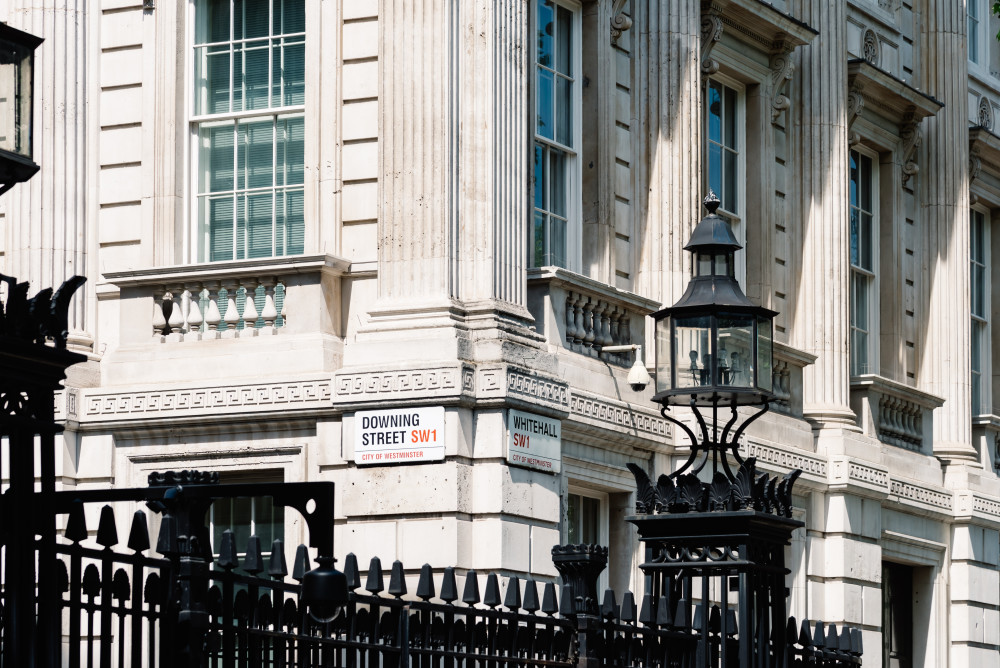
Closer to home, the UK injected a new dose of political uncertainty in June. Prime Minister Keir Starmer announced his intention to resign. Yet, markets barely reacted, with the FTSE 350 recording a positive month (more on this below). 

Keir Starmer resigns, but markets stay calm

The big news in the UK this month was Keir Starmer’s announcement that he’ll resign as Prime Minister.

Starmer campaigned on a promise of stability, after a turbulent period that saw five government leaders in just 12 years. 

Instead, his short tenure will see him memorialised as Labour’s shortest-serving Prime Minister.

Such uncertainty can panic investors and cause them to react, leading markets to dip.

But markets were noticeably calm after his resignation. After a brief fall in the value of the pound and a rise in gilt yields (that’s the government’s borrowing costs), markets stabilised.

That was seemingly helped by newly-sworn in MP for Makerfield, Andy Burnham, confirming his intention to run for the job. 

With former Health Secretary, Wes Streeting, backing Burnham, June finished with just one candidate vying for the top job. A leadership contest could spook investors and see markets wobble. But investors seemed calmed by Burnham throwing his hat into the ring alone.

Markets responded even more favourably after Burnham laid out his vision as Prime Minister at a speech in Manchester.

Borrowing costs fell and the pound rose as Burnham described his intentions to set up a “No. 10 North” and devolve power away from Westminster. 

He also described a “laser-like focus on growth and regeneration”. That commitment could've contributed to the positive market reaction.

What remains to be seen is who the next Prime Minister will appoint as Chancellor, and what their fiscal policy will be.

US tech dominates headlines as investors pivot 

As it has throughout 2026, the US tech sector dominated headlines in June. However, it was a slightly different landscape this month.

Firstly, Elon Musk’s space exploration, communications, and AI company, SpaceX, listed on the stock market.

This was initially a resounding success - at least for Musk. Investors’ appetite for SpaceX saw the company raise $75 billion and pushed shares to $161 when the market closed on the first day of trading. That made Musk the world’s first trillionaire.

However, less than two weeks after its IPO, SpaceX announced a $20 billion bond issuance. The company later increased that to $25 billion.

Bonds are debts that companies take on to fund projects. They then pay back the loans with interest.

It’s a seemingly odd choice for a company that just raised $75 billion to then take on another $25 billion in debt.

But it speaks to the huge cost of AI infrastructure and what it’s going to take for the business to become profitable.

That understandably spooked investors. SpaceX shares peaked at just over $200 on 16 June. But when markets closed on 30 June, they were just below $171 - higher than they initially floated for, but less than that peak.

SpaceX isn’t the only company to have taken on large amounts of debt like this last month, either. Nvidia raised $25 billion, while Alphabet - the parent company of Google - issued $31 billion.

Investors move away from the Magnificent Seven to chipmakers

Investors also started selling off the so-called ‘Magnificent Seven’ at the end of June. That’s the group of big tech companies comprised of:

  • Apple;
  • Amazon;
  • Alphabet; 
  • Meta; 
  • Microsoft; 
  • Nvidia; and 
  • Tesla.

The sell-off saw the companies’ combined value shrink by $2.3 trillion.

Concerns over the immense cost of the AI buildout no doubt played a part here. 

Another aspect has been price rises. As chipmakers have been busy supplying AI data centres, there’s been a surge in demand for those components.

However, they’re also critical for hardware, such as in Apple and Microsoft products. This creates a supply issue, pushing up chip costs.

Both companies announced price rises off the back of this. Investors may be worried about what this might mean for sales and revenue.

While the dip has been bad news for these businesses, companies supporting AI infrastructure benefited. 

The Philadelphia Semiconductor Index tracks a basket of chipmakers, like TSMC, Micron, and ASML. It’s often used as a proxy for how the sector’s performing.

Data shows that the index is up 6% this month. Across the year, it’s risen by 90%, versus a 3.4% decline across the Magnificent Seven.

Investors have been put off by the tech companies’ big AI outlays. Instead, it seems they’ve turned to the businesses that have profited from all that spending. 

Some central banks raised interest rates as inflation concerns continue

As for financial policy, interest rates paint an interesting picture of what’s happening around the world.

Since the start of the war in Iran, rising oil prices had pushed inflation above expectations. As a result, rather than cutting rates as predicted at the start of the year, central banks have largely held interest rates so far in 2026.

That’s what we saw in the UK and US in June. Both the Bank of England (BoE) and the Federal Reserve (Fed) held rates. 

Meanwhile, the European Central Bank (ECB) and Bank of Japan (BOJ) both raised rates this month.

While these economies are all facing different pressures, the ECB and BOJ’s decisions may be the first of many rate rises this year.

Risk warning

As always with investments, your capital is at risk. Past performance is not an indicator of future performance. The value of your investment can go down as well as up, and you may get back less than you invest. This information should not be regarded as financial advice.

What happens to your pension when you can't work?
Your health can shape your working life, and your pension too. Find out more about the retirement savings gap facing disabled people, and how to close it.

Most of us know someone whose life changed because of their health.

A colleague who had to stop working before their retirement after a diagnosis. A friend who entered the workforce already managing a chronic condition. Or a parent who gave up full-time work to care for a disabled child. 

When we think about the financial impact, we often focus on reduced income. But there's another consequence, and that's the effect on retirement savings. When work stops, pension contributions often stop too. Over time, that gap can grow far larger than many people realise.

New PensionBee research found a stark gap in retirement savings. Disabled people who work part-time could retire with £245,000 less than a non-disabled full-time worker. Our Sick, Tired and Never Retired report looks at why. 

The hidden retirement gap facing disabled people

One-in-four people in the UK is disabled, up from one-in-five a decade ago.

But the pension system wasn't built to reflect that reality. It was designed around a fairly traditional idea of working life. Stable employment, regular contributions, and a working life that followed a predictable path.

But illness and disability don't work to a schedule.

Health challenges don't just affect your day-to-day life. They can also make it harder to earn, save and plan for the future. And unlike many financial setbacks, the impact can begin years before retirement is even on the horizon.

To better understand this, PensionBee surveyed more than 900 disabled people of working age and in retirement.

The findings showed:

  • 91% are worried about their future financial security;
  • 48% have no pension provision beyond the State Pension;
  • 52% of those with private pension savings have saved less than £10,000; and
  • 46% became disabled before the age of 30.

When you become disabled has an impact too. PensionBee's modelling shows a non-disabled full-time worker could retire with £355,213. A disabled person working part-time could have just £109,886. That's a gap of £245,327.

The impact can start in childhood. The proportion of disabled children in the UK has nearly doubled in a decade, from 7% to 12%. Many of these children face extra barriers to education and work as they grow up. That makes building financial security harder from the start.

Why does disability affect pensions so much?

It's rarely one thing alone. Lower earnings, time out of work and higher day-to-day costs can all make it harder to save for the future. Over the course of a working life, those pressures can add up and leave disabled people with less in retirement. 

Lower earnings

Disabled workers earn less on average than non-disabled workers. Many also work part-time or in flexible roles. While flexible work can make employment possible, some part-time roles fall below the £10,000 Auto-Enrolment threshold - the minimum earnings level at which employers must automatically enrol eligible workers into a pension scheme. That’s why pension contributions may not start automatically, meaning the savings gap can begin before it's even noticed.

Gaps in employment

Periods of illness, treatment and recovery can interrupt employment. While any worker may experience time away from their job, disabled people are often more likely to face repeated interruptions over the course of their career. 

Higher costs in later life

For most people, retirement brings a chance to slow down. But disability-related costs don't necessarily ease with age. In some cases, they may even increase.

Expenses linked to care, mobility, specialist equipment or support can continue well into later life. That can leave disabled retirees balancing ongoing needs against savings that may have taken longer to build.

Housing inequalities

Disabled adults are less likely to own their home. Lower incomes, time out of work and difficulty getting a mortgage all play a part. More disabled people rent into retirement as a result. That puts extra pressure on their income later in life. 

What practical steps can help?

Although many of these barriers are outside an individual's control, there are still ways to build greater financial security for later life.

Check what pension savings you already have

If you've worked for different employers over the years, you may have previous pension pots you've forgotten about.

The government's free Pension Tracing Service can help you track them down. Having a clear picture of your savings is often the first step.

Don't overlook National Insurance credits

If you receive certain benefits, you may qualify for National Insurance (NI) credits that protect your State Pension entitlement, even during periods when you're unable to work.

This includes recipients of:

Checking your NI record can help you spot any gaps.

Contribute when you can

Not everyone can afford to save regularly. But even small contributions can benefit from tax relief. Most UK taxpayers get a 25% tax top up from the government. So if you pay in £100, HMRC usually adds £25, bringing your total to £125. If your income varies month-to-month, a personal pension can give you the flexibility to contribute when you're able. 

You can still save even if you're not working

You don't need to be in paid work to contribute to a personal pension. If you can set money aside, you can contribute up to £2,880 a year (2026/27) and the government will usually top it up to £3,600 through tax relief.

Carer's Credit can help protect your State Pension record while you're caring. A personal pension may also help you keep building private savings during those years.

Are you receiving the support you're entitled to?

PensionBee’s research found that half of people who meet the legal definition of disability aren't claiming disability benefits. 

Benefits such as PIP aren't means-tested. That means it doesn't matter how much you earn or have in savings. Eligibility is based on how your condition affects your daily life, not your finances. If you've never applied, or if a previous application was unsuccessful, it may be worth reviewing your options. Find out more about disability benefits.

If you're still working, check your workplace pension status

If you earn below the Auto-Enrolment threshold, it's worth asking your employer about joining their pension scheme. Some will still contribute on your behalf, even if they're not required to. 

What friends and family can do to help

If you know a person who lives with a disability, you may already support them in lots of ways. That could mean helping with day-to-day tasks, offering emotional support, or simply being there when they need you.

But support can also extend to their financial future. There are practical ways friends and family may be able to help a disabled person build greater financial security in retirement.

Talk about pensions

Many people don't identify as disabled, even when they are. And many carers don't realise how much their caring role can affect their long-term savings. Starting that conversation and sharing your knowledge can be the first step towards someone getting support they didn't know existed.

Contribute to their pension directly

You can pay into someone else's pension through what's known as a third party contribution.

As with personal contributions, the government tops up what you pay in. You can contribute up to £2,880 a year (2026/27) and this usually becomes £3,600. 

Help them check what they're entitled to

Many people who qualify for disability-related support don't realise they're eligible. Helping someone explore benefits such as PIP, Carer's Credit or NI credits could help protect both their current finances and their future retirement income.

You can watch our full carer's series on YouTube.

The bigger picture: what a fairer system looks like

The solutions to these challenges lie beyond personal responsibility. Lasting progress will depend on reforms across employment, pensions policy and public services.

PensionBee is calling on the Timms Review to consider:

  • Removing the £10,000 Auto-Enrolment threshold - contributions should start from the first pound earned.
  • Introducing a disability pension credit - to help offset savings gaps caused by reduced hours or time out of work.
  • Reforming disability benefits with retirement in mind - future changes should consider long-term impact on retirement, not just short-term costs.
  • Encouraging genuinely inclusive employment - flexible and accessible workplaces help disabled people stay in work and keep saving.
  • Increasing public awareness - too many disabled people don't know what financial support they're entitled to. Raising awareness could help close some of the gaps in support and retirement savings. 

For nearly half of disabled people, the State Pension is the only pension they have. That's why decisions about disability support matter not just in the short term, but for retirement outcomes decades from now.

Read the full findings and policy recommendations in our Sick, Tired and Never Retired report.

Risk warning

As always with investments, your capital is at risk. The value of your investment can go down as well as up, and you may get back less than you invest. This information should not be regarded as financial advice.

Big tech and your Climate Plan: what you need to know
Find out where the big tech companies fit into PensionBee's Climate Plan and its goal of reducing the carbon emissions intensity of its portfolio over time.

PensionBee's Climate Plan is designed to reduce the carbon emissions intensity of its portfolio over time, in line with the goals of the Paris Agreement. Find out how the plan selects the companies it holds.

The Climate Plan isn't a 'green companies only' fund

The Climate Plan tracks a custom MSCI index built to exceed the minimum standards of an EU Paris-Aligned Benchmark. Its objective is to reduce the portfolio's carbon emissions intensity by at least 10% per year against its parent index, using 2020 as the baseline year. 

This is a passive, Paris-Aligned, index-tracking approach, removing fossil fuels and enabling your plan to be invested in line with international climate agreements. The plan doesn’t follow an impact investing or green revenues strategy, so there isn’t an objective to demonstrate a positive impact for society and the environment alongside generating financial returns. 

Before any companies are selected for the index, a set of exclusion rules is applied. The most significant of these relates to fossil fuels. The plan excludes companies that own fossil fuel reserves, as well as companies with strong ties to fossil fuels. For example, utilities that rely heavily on fossil fuel-based power generation. 

The plan also excludes companies involved in:

  • controversial, nuclear and other weapons; 
  • civilian firearms; 
  • tobacco; 
  • gambling; 
  • adult entertainment; 
  • alcohol; 
  • for-profit prisons; 
  • palm oil;
  • recreational cannabis; and
  • activities that don’t comply with the United Nations Global Compact. 

It excludes companies assessed as ‘strongly misaligned’ with the UN Sustainable Development Goals (SDGs). For example, SDG 6 (clean water and sanitation) and SDG 7 (affordable and clean energy).

Once this set of exclusionary screens has been applied, the remaining companies are reweighted, to ensure the carbon emissions reduction objective. 

This sees companies with lower emissions (compared to their relative size) receive more investment compared to the parent index. And companies with higher emissions or that don’t demonstrate a commitment to a long-term reduction in line with the Paris Agreement goals will receive less investment over time. 

Why does big tech feature so prominently in the Climate Plan?

Among the Climate Plan’s top holdings are seven of the world's largest technology companies:

  • Apple;
  • Amazon;
  • Alphabet; 
  • Meta; 
  • Microsoft; 
  • Nvidia; and 
  • Tesla. 

These large technology companies dominate the global stock markets, and the Climate Plan tracks a global index.

The Climate Plan tracks a custom MSCI index that uses the MSCI All Country World Index (ACWI) as its starting point. 

As of May 2026, Information Technology and Communication Services companies make up around 40% of MSCI ACWI. So, they feature prominently in any plan that follows this approach.

Additionally, there's a more specific reason these particular companies are overweighted. Relative to their economic footprint, they're lower-emitting parts of the global market. 

Using the latest climate emissions data publicly available, the seven largest technology companies combined account for just over 1% of total global greenhouse gas emissions. That’s despite the fact that they represent approximately 21% of the MSCI ACWI by market capitalisation, as of May 2026.

Here's how the latest data for each of these companies compares.

Company Total Scope 1, 2 & 3 emissions (million tons CO₂-eq) As a % of global emissions Green revenues (%)
Nvidia 60.1 0.11% 89.72%
Microsoft 53.0 0.10% 20.69%
Apple 172.2 0.32% 0.00%
Alphabet 47.5 0.09% 3.85%
Amazon 204.2 0.38% 2.25%
Meta 18.9 0.03% 0.00%
Tesla 72.3 0.13% 99.99%

Source: State Street IM, MSCI, as of 03 Jun, 2026. For illustration only. According to Our World in Data, Global GHG Emissions in 2024 were 54.43 billion tons of CO2-eq.

The index uses specific emissions-based metrics to compare all the companies in the parent index against each other, rather than position any one company as a climate leader. 

On emissions-based metrics relative to size, the big technology companies score more favourably than others in the index.

They improve the overall carbon profile of the plan relative to its parent index. This is because they emit less relative to their size than many comparable companies. Some also earn a share of their revenue from products and services that support the transition to a cleaner economy, such as energy efficiency technology.

What about Artificial Intelligence and rising energy use?

Artificial Intelligence (AI) infrastructure requires significant energy. As a result, some of these companies have seen their emissions increase in recent years. There are a couple of things worth noting alongside that.

Five of the seven companies have emissions reduction targets approved by the Science Based Targets initiative (SBTi). This is a globally recognised framework for setting credible, science-based climate goals. 

These companies are also among the world's largest. At that scale, their decisions on the energy they buy, the infrastructure they build, and the suppliers they work with will shape the wider energy transition. The index methodology considers both their current emissions performance and their commitment to future reduction, including whether they have science-based targets approved by SBTi. That assessment can change as their trajectories shift. 

What happens if a company's emissions rise sharply?

The plan's index is reviewed twice a year. This is to check both whether companies still pass the exclusionary screens, and whether their emissions weighting needs to change as new data comes in.

If a company's emissions rise significantly, or its progress on reducing them falls, its weighting will be reduced over time. In serious cases it could be removed from the index entirely. For example, if its business model changes in a way that brings it into conflict with the exclusionary rules.

The Climate Plan is designed to reduce the overall carbon emissions intensity of the portfolio year-on-year, regardless of what any individual company does. If the seven companies in the table above stopped being the lower-emitting option relative to their peers, the index would reduce their weighting over time. 

You can keep track of monthly changes to the plan's top 10 holdings in your online account (‘BeeHive’). Or you can download the full monthly holdings list directly from the money manager, State Street, via their website.

What if I want a pension that excludes technology companies entirely?

Removing all large technology companies from a pension would mean investing outside the major global indices. Typically, that’d be through a specialist actively managed fund or an impact-focused fund.

These plans usually hold only 30-35 companies, carry a significantly different risk profile, and tend to be considerably more expensive than mainstream index-tracking pensions. At PensionBee, we believe investments should be diversified, low-cost, and simple to understand. We're customer-led, and our plans are designed for a wide range of savers.

Have a question? Get in touch!

If you have questions about the Climate Plan or want to understand more about how it works, you can read the full plan details or email us at engagement@pensionbee.com.

Risk warning

As always with investments, your capital is at risk. The value of your investment can go down as well as up, and you may get back less than you invest. This information should not be regarded as financial advice.

E51: How to resist lifestyle creep with Clare Seal, Edoardo Moreni, and Alex Langley
The average Brit spends £696 a year on subscriptions alone. We break down exactly what lifestyle creep is, how to spot it in your own spending, and why redirecting even £200 a month could add around £200,000 to your pension pot.

The following is a transcript of a bonus podcast episode of The Pension Confident Podcast. Listen to the episode or scroll on to read the conversation.

Takeaways from this episode

PHILIPPA: Welcome back. Quick question for you: are you earning more than you were five years ago? Now here’s a thornier one: if you are, do you actually feel better off? There’s a sneaky phenomenon that can quietly hoover up every pay rise, every bonus, every step up the career ladder. It’s called ‘lifestyle creep’, and it might just be the single biggest obstacle between you and the comfortable financial future you’re actually working towards. So, how can you keep that destructive phenomenon at bay? That’s what we’re talking about today.

I’m Philippa Lamb, and if you haven’t subscribed to The Pension Confident Podcast yet, do it now. That way you’ll never miss an episode.

So, here to help us spot, stop, and maybe even reverse lifestyle creep, we’ve three guests who know all about it.

Edoardo Moreni is the Co-Founder and CEO of Emma, the personal finance app that helps over a million people track their spending, subscriptions, and their net worth. He’s seen firsthand what happens to people’s money when they don’t keep an eye on it.

Content Creator Clare Seal is one of the UK’s most trusted personal finance voices. She’s chronicled her own journey out of debt, and she’s written books on the psychology and practicalities of spending. She’s, in her own words, a recovering lifestyle creeper.

From PensionBee, this time Alex Langley, Head of Customer Success, and back for his second appearance on the podcast. He spends his days talking to PensionBee customers about their money, so he’s seen what lifestyle creep can do to people’s finances, including his own.

Hello everyone.

ALL: Hello.

What is lifestyle creep?

PHILIPPA: Lifestyle creep is essentially spending, well, more as you earn more and falling into that trap of just never really feeling any wealthier. Obviously, it can be about big purchases. My feeling is that it’s about the small stuff for a lot of us. I was thinking about this this very morning. I came into King’s Cross Station; I spent £4.50 on a white Americano. I looked at it. I thought about the podcast. I thought, this is [a] ridiculous amount of money to spend. But I do it. I do it often. What do you guys do? I bet you’ve got similar stuff.

CLARE: Oh, for me, lifestyle - like keeping lifestyle creep at bay is like playing whack-a-mole, honestly, because it’s, I think I’ve got youngish children, so they’re, age three to 11 [years old] and one in the middle. And so, it’s so easy to spend more on them because as you’ve more money, you just sort of think, why not, when they ask for things. And you’ve to really rein yourself in. But also, about things to fix myself. I’m 36 [years old], so I’m not even that old, but I’m just being advertised like collagen and creatine and all of these things.

PHILIPPA: Oh yeah. Edoardo, what is it for you?

EDOARDO: I think my new lifestyle creep since last year has been clothes.

PHILIPPA: Oh, really?

EDOARDO: Really bad.

PHILIPPA: I think we really need to know why this has suddenly arrived in your life.

EDOARDO: I think, because I am 33 [years old] and up until the age of 32, I was hanging on like these sort of like Christmas gifts, birthday gifts, and that was my sort of look. And after that, I just, I decided, “OK, no, now we need a reset” and I start buying. And it’s a disease, it’s like in every sense. You know?

PHILIPPA: Yeah, I know, there’s no answer. Alex, what’s it for you?

ALEX: Mine is a lot of beauty stuff. Very vain, very shallow. Because, you go to Holland and Barrett or you go to Boots and you think, “This purchase is going to change my life. It’s going to change everything. Once I’ve got this cream, everything’s going to be better”. And then of course you inevitably use it, and it doesn’t solve all of your problems.

PHILIPPA: But are you buying more expensive stuff as you earn more?

ALEX: This is the thing. I’ll buy more and then it sorts of builds. And now I’ve got into like, I get Botox as well. And so, it all sort of builds up over time.

PHILIPPA: Well, I think, we’ll get onto ‘the what’, more about the what, but ‘the why’, ‘the why’ is interesting to me. I mean, we’ve talked a bit about slipping into it and there’s age and there’s kids and things, but what do we think?

CLARE: I think what I see happening is that you have your current means and your life where it’s, it’s like one circle, and then outside of that there’s like a bigger circle of what you’d like your life to be like. And honestly, I think that as your means grow, as long as that circle, the outside circle, is really intentional and it’s stuff that you value and it’s stuff that’s going to bring joy or security or something, it’s going to bring something to your life, then I actually think that expanding out into that circle is fine.

So, if that’s as you earn more, you haven’t been on holiday for years, so you’d like to add in a holiday because it’s going to bring some value. Or even for so many people, like more regular trips to the dentist or swimming lessons for your children or some education. I think that’s absolutely fine. But what we quite often happen is that as your actual circle of means expands, that external circle keeps expanding as well. So, you keep sucking more things into that. The goalposts just continue to move as you achieve the things that you want to achieve.

Trigger points and the psychology of spending more

PHILIPPA: I think there’s trigger points as well, aren’t there? Things like, even your first salary, your first job. I mean, we all spent when we got our first pay packet, right? And it creeps up on you, but promotion, maybe you’re moving in with a partner, buying a home. All these things feel like justification, don’t they, to spend more? But as you say, it’s that thing about it being intentional rather than just luring you on.

EDOARDO: But, I think, as long as you don’t spend more than what you make and savings and investments are counted in, there’s no problem with that.

CLARE: I think it’s about having some boundaries, but not in terms of [being] really strict with yourself. I think for me, sometimes it comes down to keeping a level of respect for your future self, making sure that you’re just holding your future self in regard and taking them into account. And this is from someone who also orders a lot, like too much Deliveroo.

PHILIPPA: I mean, we all do.

CLARE: It’s so exhausting, isn’t it?

PHILIPPA: I do. I tell you where I think the difficulty arises for a lot of people who work. So, I’m freelance and the series producer of this podcast, she’s freelance too, and we’ve talked about this. All that’s great if you’re on a regular income. If you’re freelance or self-employed, your income often isn’t like that. There’s [a] real feast and famine. And you might go through months and months where you’re really, really reining everything in. And the temptation when things happen, you get a new contract or, your rates go up or more money suddenly arrives, to really splurge, because you do feel you deserve it. There are some things you definitely do need. That you haven’t got. And then before you know it, that’s the new normal, you know? So, the predictability of your income is a factor, I think, isn’t it?

CLARE: I think you’re so right. And I think that an emotion that’s really underestimated when it comes to things like emotional spending and lifestyle creep and all of that is relief. Sometimes if you’re feeling the pinch a bit, like you said, if you’ve just gone through a period where it’s more famine than feast. Or if you’ve been working in a job, maybe you’re training and you’re on a lower wage, but then you get a promotion. Sometimes that feeling of relief is really dangerous because you’re like, “Oh, I can finally let go,” and you just let go too much. That’s definitely happened to me many times in the past.

PHILIPPA: I mean, it’s other people, isn’t it? It’s the general expectation of people, friends, family, what - how they’re spending, how they’re living. You know, you’re spending time with them, It’s weird if you’re penny-pinching all the time. I find that drags your spending higher, don’t you find? Because obviously incomes vary radically. You might have friends who’re working in the city earning a load of money and people who’re working in jobs where it’s really, really low pay, but you’re still all friends. You’re still seeing each other.

EDOARDO: I mean, you don’t have to spend it if you can’t afford it. You know, like I go back to that point that you don’t have to go out, you don’t have to entertain yourself if you can’t stay at home.

PHILIPPA: Oh, sounds a bit dull.

EDOARDO: Yeah. But no, but like, that’s the whole point is like, why do people overspend? Because they’re not in control. And, there’s no, having a humble life in control is like a valuable life.

CLARE: I think I’d always fall in the middle ground of that. I really feel like you can embrace some joy in the in-between of that. And I think one of the things you’re talking about, like staying at home by yourself and not doing very much versus going out and spending a load of money. But I think in the in-between there, have people over to your house. And I always say this, like one of the most generous things that you can do is invite people into your home. Tell them to bring something so that you’re sharing the cost. Like someone brings a bottle, someone brings a dessert. Whatever it might be. But like, please, please have people round to your house even when it doesn’t look like a show home, even when it’s not super tidy, because then it gives other people permission to invite you and their other friends and family to their house even if it doesn’t look perfect.

Supermarket upgrades and the subscription trap

PHILIPPA: Food.

CLARE: Yeah.

PHILIPPA: Is a big one. Where you buy food.

CLARE: Mm-hmm.

PHILIPPA: So, you start out at the cheap supermarkets, right?

EDOARDO: Exactly.

PHILIPPA: And then as time goes on, as you earn more, creep up the chain, don’t you? And you end up at Waitrose.

CLARE: I’m an Ocado girl through and through.

PHILIPPA: Oh, me too.

CLARE: Yeah.

PHILIPPA: You know what I’m talking about here.

EDOARDO: That’s a quite interesting point. You know, when I started the company, my starting salary was like £25,000 for the first two years. And I wasn’t going to Waitrose, buying the burrata from Waitrose was like -

PHILIPPA: absolutely not -

EDOARDO: just terrifying, right? I still remember that feeling.

PHILIPPA: Advertising has a lot to answer for here, doesn’t it? Because, all the stuff like meal kits, this whole thing of you are time poor, what you need are meal kits delivered to your home. They’re very expensive. We can agree on that, can’t we?

CLARE: After that initial offer that they drag you in with that’s like really good value, and then they just trust that - it’s like any subscription. They just sort of trust that you’ll forget to cancel.

PHILIPPA: Yeah, subscriptions though. I mean, you mentioned subscription. We talked about meal kit subscriptions. Let’s talk about other subscriptions, Alex. Because I’ve heard that you’ve got a lot of them.

ALEX: Oh God, it’s terrible, isn’t it? I’m one of those people that signs up for the free one-month trial. And because in my life, like I’d say at work, I’m quite organised and I think I organise myself out.

PHILIPPA: Yeah.

ALEX: It’s like the ability to be organised, it’s been used up. And so, in my normal life, everything just is very burying my head in the sand. Oh, I’ll pay a one-month free subscription and then end up paying it for a long time. So, there’s like -

PHILIPPA: how many do you’ve?

ALEX: There are so many and I might even miss some.

PHILIPPA: We have time.

ALEX: I’ve the standard ones. So, I have Spotify, I have Amazon Prime, and I also have Netflix. And actually, just those three combined costs £419 a year. On average, if you’ve sort of a standard package. But those aren’t the only ones I’ve. So, I also -

PHILIPPA: the others are? I don’t want to drag this out of that. Is it just me feeling like I’m having to drag it out?

ALEX: I also have Disney Plus, I have Hulu, I have Sky. I also once was paying for Mario Kart on the phone. You can pay to get the different skins, and I wanted all the different ones, so I paid like a small subscription for that, and it wasn’t a lot, but that’s the point. You sign up to it and it’s £7.99, but that £7.99 adds on to the £8.99 over here, and it all adds up. And I found -

EDOARDO: times 12.

ALEX: Yeah, I had a lot of them.

PHILIPPA: Edoardo, you’ve got data, haven’t you, on this? How much the average person spends?

EDOARDO: A lot of money. I think Emma is famous for tracking all your subscriptions in one place, and it’s almost like one-in-two people that download the app, they see duplicate subscriptions running through their bank account.

PHILIPPA: And do you know what the average Brit spends every year? Take a guess on subscriptions.

CLARE: £500?

PHILIPPA: £696. This is the average Brit. You know, that’s £58 a month. But there are going to be people, looking at you Alex, who’re at the other end of the scale spending a lot more. And people like Edoardo, I presume, not spending anything. Do you’ve any subscriptions at all?

EDOARDO: Actually, I can show you because I’ve got them here in my pocket. I think I’ve got probably like 15 of them.

PHILIPPA: But it’s a thing, isn’t it? And there’s more and more and more of them and they all feel like things you have to have.

ALEX: I mean, one of the problems is that I’m paying to essentially rent things, I’m not actually - where is that money going? Am I actually purchasing anything? Not really.

Being intentional and auditing your spending

EDOARDO: But, like, because we talk about a lot of subscriptions as they’re like a bad thing. But, we forget that a pint in London costs like £7.70.

PHILIPPA: Oh, yeah.

EDOARDO: So sometimes it’s not even about the subscriptions, it’s about how you spend your money and how you live your life. The £9.99 can sound a lot, but the two pints at the pub is two months of a Netflix subscription, you know? So -

PHILIPPA: And this loops us back to that thing that Clare was saying about, you need to be intentional about it, which means you need to know that you’re doing it. So, I’m guessing the advice would be [to] audit what you’re spending, right?

EDOARDO: Of course.

CLARE: But if - I always say to people, if that coffee is what makes the difference, like if that’s the thing that you look forward to every day on your way to work and it makes the commute bearable and you savour every mouthful of it, then that’s - that spending is fine. If you can afford it, that spending’s fine.

If it’s just a habit and you pick it up and you often throw half of it away and you’re just doing it on autopilot, then that’s a waste. So, I think it’s about - you have to interrogate every one because what’s valuable to me isn’t going to be what’s valuable to you.

So, I think it’s about that. I wanted to go back to subscriptions just for one second. It was a really quick win that people can do, is that if you’ve got a partner, and I mean, this is, it’s really good to talk to your partner about money anyway, but please, please sit down and make sure that you’re not both subscribed to the same thing -

PHILIPPA: oh yeah -

CLARE: because me and my husband, like, we both had Netflix subscriptions. And at one point I think we both had like a Disney+ subscription and we have Sky, which includes Disney+. So, we were paying for it three times. So, I think if you can just sit down, that can be a really good, inciting conversation for a broader conversation about your finances. Obviously, we all know that people don’t really talk to their partner enough about money.

PHILIPPA: I already know I’ve got duplicate subscriptions with my husband, particularly things like Amazon Prime, because, and I just haven’t done anything about it. It’s like you saying, Alex, super organised at work and then your own personal life, somehow part of being in downtime is that you’re not quite as on it as you would be at work and stuff. But I’ve got better. I mean, do you not diarise when you do free trials with streaming services? You don’t stick it in your calendar because I do now, the cancellation date before I’ve to pay anymore.

ALEX: Oh, I completely overestimate my abilities to remember to shut something down for sure.

CLARE: But the other thing is that if you’re subscribing through Apple, so if it’s like an app subscription, you actually can cancel it immediately. So, you can subscribe and then cancel it immediately and you still get the full free trial.

PHILIPPA: Yes.

CLARE: So that’s a tip that I always give to people as well is just do it all in one motion. Subscribe, cancel, and then you just get the free trial, and you won’t get stuck in that subscription.

PHILIPPA: That’s a very good tip.

The real pension cost of lifestyle creep

PHILIPPA: It’s all very well, we’re laughing about this and saying, these are small sums. And as Clare rightly says, and as Edoardo rightly says, if they’re bringing you joy, for the price of a pint in London, then actually how bad is that? But the audit thing is important, isn’t it? Because if you’re thinking it doesn’t matter, it really, really does, doesn’t it? Because you talk to people all the time who’ve - this has got out of control. And all the money that’s leaching out of their budget into this could be feeding into savings and investments and of course pensions, couldn’t it?

ALEX: For sure. And I think at the moment with [the] cost-of-living crisis that we’re having, the fact that we’re all potentially spending money on things that if we’re not getting the benefit out of it, it’s worrying and it’s coming out every month and people will forget about it.

PHILIPPA: But say, I mean, if we put some numbers on it, say if we had someone in their 30s, And we’re going to be conservative here and say they’re just spending an extra £200 a month on what we might call ‘lifestyle creep’ or ‘lifestyle inflation’ rather than saving or investing it. Are we able to count that forward and see what that actually would cost them in terms of by the time they get to retire?

ALEX: Yeah. So, every personal contribution you make [as a basic rate taxpayer], the government tops it up by 25%, which is amazing. So, if you were to spend that money into your pension, you would get £50 tax relief on top of the £200, and over 30 years, let’s imagine you’ve got 8% growth. Let’s take some inflation off of 2.5%, and let’s say that you’re paying 0.7% in fees. It’d be around £200,000 extra in your pension, or £7,900 per year, and that breaks down to £660 per month in your retirement income.

PHILIPPA: I mean, it’s quite surprising, isn’t it, how those numbers stack up, because we’re only talking about extra £200 a month of discretionary spending you don’t need to do. And I think we’ve already established [that] a lot of us are doing more than that.

CLARE: One of the things that always really helps people to make good moves financially is making it really tangible. I think so much of this tends to be abstract. It tends to be this kind of, “Oh, I spend way too much on subscriptions,” or, “I can feel my lifestyle inflating”. But if you can make it really tangible. So doing direct swaps, and so this is how I incrementally started paying more into my pension, is I literally took the thing and cancelled the thing and immediately set up the direct debit straight into my pension. So, a direct swap of this thing that I’m not getting value out of versus this thing that I’m going to get so much value out of. You know, as you walk past the coffee shop, put the £4.50 straight into your savings or your investments or your pensions. Honestly.

EDOARDO: I’d be on the opposite spectrum of you.

CLARE: Really?

EDOARDO: Like if you don’t have an emergency fund, you shouldn’t spend your money. Set up savings, set up investing, then what’s left, you spend it. And if there’s nothing left, live a very humble life.

ALEX: It’s just a mindset though, isn’t it? I think it’s hard for people. I’d struggle to do that. Yeah, I’d find that really hard.

How to cut back without making life miserable

PHILIPPA: I mean, this is the point, isn’t it? Because I do want to talk about [it], I think we’ve all agreed it would be good to stop this, or at least rein it in. But how do you do that without making your life feel really horrible? Because Edoardo is obviously someone with a huge amount of self-discipline, probably more than the rest of us. But we don’t want to make our lives a misery. I mean, I take your point, Edoardo. If you can’t afford to spend, don’t spend. The last thing you want is debt. And Clare knows all about this. She’s talked about it in the past.

EDOARDO: It goes back into priorities, right? Because what’s important to my life? Groceries, personal care, [a] tiny bit of entertainment. But eating out, doing takeaways, buying alcohol - these are all things that I think you can cut by 50% tomorrow if you want to.

CLARE: I disagree that those things are useless. So, I did, like you said, I had £27,000 worth of debt. And to put that into context, that was almost exactly my annual pre-tax salary at that point. Let’s not talk about how that was able to happen. That’s a whole other show, but -

PHILIPPA: But you were there, but it was -

CLARE: I was there and I paid it off over two years and I didn’t completely deprive myself and my family of all of those extras because always in the back of my mind was like, “I could get hit by a bus. I could make myself miserable, to pay off this debt in the minimal amount of time. And then I could get hit by a bus”.

And so, I trod a middle ground, and I ring-fenced some spending that was going to enable me to like to take my kids to Legoland while they were still little enough to enjoy it. And my eldest is 11 [years old]. He’s on his school’s residential [trip] at the moment and I can feel him slipping away. I can feel him slipping away towards his friends. And so, I’m really glad. I don’t care that it took me maybe three months longer to pay that off, and I didn’t care that it took me six months longer to fully fund my emergency fund. Like, I think you’ve to live your life.

PHILIPPA: A lifelong joy of that connection.

CLARE: Exactly.

Building resilience and talking about money

EDOARDO: We live in very unpredictable times. You know, you’ll lose your job, the rent might increase. There are so many things that might happen that if you’re already in a very bad situation, it’s better to sacrifice six months of your life to be back on track and then restart over than finding a middle ground. What if you get fired and you lose your job and you’re like £20,000 in debt? What’s going to happen?

CLARE: What insulates me from that fear is the fact that I’ve been through all of those things. I did have to leave my job when I was deeply in debt. My husband got made redundant when I was seven months pregnant. And we’re resilient, and we found a way through all of that, and, and we’re fine. So, I think [you should] absolutely do everything that you can. I’m not diminishing the importance of an emergency fund. That would, that would go against everything that I believe in.

I just think that find a way to ring-fence some stuff. And it might be a really small amount. It might be like your child’s swimming lessons, or it might be like enough to go for an ice cream every week. It doesn’t have to be like a big thing. I certainly wouldn’t be advocating for [things] like, “Go on the holiday of a lifetime because you’ll never get that time back”.

PHILIPPA: Sure.

CLARE: Also, crucially, they can make the difference between getting to the end of that journey of paying off your debt or building your emergency fund, or making yourself so miserable that you give up and you swing back in the other direction and you fall completely off the wagon. So, some of it isn’t even emotional or desirable or sentimental. Some of it’s just purely practical. There are a lot of people who just wouldn’t be able to carry on with that level of discipline.

PHILIPPA: Yeah, it has to be sustainable, doesn’t it? I mean, Alex, you talk to people all the time. I mean, I’m guessing quite a lot of them have a wake-up moment like Clare had when she suddenly thought, OK, things need to change. What do they tend to be?

ALEX: For sure, we see sometimes people needing to withdraw in order to make purchases rather than to live on, which is worrying at the moment, yeah. And something that, you should try to make sure your pension is there for you to live on after you retire rather than to allow you to supplement an income currently.

PHILIPPA: Clare, you talked a bit about recovering from this debt mountain that you had. Did you do the basic things? I’m guessing you did, like, you reined back on where you bought your groceries and the things we’ve talked about earlier on.

CLARE: We did like a full, full audit and we did shop at a cheaper supermarket. We renegotiated any contract. We kept our old phones and went SIM-only, all of those things that we could. We cut out a lot of waste.

PHILIPPA: Did life feel grey and hard?

CLARE: No, I’d say, I think because I was documenting it, people knew that we were doing it, so it wasn’t -

PHILIPPA: Well, that brings me to the next thing, actually, that whole idea we talked about, other people can drag your spending up. But other people can also help you in this journey to reining it in, can’t they? Because it’s all about having conversations and the transparency can be really helpful. Yeah. I mean, you’ve got features, Edoardo, haven’t you, on your app about to help people have those conversations?

EDOARDO: I think so. But that’s one of the main problems with personal finance. People don’t like to talk about it.

PHILIPPA: Feels embarrassing, doesn’t it?

EDOARDO: Yeah, it feels a bit embarrassing. But obviously for couples, for example, we’ve got features where you can share each other’s bank accounts within the product. So essentially you can move both partners’ accounts in a single, like we call it ‘Space’, that you can access. And so, you can track each other’s spending. So, the problem of like double paying the Netflix at the same time, it goes away because you would see duplicate subscriptions right away, so -

PHILIPPA: so we need to really wrap this up now, but I’m going to, I’m going to say budgeting apps. These, I mean, everyone should be using these, right? I bet you don’t, Alex. You’re looking at me like a man who doesn’t use budgeting apps.

ALEX: No, I don’t.

PHILIPPA: Even tempted? By that help you rein stuff in.

ALEX: I think I just need to be more organised generally, just like outside.

PHILIPPA: They do it for you, don’t they?

ALEX: Yeah, that’s probably what I need, something that just organises it for me. The thing is, you get to the end of the day, and you just want to sit on the sofa. And this is why I spend all this money on all of these streaming services so I can sit on the sofa and enjoy them.

PHILIPPA: I mean, yeah, I get it. I do. I mean, there’s kind of, there’s a very, even if you don’t like technology, you don’t want to use apps, there’s basic frameworks.

Budgeting frameworks and tools that work

PHILIPPA: So, there’s the ‘50/30/20 rule’ Clare, talk us through it, how it works.

CLARE: Yeah, so the ‘50/30/20 rule’ dictates that 50% of your spending is on essentials, 30% on enjoyment, 20% on building your net worth. So, whether that’s paying off debt or whether it’s savings and investments, I’d say that the 50/30/20 rule is completely inappropriate for most people within this cost-of-living crisis. I think that most people’s essential bills are way higher than 50% of their income. But I do think that it’s a useful framework to work to that you can adapt.

PHILIPPA: So, if you play with the percentages.

CLARE: Yeah, exactly. So, let’s say your bills - and work from your essentials - so, let’s say that your bills are 70% of your income, then you maybe look at 15% and 15% or 20% and 10%. But I do think that’s very theoretical. You have to pair that with something like a budgeting app. I always say that budgeting, two-step process. There’s the plan and then there’s the tracking and monitoring. And most people never make it past the planning stage. So, they lay out this beautiful budget that really works on paper and then they don’t tie their budget to their actual spending.

EDOARDO: Interesting point. Obviously, I’m pro using budgeting apps, but the way that I budget is actually quite different from most of the people in the sense that I don’t set specific budgets. I simply look at the income and then the spend per month, and if I know that there is like a positive difference in between, I’m saving.

CLARE: Yeah.

EDOARDO: So, if the income is like, I don’t know, £2,000 net and the spend is £1,000 or £1,500, there’s £500 saved every month.

PHILIPPA: So, you’re not believing targets? You don’t want to -

EDOARDO: wow, you’re going to spend hours setting targets, you’re going to do all of that, and then you’re not going to follow through. So, it’s like, that’s eventually what happens to everyone, right?

PHILIPPA: Well, you say that, but I mean, I use tech to move money around so that it takes the decision part away. So, I set up my bank account so that a certain amount automatically disappears into my potential tax pot, [and] a certain amount disappears into other pots. And then the balance I see is the balance I can spend because the rest of it’s gone to those pots. I find that really helpful.

EDOARDO: And I think that’s the right way to do it.

ALEX: Yeah.

CLARE: And what you’re doing with that intentionally or not, is that you’re treating all of those things like saving for tax, saving for your pension, all of those, you’re treating them like another bill. And it’s kind of like, you know the Julia Donaldson book ‘A Squash and a Squeeze’?

So, it’s based [on] an old proverb, but it’s [a] farmer goes to whoever it’s, a local wise guy, and says, “Oh, my house is too small”. And he’s like, “OK, bring your chickens in, and then bring your cow in”. And then at the end he’s like, “Oh, it still just feels really small, but there’s loads of animals in here.” And he’s like, “OK, so now just take them all out”. And suddenly his house feels enormous. And I think that if you do that, where you get yourself used to that lower amount of spending and that lower limit that you’ve, then if you do then want to increase it a little bit, you really feel the benefit of it.

PHILIPPA: Mind games.

CLARE: Yeah, exactly. Sometimes you’ve to gamify it for yourself.

PHILIPPA: Thanks everyone. I really love these episodes where we end up with a bunch of things people can do, don’t you? You know, the practical stuff you could actually take away.

If you found this episode helpful, please do rate and review it so that other listeners like you can find us. If you missed an episode, it’s not a problem. You can catch up anytime on your favourite app, or you can watch us on YouTube.

Next month we’re going to be discussing marriage. Is tying the knot actually worth doing from a money standpoint? We’re going to dig into the legal and financial ins and outs of saying I do or I don’t.

And here’s the disclaimer before we finish: please remember, anything discussed on the podcast shouldn’t be regarded as financial advice or as legal advice, and when investing, your capital is at risk. Thanks for being with us.

Risk warning

As always with investments, your capital is at risk. The value of your investment can go down as well as up, and you may get back less than you invest. This information should not be regarded as financial advice.

Behind the pension pot: Nigel's story
Cycling, music and a pension he checks every morning - find out how Nigel, 76, built a retirement that works on his own terms

On a Tuesday morning in Liverpool, Nigel, 76, opens his PensionBee app and checks the balance.

It's a habit he's developed since moving his pension to PensionBee around three years ago.

He says he checks it most days.

Not because he's worried about money. He just likes the reassurance that his pension’s in a good place.

Later that afternoon, he heads to orchestra rehearsal, where he plays the oboe. He first learned the instrument at school before picking it up again in retirement. On weekends, he cycles. In his early 50s, during a quieter period at work, he cycled 4,500 miles across America with a tent and backpack.

For more than 25 years, Nigel's life followed a familiar rhythm. Every morning, he caught the 6:20 train into central London. He built a successful career in technology consulting and eventually became a partner at his firm.

But like for many people, retirement always felt far away. His pension stayed in the background while work, family life and day-to-day responsibilities took priority.

"I would’ve liked to. I did plan to. But this came up and that came up," he says.

Looking back now, there are a few moments that shaped how he thinks about retirement and money.

Saving for retirement started as a practical decision 

Nigel first began paying into a pension in his early 30s after becoming a partner at his firm.

"It was partly tax-driven."

At the time, retirement still felt a long way off. He wasn't building towards a carefully calculated number or following a detailed financial plan. The decision was largely practical.

That's often how pension saving begins. It can start with a promotion, a conversation with an accountant or simply the feeling that it's probably time to put something aside for the future.

For Nigel, starting early turned out to matter more than having everything mapped out from the beginning.

Good to know: Basic rate taxpayers usually receive a 25% tax top up on personal pension contributions. That means for every £100 contributed, HMRC adds £25, bringing the total contribution to £125. PensionBee will claim this tax top up on your behalf if you're paying into a PensionBee plan. Higher and additional rate taxpayers can claim a further 25% and 31% respectively through their Self-Assessment tax returns

{{main-cta}}

Retirement arrived before he fully expected it

Nigel never worked out exactly how much he’d need for retirement.

"Was there a number I was aiming for? Did I know what that number should be?" he says.

"Looking back, yes, it would’ve been very easy to calculate. But I never answered that question for myself."

Eventually, retirement happened more through circumstance than planning.

"I've often said that I retired when nobody wanted me anymore."

Once work slowed down, Nigel began looking more closely at the numbers. He worked backwards from what he had saved and considered whether it would support the kind of retirement he wanted.

Looking back, he believes having even a rough sense of how long his savings needed to last would’ve helped him feel more prepared.

Good to know: Once you stop working, it helps to know roughly how far your savings can stretch. PensionBee's Drawdown Calculator can help you estimate how much you could take each month and how your pot might hold up over time.

The fees became harder to ignore 

Before moving to PensionBee, Nigel worked with an Independent Financial Adviser (IFA) and invested through an actively managed fund.

This was followed by a difficult period in the markets.

"I was shocked at the charges," he says.

"The markets hadn’t done well. I had an overall loss in one particular 12-month period, and I had to pay the fees for the active management, and I was paying the IFA."

"I looked at it and I just thought - this is silly."

Until then, the costs had felt relatively invisible. But when investment performance weakened, the charges became much more noticeable.

The experience changed how Nigel thought about managing his pension. He started looking for a pension that was easy to understand and manage.

Good to know: Pension fees can include platform charges, investment management fees and adviser costs. Over long periods, even small percentage fees can reduce overall returns. With PensionBee, you’ll pay between 0.50% and 0.95% depending on the plan you choose, and we'll halve the fee on the portion of your savings over £100,000.

Big life changes can affect retirement savings

At one point, Nigel mentions divorce.

"The pension pot was twice the size before I divorced," Nigel says.

He doesn't dwell on it, but the comment reflects something many people experience. Retirement savings are shaped by life as much as investment performance.

Career breaks, divorce, redundancy, caring responsibilities and periods of self-employment can all affect long-term savings plans.

For Nigel, those changes became part of the story of his pension, rather than something separate from it.

Good to know: Pensions are often one of the largest financial assets people own. During divorce settlements, pensions can sometimes be divided or shared depending on the circumstances. Find out more about how pensions are split in a divorce.

Drawing an income became part of his retirement routine 

Three years ago, Nigel moved his pension to PensionBee. Today, he’s in drawdown - taking a monthly income from the savings he spent decades building.

"I'm drawing effectively a monthly income," he says. "I get the equivalent from PensionBee of a payslip, with a tax deduction and the tax code."

The ability to withdraw flexibly matters to him. If he wants to fund a holiday, he can take a little more that month. If his tax bill is running high, he takes less.

The process is straightforward: a few regulatory questions, the amount he wants to withdraw and an estimate of the tax due. About 10 days later, the money lands in his bank account.

He also opens the app most mornings. Not from anxiety, but something closer to habit and reassurance.

"I have a kind of notional value in my head of what the pot needs to be worth to see me through," he says. "I get a little tense when I see it fall with the markets. But I get a sense of achievement when I see it going up," he says.

Knowing there’s one clear management fee, no hidden charges and clear investment choices helps too. After his experience with active management, he no longer feels his returns are being quietly eroded before he even sees them.

"I'm comforted by the fact that I'm not constantly worrying about the fees creaming off the top."

Good to know: From age 55 (rising to 57 in 2028), you can start drawing from your pension pot. With PensionBee, you can take one-off or set up Automatic withdrawals, with the flexibility to adjust the amount each month, helping you manage your income and tax position from year-to-year.

Retirement became a chance to rediscover old passions 

Nigel says some former colleagues struggled with the transition into retirement because so much of their identity had been tied to work.

"A lot of my colleagues always wanted to know, when they finished full-time employment, where they could find more work," he says.

"They never seemed to find it easy to break away from the idea that if you're not working, you're not valuable."

For Nigel, the adjustment felt more natural. By the time he retired, he already had passions outside work that gave shape to his time and routine.

"I walked away and I've never looked back."

Today, music and cycling remain an important part of his life. Retirement, he says, gave him more time to return to things he had always enjoyed but never fully prioritised during his working years.

Looking back now, Nigel doesn't describe his pension journey as perfect. He never set a precise retirement target, some financial decisions proved expensive and life events changed the shape of his savings in ways he couldn't fully control.

But he also started early, kept contributing and adapted when things no longer felt right for him.

At 76, he’s in control. He knows what's in his pot, what he draws each month and roughly what he needs it to do. For Nigel, retirement feels less like an ending and more like a different stage of life.

"Retirement is not the end of a journey," he says.

"Retirement is the next chapter."

The takeaway

Nigel’s pension journey wasn’t especially planned. Life intervened, fees became harder to ignore and divorce reshaped the savings he’d built over decades. But he started early, kept contributing and adjusted course when he needed to.

Now, at 76, retirement feels steady.He draws what he needs, changes it month-to-month and checks his app most mornings out of habit and reassurance.

There’s no perfect ending to the story. Just a sense that, over time, he’s arrived at something that works for him.

Hear more from Nigel and our other customers on our YouTube channel.

Risk warning

As always with investments, your capital is at risk. The value of your investment can go down as well as up, and you may get back less than you invest. This information should not be regarded as financial advice.

What SpaceX’s public listing could mean for you and your pension
Elon Musk's space exploration, communications, and AI company, SpaceX, is now publicly listed on the stock market. Find out what it might mean for your pension.

You might’ve seen the news that Elon Musk’s space exploration, communications, and AI company, SpaceX, publicly listed on the stock market on Friday 12 June.

Releasing a very specific 555,555,555 shares at $135 each, the company raised $75 billion from investors. That makes it the biggest initial public offering (IPO) in stock market history. 

When public trading started, share prices opened at $150, briefly reaching $176.50. In the end, they closed around $161, giving the company a remarkable value of $2.2 trillion. This performance made Musk the world’s first trillionaire.

It’s worth noting that the share price has since softened. By Tuesday 23 June, shares were back down to $151.90. That took more than $350 billion off Elon Musk’s net worth.

This is the first of some big tech company IPOs set to come in 2026. That includes OpenAI - the company behind ChatGPT - and Anthropic, the makers of Claude AI. 

So what does this mean for your PensionBee pension? 

In a nutshell, SpaceX won’t be included in any of PensionBee’s plans right now. However, that could change in future. 

Find out why, what’s happening across the market, and what might happen moving forwards.

SpaceX won’t be included in PensionBee’s plans for now

SpaceX won’t currently feature in any of the PensionBee plans. So, your pension savings won’t be invested in Musk’s company for the time being.

This isn’t particularly unusual for IPOs like this. Most stock market indices - essentially lists of specific groups of stocks, linked by things such as country or industry - don’t include newly-listed companies.

There’s normally a waiting interval - called ‘seasoning’ - before they’re added. This is typically between three to 12 months.

But some index providers have shorter wait times if companies meet specific criteria. That’s allowed them to include SpaceX in their indices sooner. 

Some of these indices even created new fast-tracking rules that mean they’ve been able to bring SpaceX into their lists within a matter of days.

Such indices are the:

  • Nasdaq 100;
  • Russell 1000 (and 3000); and
  • Broad, total-market indices, such as the CRSP US Total Market Index.

However, the S&P 500 - an index of the 500 largest companies in the US, and arguably the leading index in the world - won’t include SpaceX.

To be included, companies need to have been listed for one year. They must also be profitable, posting positive earnings for their most recent quarter and the previous year. 

S&P Dow Jones, the provider behind the S&P 500, did discuss whether to change its rules to allow SpaceX in. But it ultimately concluded that they wouldn’t.

So, it’ll likely be at least a year until we see SpaceX included in any of the S&P indices. And it could be longer if it takes time for the business to turn a profit.

Will SpaceX be added to PensionBee’s plans later?

Whether SpaceX will be added to PensionBee’s plans in future depends on a couple of things. 

The index providers

PensionBee works with a few different money managers. That includes State Street and BlackRock.

Those money managers are speaking to the index providers to understand whether SpaceX will meet each providers’ criteria for inclusion.

That includes factors such as the seasoning period we talked about before. It also might be the ESG (environmental, social, and governance) credentials that companies may need to meet.

If these providers decide SpaceX is eligible for inclusion, it would likely be included in the next index rebalance. That usually means in the next few months. For the Global Leaders Plan, that’ll be August 2026. For the Tracker Plan and Shariah Plan, it’ll be September 2026. 

It’s still an emerging picture on the Climate Plan and the 4Plus Plan. We’ll share further updates when we have them. 

Your PensionBee plan

SpaceX’s inclusion will also differ between PensionBee plans. It’ll depend on elements such as the plan’s objective, what it invests in, and whether it meets the specific investment criteria of those plans.

For example, the Preserve Plan doesn’t invest in equities, so there’ll be no change.

But for the other plans, they may include SpaceX if it’s included in the indices and meets the criteria.

This is a developing and quite unusual situation, so for now, we don’t know exactly what’ll happen.

SpaceX would make up a small amount of your plan

It’s also worth noting that, even if SpaceX is included in your plan, it’ll make up a small amount of your total investments. 

That’s because of what’s called the ‘free float’ - the proportion of shares offered to public investors at the point of listing.

Founder-led companies like SpaceX often list with a lower initial free float. That allows the founders to keep control of most of the company, while limiting near-term market impact.

So, while SpaceX might be valued around $2 trillion, they've chosen to make about 4% of the shares publicly available. The rest are locked up and not tradeable.

This is a very small free float compared to other big tech companies in the major indices.

For the index providers, when deciding what percentage to allocate to each company, they’ll use a measure called ‘free float adjusted market capitalisation’.

For example, Nvidia's free float is 98%. That makes their free float adjusted market capitalisation around $5 trillion (as of June 2026). Whereas, SpaceX's free float adjusted market capitalisation is around $113 billion - far smaller.

Taking the MSCI World Index as an example, SpaceX would make up about 0.06% of the index weight. That’s compared to Nvidia at 5.64%. 

All in all, SpaceX may well have a trillion-dollar valuation when you consider all its shares. 

But, because so few shares are publicly available, the impact in our plans will be far less significant than it might first appear.

Save for your future with PensionBee

The PensionBee pension plans are built with simplicity in mind.

You can choose to stick with our default plans - that’s the Global Leaders Plan for under 50s, or the 4Plus Plan for over 50s. Or choose a specialist plan, such as the Climate Plan or Shariah Plan.

Find out more about our plans.

Risk warning

As always with investments, your capital is at risk. Past performance is not an indicator of future performance. The value of your investment can go down as well as up, and you may get back less than you invest. This information should not be regarded as financial advice.

What could Prime Minister Keir Starmer’s resignation mean for your pension?
With Prime Minister Keir Starmer resigning from his role, the UK will get a new leader by September. Find out what that might mean for you and your pension.

You’ll have no doubt seen the news from Monday morning that Keir Starmer will resign from his role as Prime Minister.

Having won a landslide majority in the 2024 general election, Starmer’s resignation feels early. In fact, he’s the shortest-serving Labour Prime Minister in history.

For now, he’ll stay in post until Labour chooses a new leader. That’ll happen by September at the latest. However, it could be sooner if the party picks a candidate without the need for a leadership contest.

So, what could Starmer’s resignation mean for your pension?

Investors responded softly to the news

When news like this breaks, the main way it can affect your pension is in the movements of the stock and bond markets.

Generally, investors dislike uncertainty and often make changes in response to events like this. This can see stocks and shares dip in value.

It’s also true for government bonds, known as ‘gilts’ in the UK. 

Leadership changes can lead to policy changes, affecting how much the government borrows and spends. So, gilt prices and yields can shift as investors react to potential developments as they happen.

But, straight after Starmer’s resignation, markets were fairly calm. Investors had anticipated his decision, meaning there was no bombshell moment to react to.

The FTSE 100 (an index of the 100 largest companies in the UK) flatlined. That suggested that stock market investors were relatively unbothered by the news. 

Meanwhile, gilt yields did briefly rise, and the pound dropped slightly against the US dollar.

But shortly after, yields had dipped back down, while the value of the pound climbed back up. That came after former Mayor of Manchester, Andy Burnham, confirmed that he’d throw his hat in the ring for the job.

Wes Streeting, the former Health Secretary, also backed Burnham. With Streeting out of the running, markets were further reassured that there might not be a leadership contest (more on this in a moment).

By lunchtime on Monday, UK bonds were moving in lockstep with other countries, showing no real impact.

We could see some volatility moving forwards

While markets were fairly unfazed by the resignation announcement itself, there could be volatility yet to come. That’s because there’s still uncertainty around what’ll happen next.

Firstly, there’s the all-important detail of who becomes Prime Minister. As mentioned above, Andy Burnham is the first candidate to confirm intent of running for the job.

Whoever takes over, they’ll likely have their own ideas about how to best run the country. When that’s confirmed, we could see a reaction in the markets.

However, for investors, it’s less about who’s in the job. Rather, they’ll want to see a smooth transition of power - ideally without a leadership contest - and a clear vision for the country, no matter who has the reins.

A new Prime Minister could also bring a new Chancellor and investors will keep a close eye on who’ll be taking care of the purse strings. They’ll likely want to see someone known for caution with finances, rather than spending freely or tinkering with tax and pension rules.

This could all influence the bond markets, too. Uncertainty around leadership - particularly if there are calls for a general election - could push up the cost of lending for the UK.

If that were to happen, it could lead to an increase in interest rates across the economy. We might see higher costs for borrowing money on credit cards or mortgages. It could affect pension values and annuity rates, too.

Stay patient, no matter who’s in office

The political landscape matters for pensions. Changes can lead to uncertainty in both the stock and bond markets, which can influence pension balances in the short term.

However, it’s worth remembering that pensions are for the long term. So, no matter who’s in office, it’s key to stay patient and stick to your strategy.

If you’re saving for retirement, continuing to contribute to your pension could keep you on track to build a fund that’ll support you in later life. It can even be helpful to do this when markets are volatile. You could benefit from cheaper investments, actually boosting your pot.

It also tends to be sensible not to switch plans during periods of volatility. You might find that you simply lock in losses that could’ve recovered later.

Meanwhile, this is a reminder of the value of having an emergency fund of one-to-two years’ expenses during retirement.

That way, you can keep enjoying your lifestyle, even if your pension balance does temporarily fall.

Summary

All in all, it’s going to be an important couple of months in the UK as we wait to see what’ll happen next.

If you have any questions about what it might mean for you or your pension, you can get in touch with your account manager (your ‘BeeKeeper’) via phone, email or live chat.

Risk warning

As always with investments, your capital is at risk. The value of your investment can go down as well as up, and you may get back less than you invest. This information should not be regarded as financial advice.

Bonus episode: “I’ve often said that I retired when nobody wanted me anymore”
In this bonus episode, we hear from PensionBee customer Nigel as he shares his pension story. From 25 years with the same organisation, promising himself he’d sort his pension “someday”, to retiring and reflecting on the financial decisions he wished he’d made earlier.

The following is a transcript of a bonus podcast episode of The Pension Confident Podcast. Listen to the episode or scroll on to read the conversation.

PHILIPPA: Welcome to ‘Behind the Pensions’. This time we’re going to be hearing from Nigel.

NIGEL: I’ve often said that I retired when nobody wanted me anymore.

PHILIPPA: What you’re about to hear is the latest in our stories from listeners about their pension journeys. They’re all so interesting. Full of useful lessons for everyone, whether you’re just starting out or like today’s guest, Nigel, already retired and looking back on financial decisions he made earlier - and what he wishes he’d known then.

I’m Philippa Lamb. If you haven’t subscribed to The Pension Confident Podcast yet, why not click that button right now so you never miss an episode? Just before we hear from Nigel, here’s the usual disclaimer. Please remember anything discussed on the podcast shouldn’t be regarded as financial advice or legal advice, and when investing your capital is at risk.

Meet Nigel

PHILIPPA: Let’s meet Nigel.

NIGEL: I’m Nigel Backwith, and I’m retired [and] 76 [years old]. Life before I retired was in several different phases really. There was the latter stage, after I’d done 25 years with the same organisation, where I had the opportunity to work on different projects really as just a self-employed individual. So I was very self-motivated and it always had something to do with technology.

But before that, it was an intense professional career. So, you know, it was the 06:20 train commute into central London five days a week, and sometimes, going into London on a Sunday morning into the office simply because it was the only time I could get any free headspace.

And bringing up two children - I think my Dad might’ve said to me on more than one occasion, “Are you putting stuff aside for your old age and whatever?” And I’d say, “Well, I would’ve liked to, and I did plan to, but this came up and that came up and so on”.

PHILIPPA: I think we all know how that is. Pensions expert, Dani Skerrett, from PensionBee is here with me. She’s been listening along. Hi, Dani.

DANI: Hi, Philippa.

PHILIPPA: Nigel saying there he’d like to have planned more, life got in the way. I mean, it’s true for many of us, right?

DANI: Yeah, it’s such a relatable story and I think shows the importance of talking about money. Like, thankfully his Dad did say to him, “Are you thinking about this?”. And we hear that from people all the time: “Oh, it was my friend that mentioned saving for a time” and “Oh, it was my grandparent that told me about saving” -

PHILIPPA: yeah -

DANI: it’s so important to talk about it. And I think Nigel represents everybody really. You’re working, you might be bringing up a family, you’re commuting to and from work, you’ve got lots of things to think about. And that future plan that you only really start thinking about maybe later in life when it’s closer. I remember in Episode 37 when we spoke with the Behavioural Psychologist, Neil Bage -

PHILIPPA: on the podcast, yeah? -

DANI: on this podcast, and he said that people just really struggle to think of ‘future them’, and that is it isn’t it? You can’t picture yourself older.

PHILIPPA: It’s true. Yeah, it’s really hard to visualise yourself later, isn’t it? And I can speak from experience, even as you get closer to that, because I’m older than you, it’s still hard to imagine yourself older.

DANI: Yeah.

PHILIPPA: And in the end, for him, for Nigel, it was a work promotion, wasn’t it, that really got him thinking about saving into his pension in a really major way?

The tax benefits of saving into a pension

NIGEL: I started thinking about my retirement when I became a Partner in the firm, I think. That would’ve been in my early 30s, and I started understanding that there were things called ‘private pensions’. I started to look at whether there was any reason at that point in time to put money away in a pension - and the biggest reason for doing it was the fact that it could go away tax-free. I could lower my tax bill year on year by doing it. Of course, it meant that there was less money around to fund monthly outgoings, and it was a balancing act, but it was worth putting some away just to get the tax benefit at the time.

PHILIPPA: So, Dani, on the podcast, we always go on, don’t we, about the tax benefits of saving into a pension. For people who don’t know anything about pensions, just remind us how that works.

DANI: Yeah, definitely. We always come back to the same kind of points here, where pensions are tax-efficient when you’re putting money in and when you’re taking money out. So those are kind of the two things to keep in mind.

So on the way in, usually you benefit from something called tax relief. So this is where the government tops up your eligible personal contributions. For most people that are basic rate taxpayers, that’ll be a 25% top up. So think of it: for every £100 you put into your pension, you get given £25 from the government making the total contribution £125. That’s done automatically for basic rate taxpayers, so you don’t have to think about it.

If you’re lucky enough to be a higher or an additional rate taxpayer, you can claim even more tax relief, but you have to contact HMRC or do that within your Self-Assessment tax return to get that extra tax relief. But everybody that’s a basic rate taxpayer is getting that basic 25% uplift, so it’s definitely not to be sniffed at.

PHILIPPA: Yeah, it’s serious money, isn’t it? Just going to say that again. So £25 for every £100 you pay in, free from the government.

DANI: Exactly. And if you’re in a workplace scheme and you’re auto-enrolled into that, it sort of means that you’re putting personal contributions in, you’re getting the tax relief, that top up from the government, and you’re getting employer contributions put in. So you’re kind of paying into your pension three times.

PHILIPPA: And as you say, at the other end, when you start taking money out of your pension, it’s tax efficient then too.

DANI: Yeah, so that’s the other side of it, is the withdrawal, which you can only do from age 55, and that’s increasing to age 57 from 2028. But when you get to those ages, you can take 25% of your pot tax-free [up to a cap of £268,275], and you won’t pay Income Tax on that.

PHILIPPA: Depending how big your pension pot is, that’s a serious saving.

DANI: It is, yeah. And it doesn’t have to be in a lump sum either. So you could withdraw, you could take lots of little withdrawals and take 25% of each of those tax-free to kind of keep the balance there, or you could take out that lump sum completely tax-free depending on what you want to do. Important to remember that that allowance, that 25% tax-free that you can take, is overall. It’s not per pot you have, not per scheme. It’s your entire -

PHILIPPA: sadly -

DANI: pension savings put together.

PHILIPPA: Got it. So, no question, some of this can feel complicated. Nigel, he chose to go to an [Independent] Financial Adviser (IFA), didn’t he?

Should you use a financial adviser?

NIGEL: We went with an active manager for a couple of years, and I was shocked at the charges. And I - and the markets hadn’t done well during that period of time. And in fact, I didn’t - I’d never followed markets before, but because this money was now being “actively managed”, I was sort of following the markets. And I had an overall loss in one particular 12-month period, and I had to pay the fees for the active management, and I was paying the [Independent Financial Adviser] (IFA). You know, and I looked at it and I just thought, “Well, this is silly”.

And I was chatting to my son, who is a young full-time employed guy, and I said, “Do you, are you doing any pension stuff?” He said, “Yeah, I’m putting a little bit aside and I’m using this platform called PensionBee”. And he showed it to me and it was a bit of an eye-opener for me. Although I’m very app savvy and tech savvy because that’s my background. But I looked at it and I thought, “Well, this is dead easy”.

Having moved to the PensionBee app, I find the ease of just flicking it open and seeing the information there about, the value today and the other breakdowns. It’s quite comforting. And I also am comforted by the fact that I’m not constantly worrying about the creaming off the top.

PHILIPPA: Yeah, so as Nigel said, he had a particularly bad year, and he ended up both losing money and paying big fees on his pension. Obviously, it’s not great. It can happen. He obviously didn’t want that to happen again though, because he started looking around for other options. And he liked the idea of managing his pension on an app.

DANI: Yeah, I think it’s really interesting that he’s kind of had both experiences here. He’s paid for an “IFA”, an Independent Financial Adviser, and he’s also done a bit of managing his own savings on, on a provider’s app.

I’d say with independent financial advice, that can be very helpful if you have big sums of money, if you have big pension pots, and the rules are complicated and you have a complex tax situation. That can be helpful for peace of mind, but you have to pay for it. It’s - your provider’s not going to give you that advice, so it’s definitely an option. But -

PHILIPPA: I mean, that can save you [from] making expensive mistakes, in fairness, can’t it?

DANI: It can, yeah, it definitely can. You can look to your provider for guidance though, and you can, you can get your provider to explain the different fees that you might be paying and the different things involved in that pension plan. So I’d maybe suggest doing that first, and then if you feel like it’s a complex situation, then paying for that advice.

PHILIPPA: Just to be clear, your pension provider, they aren’t going to give you advice. They’ll explain things -

DANI: exactly -

PHILIPPA: but they won’t advise you.

DANI: They’ll give you guidance, but they won’t give you advice. You can’t get financial advice without paying for it.

PHILIPPA: Yeah, it’s important to understand that.

DANI: It is. And I think on the point of fees, they can be complex. You know, some providers might have multiple different fees that all add up to a certain percentage. You could be paying for initial advice fees, you could be paying for ongoing management fees, you can be paying exit fees.

PHILIPPA: Yeah, that could all be quite opaque in the terms and additions, can’t it?

DANI: It can. And the great thing to say here about PensionBee is that we have a really simple fee structure, which is just one annual fee, which is the management fee. So it can be between 0.5% or 0.95%, but it’s just one fee.

PHILIPPA: Yeah. So at least there’s clarity.

DANI: There’s clarity there and there’s no sort of hidden charges. Nigel also mentioned, you know, following the markets and the markets having a bad year and things like this. And I think it’s really important to remember that with pensions, it’s a long-term investment. And so for some people, they might like to follow markets and understand why their balance might be moving with the stock market -

PHILIPPA: yes -

DANI: And that’s important to understand, and it can give you clarity, and it can give you a bit more confidence of exactly where your money’s invested and how it fluctuates and how it grows, hopefully. But if you’re a long way from retirement, it might not be sensible to have that eye on markets moving.

PHILIPPA: This is an interesting thing and depends how people feel about it, doesn’t it? Because, you know, if you love that sort of thing, if you love watching the markets and you love seeing what’s happening on a daily basis, fine. But it’s important not to let it freak you out because, as you say, long-term investment, there’s going to be ups, there’s going to be downs.

DANI: Exactly. He also mentioned things like actively managed, and without going into it on the podcast, we have a lot of explainers on the PensionBee website about what an actively managed pension is and what a passive managed pension is. So it’s worth also reading some explainers, and again, if you don’t understand, asking your provider, “Am I in an actively managed fund? Am I - what am I doing?”. So that you know and you can have a bit more confidence around where your money is.

PHILIPPA: It’s like all financial products, isn’t it? You really, really do need to understand exactly what you’re getting into before you commit. I mean, obviously in the end, Nigel retired, and since then he’s had the chance to mull over a bit what he might’ve done differently about retirement planning.

How much do you actually need for retirement?

NIGEL: I’ve often said that I retired when nobody wanted me anymore, and that didn’t happen straight away. It wasn’t like a cutoff. It was [a] full-time professional career, decided to do something different, went into a senior executive position, didn’t like it, and then got involved in what you might call “bits and pieces”.

I wasn’t focused enough on it in terms of was there a number I was aiming for, did I know what that number should be, was it easy to calculate? Looking back, yes, it would’ve been very easy to calculate even if you just say there’s this pot of money and I expect to live for another 25 years, so I’ll divide it by 25 and see how much a year it is. I mean, I know it’s not as simple as that, but it’s not far off. At the end of the day.

DANI: Yeah, it’s interesting, isn’t it? He’s thinking about that total pot and sort of calculating it. I think it’s hard to think of the total end number. I think it’s much easier -

PHILIPPA: yeah -

DANI: to break down and think about the annual income you want to take.

PHILIPPA: Yes, I think that’s right because it’s so far away, isn’t it? It’s hard to know what that money will be worth anyway in 10, 20, 30 years’ time.

DANI: It is, yeah. There’s loads of different benchmarks or forecasting you can do. And one sort of rule to have a look at, and you don’t need to necessarily follow it, but a good rule to have a look at is a 4% withdrawal [rate]. So this is a sustainable withdrawal method that was developed in the ‘90s by a Financial Planner in the US, and he had looked at historical stock market and bond performance and came up with this 4% withdrawal being a sustainable method.

And what it means is: if you take 4% of your [pension] pot every year, it should last 30 years or more.

PHILIPPA: OK.

DANI: So that’s quite good because then you can sort of apply that to whatever your end pot is. So say for example you have £300,000, you can sustainably take 4% of that, which would be £12,000 a year. And the idea is that [it] would last 30 years or more. There’s a couple of caveats around that’s based on you not changing your investment strategy so not moving your money around or I guess following the market. And that’s based on you not taking any other withdrawals other than that 4% a year.

PHILIPPA: OK. Yeah, I mean, looping back to what I just said earlier about it’s hard to imagine what the money will buy you by the time you come to spend it. You know, I’m thinking about inflation.

DANI: Exactly. Something to consider. And I think with that 4% withdrawal strategy, you can also apply an inflation percentage to it.

PHILIPPA: And it’s probably smart to do that, isn’t it? To get a really realistic idea of how much money you’re going to need.

DANI: Exactly. Because we’re talking about the money lasting 30 years or more, inflation is certainly going to fluctuate and play a part in that over [those] 30 years.

PHILIPPA: Yes.

DANI: So using that, that first rule, so again, you have £300,000 in your pension pot and you’re taking 4% a year. If you adjust for inflation in that first year, you’d take 4% and that would be £12,000. In that second year, you adjust for inflation of 2% and you’d withdraw £12,240 and so on.

PHILIPPA: Yeah, but as you say, over a 30-year retirement, those numbers are really going to ramp up, aren’t they? So yeah, definitely something to think about.

DANI: So if you’re finding it hard to imagine how much money you might need and how that income breaks down and what you can afford per year with that income, there’s a brilliant website called Pensions UK. And they have what they call Retirement Living Standards, which they update each year, and it gives you an idea of what you can afford at three different income levels. Whether you’re a single person or whether you’re in a couple. And so that might be another sort of guide. And you know, these aren’t one-size-fits-all, these different benchmarks and guides, but they’re helpful to have a look at.

PHILIPPA: Yeah, we’ll put a link in the show notes. Now happily, Nigel is enjoying life in retirement. He’s seeing the benefit of making all those contributions.

Nigel’s life in retirement

NIGEL: My situation in retirement is that I’m, I think the technical term is, I’m in drawdown. I’ve reached a point where I can’t top up anymore, and I’m drawing effectively a monthly income, a salary if you will. You know, I get the equivalent from PensionBee of a payslip with a tax deduction and the tax code. So that’s how it works.

So I could take more if I wanted to fund a bit of a holiday, or I could take less if I felt that my tax bill for the year was going to be far too high in an upper tax bracket. So there’s flexibility there. Retirement has given me quite a lot of freedom. It’s not bottomless freedom. You’ve still got to budget and look after things, but if you’re careful, there’s enough to have a holiday a year and do things like that.

Retirement isn’t the end of a journey. Retirement is the next chapter, and I’m lucky enough to be, you know, fit enough, and my brain still seems to work well enough, and my hand-eye coordination when I’m playing my musical instruments is maybe not what it used to be, but it’s still good enough that I can get a great deal of enjoyment out of both of those activities. Cycling and music.

PHILIPPA: Yeah, I mean, as he says, if you’re fortunate enough to be in good health, retirement, it’s not the end, it’s the next phase.

DANI: Yeah, exactly. We talk so much about building up your pension pot, which is very important, and the different things you can do to sort of track how much you’re saving and project what your future income could be. But it’s even more important to think about what you actually want to do with that money. Like, that’s what life is all about. It’s lovely to hear about the different hobbies and activities that he has.

PHILIPPA: Yeah, the cycling, the music. He’s obviously got loads going on.

DANI: Yeah, it’s lovely to hear about what his pension pot has been able to give him in retirement and that makes it easier. I think when you think about the activities and the lifestyle you want to have, that’ll make it easier to save, that will make it more motivating to put a little bit extra in if you can, and I think it sort of brings to life what a pension is and what retirement is. Those are two words that I think can be quite scary. People don’t want to talk about it. But if you think about what you want to do in later life, that can make saving a little bit easier.

PHILIPPA: Yeah, because I tell you what I’m getting from this series, you’re hearing lots of people talking about their retirement and their pensions journeys, but they’re all doing that thing and they’re visualising how they want their lives to be. When they get to that point, obviously Nigel’s there already, but you know, the other people we’ve talked to in the series, they’re still on their journey to getting there. But it’s a lot easier if you can to save, if you’re thinking, “Well, what will my life be like?” Because it isn’t something you think about every day, is it? “What will life be like when I’m older?”

DANI: Exactly and think about it like a holiday. Like, it’s fun to save up for a holiday because you’re thinking, “I’m going to be two weeks on that beach in July, I’m going to save for a year to get there”.

PHILIPPA: Yeah.

DANI: So maybe think of it like that.

PHILIPPA: Yeah, no, I think that’s an excellent idea. Thanks, Dani. Thanks to Nigel too for sharing his story with us. If you’d like to find out more about pensions and retirement planning, head to those show notes on the episode. We’ve shared lots of resources as always for you to explore for yourself. Just that final reminder before we go that anything discussed on the podcast shouldn’t be regarded as financial advice or as legal advice. And when investing your capital is at risk. Thanks for being with us. See you next time.

Risk warning

As always with investments, your capital is at risk. The value of your investment can go down as well as up, and you may get back less than you invest. This information should not be regarded as financial advice.

What Climate Week can teach us about saving for retirement
Your pension and the planet have more in common than you think. Here's what the climate movement can teach us about saving for retirement.

Every June, London hosts a major international gathering. London Climate Action Week (LCAW) brings together experts, organisations and advocates with one shared goal: turning climate commitments into action.

And action can come from surprising places - including your pension.

Because the money in your pension is invested in companies helping shape tomorrow's economy.

So while climate action and retirement saving may seem unrelated, they both reward long-term thinking and rely on consistency. And in both cases, small actions today can build into something much bigger over time.

Here are some lessons the climate movement can teach us about saving for retirement.

Small steps can make a big difference

Climate progress often comes from cumulative actions. Switching energy suppliers, insulating homes and reducing meat consumption may not seem significant individually. But together, they add up.

The same principle applies to your pension.

Most people build their pension gradually through:

Over time, these contributions may benefit from investment growth and compounding.

Compounding happens when your investment returns start generating returns of their own. This can help your pension grow over the long term. The earlier you start, the more time your money has to grow.

Why does long-term thinking matter?

Neither climate action nor retirement planning is about quick wins.

For example, pension contributions can initially feel like money disappearing from your payslip. Then one day, you look at your pension and see something significant taking shape - a sign that patience pays off.

Think of it like switching to solar. The upfront commitment can feel daunting, but every day it's running, it's working for you.

And just as environmental progress can take years to become visible, pension saving is a long-term journey. The goal isn’t to track every market movement or worry about every headline. It’s to make informed decisions, stay engaged with your pension and give your savings time to grow.

There's also value in 'setting and forgetting'. Switching to a renewable energy tariff is a good example. You do it once, and the benefits continue without any further thought. The same logic can apply to pensions. Whether through a workplace pension or a monthly Direct Debit to a personal pension, once your contributions are automated, they're less likely to weigh on your mind.

Your pension and the wider world

The share of major pension funds with a climate target increased from 9% in 2020 to 63% in 2024. This reflects growing recognition of the role investment capital can play in shaping the economy.

Most pension plans invest across the wider economy, which means your money could be connected to sectors such as:

  • renewable energy;
  • construction and infrastructure;
  • retail and consumer goods;
  • banking and financial services; and
  • healthcare and pharmaceuticals.

Some pension providers offer plans that screen out certain industries, such as fossil fuels or weapons. Others prioritise companies with stronger environmental practices. Understanding the difference between exclusion and engagement can help you make a more informed decision.

Most providers will outline their approach in their annual statement or on their website. If you're a PensionBee customer, you can find out more about how each plan approaches sustainable investing, including voting and stewardship, on our investment philosophy page.

Why are more savers paying attention?

Net zero targets, global conflict and concerns about energy security are becoming more visible in everyday life. Climate change is also becoming more noticeable in financial markets.

The numbers suggest this shift is worth paying attention to. A survey from the Financial Conduct Authority (FCA) found 81% of UK adults want their investments to have a positive impact on society or the environment as well as provide a financial return.

Yet two-thirds of UK savers still don't know where their pension money is actually invested.

The gap between what people value and what their pension fund invests in is why more savers are starting to ask a question that rarely came up a generation ago: "What does my pension actually invest in?".

More than just your retirement

Pensions may feel personal. But their impact reaches far beyond individual retirement savings. The UK pension market holds trillions of pounds in long-term investments.

Where that money is invested can influence:

  • which companies grow;
  • which industries attract funding; and
  • how parts of the economy develop over time.

Your pension is part of that pool - even if it rarely feels that way. 

Building for tomorrow

It's important to remember that the future isn't fixed. The choices we make today can help shape the world we live in tomorrow.

Three things you can do today

  • Find out what plan you're in - many savers are automatically placed into a default fund when they join a pension scheme. That doesn't mean it's the wrong choice - but it's worth knowing what it is. Check any information from your provider, or log into your online account directly. Not sure what a default fund means? Our blog explains what it is and why it matters.
  • Explore whether a different plan suits your values - some pension plans are designed to reflect certain values. PensionBee offers a range of plans, including our Climate Plan - which is built around environmental considerations including how portfolio companies approach carbon emissions. And our Shariah Plan - that only invests into Shariah-compliant companies. Find out more about our plans
  • Run the numbers - PensionBee's Pension Calculator lets you estimate how your pot could grow based on your contributions, time horizon and assumed growth rate. It's a straightforward way to see where small changes today could take you. 

Climate change and retirement might seem like separate conversations. But for anyone saving over the next 20, 30 or 40 years, they're becoming increasingly connected.

So whether you're supporting positive change or building your retirement savings, both are reminders that long-term goals are often achieved one step at a time. 

Risk warning

As always with investments, your capital is at risk. The value of your investment can go down as well as up, and you may get back less than you invest. This information should not be regarded as financial advice

Sustainable investing approaches, including exclusion and engagement, don't guarantee better financial outcomes and may limit investment choices.

What is ‘inheritocracy’ and why could it matter to you?
There's a school of thought that says our society is no longer a meritocracy, but an inheritocracy. Find out why, and what it could mean for you and your wealth.

The way that we work and earn money has always changed and evolved over time.

Gone are the days of town criers or knocker-uppers - that’s human alarm clocks - of the 19th century. Likewise, factory employment has fallen dramatically since its peak in the 1970s.

We’re probably on the threshold of the next era now, too, with Artificial Intelligence (AI) about to shake up the world of work once again.

Yet, while these eras are distinct, they all have one thing in common: the reward of hard work.

In theory, our society is a meritocracy. That means we’re financially rewarded depending on how hard we work and how valuable that work is.

However, there’s a school of thought that suggests that’s no longer how our society functions.

Your finances could be defined by your inherited wealth, not work

According to historian and author, Dr Eliza Filby, our society is now an ‘inheritocracy’.

In an inheritocracy, it’s thought that only those whose parents or wider family are able to provide financial support  - in whatever form - are able to succeed.

As Dr Filby explained in an article for The Guardian:

“If you’ve grown up in the 21st century, your opportunities are increasingly determined by your access to the Bank of Mum and Dad, rather than by what you earn or learn.

“In the 2020s, rather than a meritocracy – where hard work pays off – we have evolved into an inheritocracy, based on family wealth.”

Someone who benefits from an inheritocracy might get direct financial support. For example, their parents or grandparents might give them money directly for living costs, a house deposit, or help with childcare costs

Or, it might be an indirect benefit, such as access to free or subsidised housing. They might stay at home with their parents while saving for a house deposit. Or, they could live in their parents or grandparents’ second home while paying reduced or even no rent.

These are just examples of how an inheritocracy can work. It means that those with family wealth might be in a better position to succeed and live comfortably.

What inheritocracy could mean for you

Estimates suggest that those in the Baby Boomer generation - those born between 1946 and 1964 - will pass £5.5 trillion to their families by 2050.

So, it’s likely that we’ll see the inheritocracy trend continue over the coming years as this money makes its way to the next generation.

How you’ll be affected by inheritocracy depends on your age and family’s wealth.

Age

Younger individuals are usually more likely to benefit from familial wealth. That’s because, if you’re later in your career, you might’ve already built wealth for yourself or already received support when you were younger. 

If you’re able to benefit from your family’s wealth, it’s worth thinking about how you can use that fortune to save effectively for the future.

Those savings could be important for enjoying later life. You might also want to support your loved ones in future, just as your family did for you.

Meanwhile, if you won’t inherit, it’s arguably even more important that you consider your financial future. You’ll be fully responsible for building wealth, so thinking about it early can help you get on track towards saving what you need.

Family’s wealth

Obviously, not everyone will benefit from inheritocracy. If your parents or grandparents don’t have money or assets to share, you won’t enjoy the benefits of inherited wealth.

One thing to stress is that there’s no judgement if you’re a parent or grandparent looking to support your loved ones with their wealth. 

If you’ve worked hard throughout your career, it’s understandable that you’d want to share the proceeds with your nearest and dearest.

The key consideration here is to encourage them to make sensible decisions so they can build wealth effectively, just as you have.

Pensions can help you build wealth, with or without family help

Regardless of whether you’ll benefit from an inheritance, pensions could be a useful tool for building wealth.

  • You can usually get tax relief on your contributions - subject to certain limits, most basic rate taxpayers can enjoy a 25% top up on what they pay into their pensions. Higher and additional rate taxpayers can benefit from further relief too.
  • You can receive employer contributions - if you work for an employer, you’ll likely benefit from Auto-Enrolment. Under these rules, your employer’s required to pay at least 3% of earnings above a certain limit into your pension.
  • Your pension savings will be invested - this gives them the chance to grow over time. Choose a pension plan that suits your risk tolerance and goals. Any growth your savings generate is entirely free from tax, too.
  • Your family can contribute to your pot - you can pay in inherited lump sums, and your parents and grandparents could pay in too. You’ll usually receive tax relief on those contributions, and they’ll be invested as well.

When saving into a pension, keep the annual allowance and tax relief limits in mind.

The annual allowance is the limit on the gross amount that can be saved into a pension each tax year without incurring tax charges.

The current standard annual allowance for pension contributions is £60,000 (2026/27) - this includes personal, employer and any third party contributions.

There’s a separate limit on tax relief. You can receive tax relief on personal and third party contributions up to 100% of your salary, capped at £60,000 per year (2026/27). Tax relief isn’t applied to employer contributions.

{{main-cta}}

Inheriting a pension 

In 2026/27, you can inherit a pension without facing an Inheritance Tax (IHT) charge. This can make them a tax-efficient tool for passing wealth to your loved ones. 

However, note that this is set to change. From April 2027, pensions will be included in the value of your estate for IHT purposes. Though the exact details are yet to be announced.

Moving forwards, whoever you leave your pension to could face a 40% tax charge, depending on the size of your pension and your estate as a whole.

Find out more about pensions and IHT here.

Start saving with PensionBee

It’s true that having family support’s a big advantage for financial success.

Even so, it’s important to remember that hard work can still be valuable for building wealth. And, using a pension to tax-efficiently store and potentially grow that wealth can be useful.

Open a PensionBee pension and start saving for your future today. Combine old pensions into one, pick a pension plan that suits you, and contribute easily online.

Risk warning

As always with investments, your capital is at risk. The value of your investment can go down as well as up, and you may get back less than you invest. This information should not be regarded as financial advice.

How the new 2026 Dividend Tax rates could affect you
The Dividend Tax rate for basic and higher rate taxpayers increased by two percentage points on 6 April. Find out what that might mean for you.

On 6 April, the Dividend Tax rate for basic and higher rate taxpayers increased by two percentage points.

It’s important to understand what this means if you:

  • pay basic or higher rate Income Tax; and
  • receive dividend income, either from dividend-paying shares or a business you own or have shares in. 

Find out what’s changed and how it could affect you and your money.

What are dividends?

Dividends are a portion of a company’s profits that are paid out to its shareholders. They can be paid in the form of cash or as more dividends. The rate you receive is set per share, and you then receive that amount per share you hold.

Anyone who holds shares in a company is a ‘shareholder’. So, for example, if you buy shares in a company through a General Investment Account, you’re a shareholder of that business.

If it chooses to pay a dividend, you’ll be entitled to that payment per share that you hold.

Likewise, if you’re a director of a limited company, you’re a shareholder of the business. In that case, you can choose to pay yourself dividends for each share. 

You’ll also have to pay the same amount to anyone who owns equivalent shares, such as a spouse or co-owner.

Note that companies can suspend their dividend payments. They might do this in circumstances such as if profits are lower than expected. 

Dividend Tax rates increased in April 2026

Dividend Tax is a form of Income Tax charged specifically on dividends. Your dividends are added to your taxable income, as the ‘top slice’ of it.

So, when working out your tax bill, you go in order from top to bottom of:

  • non-savings income, such as from your salary;
  • savings income, such as on taxable interest; and finally
  • dividends.

Before you pay Dividend Tax on this top slice, you have a tax-free Dividend Allowance. In 2026/27, this is £500.

You’ll then pay tax on dividends above those allowances, with the rate depending on which tax band they fall into.

Crucially, these tax rates increased by two percentage points when the new tax year started on 6 April. 

The table below shows the Dividend Tax rates from last tax year (2025/26), and what they are for 2026/27:

Income Tax band Dividend Tax rate 2025/26 Dividend Tax rate 2026/27
Basic rate 8.75% 10.75%
Higher rate 33.75% 35.75%
Additional rate 39.35% 39.35%

Note that the Dividend Tax rates are lower than the Income Tax rates in the same band, as shown in the table below:

Income Tax band Tax bracket Income Tax rate
Personal Allowance Up to £12,570 0%
Basic rate £12,571 - £50,270 20%
Higher rate £50,271 - £125,140 40%
Additional rate More than £125,140 45%

So, dividends may push you into a higher tax bracket. But it can still be more tax-efficient to have them as part of your income than just your salary.

How Dividend Tax works in practice 

Let’s look at an example to help you see how Dividend Tax works within these tax bands alongside your other income.

Imagine that you earn £45,000 as your salary. You have no other income except £10,000 in dividends.

In this case, here’s how the tax could work:

  • your £45,000 salary falls in the basic rate band, with the first £12,570 being tax-free under your tax-free Personal Allowance;
  • your £10,000 of dividends are then added to your total income;
  • the first £5,270 falls in the basic rate tax band; 
  • of this, the first £500 is tax-free, with the next £4,770 taxed at 10.75%; and
  • the final £4,730 is in the higher rate band, taxed at 35.75%.

Note that this is an example. Your personal tax arrangements may differ and you could pay more or less tax depending on your circumstances.

How the new Dividend Tax rates could affect you

Dividend Tax could affect your money if you: 

  • own dividend-paying shares; or
  • pay yourself from a business using dividends.

Any dividends above your Dividend Allowance (or any Personal Allowance you have left, if relevant) may be taxable. That extra 2% on the tax rate could make a dent on your returns.

Using the example above of £10,000 in dividends, you’d have faced £2,013.75 of tax in 2025/26. In 2026/27, you’d pay £2,203.75 - that’s almost an extra £200.

Fortunately, there are a couple of ways to mitigate this charge.

Invest through a Stocks and Shares ISA

Any returns in an ISA are entirely free from Income Tax, Capital Gains Tax (CGT) and Dividend Tax. So, you could hold your dividend-paying investments in a Stocks and Shares ISA

You can contribute up to £20,000 to an ISA each tax year (2026/27). Making the most of that allowance could help you make your investments more tax-efficient and keep hold of more of your returns.

Tactically draw income from a business

If you’re a business owner, paying yourself a salary and dividends from your business with allowances and thresholds in mind could help you cut your tax bill.

Make full use of your pension

Your pension savings will be invested, giving your money the potential to grow. Any growth your investments generate is free from tax. So, any dividends they receive will be tax-free. 

Each tax year, you can make contributions up to the annual allowance, the limit on the gross amount that can be saved into a pension each tax year without incurring tax charges. This is £60,000 in 2026/27, and includes personal, third party, and employer contributions. 

There’s a separate limit on tax relief. You can receive tax relief on personal and third-party contributions (excluding employer contributions) up to 100% of your ‘relevant earnings’, capped at £60,000 per year (2026/27). 

Plus, if you’re a company director, you can make employer contributions to your fund. This can be a highly tax-efficient way to extract money from your company as these may be considered an ‘allowable business expense’. That might mean you can cut your Corporation Tax bill too.

{{main-cta}}

Save for retirement with PensionBee

Whatever your employment status, you can save for retirement with PensionBee.

Combine existing pensions into one plan and contribute flexibly, whether that’s regular payments or one-off lump sums.

You can also open a PensionBee pension if you’re self-employed. Sole traders can flexibly make personal contributions. Meanwhile, limited company directors can also contribute as an employer, which could offer more tax benefits.

Visit our website to find out how it works and sign up today.

Risk warning

As always with investments, your capital is at risk. The value of your investment can go down as well as up, and you may get back less than you invest. This information should not be regarded as financial advice.

Please note that tax rules change regularly, and the actual tax benefits you receive will depend on your individual circumstances. If you’re not sure, please seek professional advice.

Working abroad? Here's what happens to your UK pension
Life abroad doesn't mean leaving your pension behind. Discover simple steps to stay on track, maximise tax relief, and keep your retirement savings growing.

Working abroad can mean different things. You might be spending your sabbatical overseas, freelancing while you travel, or working remotely for a UK employer from another country.

Some call it the 'digital nomad' lifestyle - although for most people it still involves plenty of emails and deadlines, just with a better view.

And when you move countries it's easy to fall behind on pension admin - whatever your set up looks like.

Your UK pension doesn't disappear when you move overseas. It stays invested and still belongs to you. But if it slips off your radar, you could lose track of old pension pots and miss out on tax relief. Plus, if you’re not paying National Insurance (NI) while living and working abroad, this could leave gaps in your State Pension record that may cost more to fix later.

Here's what to keep in mind.

Your old UK pensions still belong to you

Let’s start with any private or workplace pension savings you might have. If you've worked for several employers in the UK, there's a good chance you've built up more than one pension pot. Moving abroad doesn’t mean those pensions disappear - but it can make them harder to keep track of.

Older pensions may still sit in default funds - the investment option you're automatically placed into if you don't make an active choice. Most workplace schemes use them, and they're designed to suit the average member rather than your specific situation.

That means the risk level, retirement age assumption, or investment focus may no longer reflect your goals. Some may also charge more than other providers. And if you move countries often, updating your address can be easily forgotten.

That can make things harder when you eventually want to access your money.

A good place to start is finding out what you have. The government's free Pension Tracing Service can help you track down old pensions you may have forgotten about. Need a hand? Read PensionBee’s four step guide on how to find your pensions.

{{main-cta}}

Should you combine your pensions?

Managing several pensions from another country can become complicated over time. Most workplace and personal pensions today are defined contribution pensions. This means your pension pot grows through contributions from you, your employer, and tax relief from the government. Its value depends on how much is paid in and how your investments perform.

The good news is that defined contribution pensions can usually be combined into one plan, making them easier to manage. Whether you choose to consolidate them or keep them separate, it's often simpler to keep your pensions within the UK pension system.

Transferring your pension to an overseas scheme can trigger a 25% tax charge. Since October 2024, most transfers to schemes outside the UK have faced this cost. On a £200,000 pension pot, that could mean a £50,000 tax bill (2026/27).

For many people, leaving pensions in the UK is the simpler and more tax-efficient option, especially before taking regulated financial advice.

Can you still pay into your pension abroad?

In many cases, yes. But it depends on how you work overseas.

If you still work for a UK employer through Pay As You Earn (PAYE), your employer deducts tax and NI directly from your salary. In most cases, you can continue contributing to your pension and still receive UK tax relief, where the government tops up your contributions.

If you're freelancing or self-employed abroad without UK earnings, the rules work a little differently. For up to five tax years after leaving the UK, you can usually still contribute up to £2,880 a year into a pension you already had before moving overseas. When you factor in tax relief, that rises to £3,600 (2026/27).

So if you're a basic rate taxpayer and you pay £100 a month into your pension, the government adds £25 for every £100 you put in - meaning you could receive an extra £300 a year as a tax top up. The same principle applies up to the £2,880 annual limit for those without UK earnings.  After those five tax years, most providers won’t accept new personal contributions if you no longer have UK earnings.

Your pension can still stay invested and continue growing over time - you just may not be able to pay more into it. That’s why the first few years abroad can be an important window. Even modest contributions during that time could benefit from years of potential investment growth.

Don't forget your State Pension

Your State Pension may also be affected by time abroad.

To receive the full new State Pension, you usually need 35 qualifying years of NI contributions. Working overseas can create gaps in that record.

Some people can fill those gaps by making voluntary NI contributions. Doing so may increase the amount of State Pension they receive later. It's worth checking your NI record sooner rather than later.

Recent rules around voluntary contributions

Until recently, many people abroad could fill NI gaps using voluntary Class 2 contributions. From 6 April 2026, that option is no longer available for most people living overseas.

The main route now is Class 3 voluntary contributions, which cost around £957 a year (2026/27). Eligibility rules have also tightened. You now generally need either 10 consecutive years of UK residency, or 10 qualifying NI years already on your record. 

If you're unsure whether you qualify, it's worth checking sooner rather than later. There's a transitional arrangement for some people who applied before 5 April 2026, but the window to act closes in April 2027. HMRC should get in touch with anyone affected in July 2026.

To apply to pay voluntary contributions from abroad, you'll need to complete Form CF83.

Planning to stay abroad long-term? 

Once you reach State Pension age and begin claiming, your payments may not increase each year if you live overseas. The State Pension age is currently 66 for both men and women, and is set to rise to 67 by 2028. Whereas the age at which you can access your private pension is currently 55, rising to 57 in 2028.

Under the triple lock, the State Pension usually rises annually. But these increases only apply if you live in the EEA, Switzerland, or a country with a qualifying social security agreement with the UK. In many other countries, your State Pension stays frozen at the rate you first receive it.

Over a long retirement, this can affect your income. So if you're thinking about moving abroad permanently, it's worth checking the rules in your destination country before making long-term plans.

A little admin now, a big difference later

Pensions can feel easy to ignore when you're settling into life abroad. But keeping on top of them now may save stress later on.

Even a quick check-in can help you:

Living abroad doesn’t mean putting your future on hold. Even small pension contributions today could help your savings grow wherever life takes you next.

Risk warning

As always with investments, your capital is at risk. The value of your investment can go down as well as up, and you may get back less than you invest. Tax rules can change and benefits depend on individual circumstances. This information should not be regarded as financial advice.

Age Without Limits Day: how you can make the most of later life
Age Without Limits Day, a campaign battling ageist stereotypes, falls on 10 June. Find out why getting older and retiring is not an end, but a new chapter to enjoy.

What it means to get older has changed dramatically over the past few decades. 

Approaching retirement no longer feels like the end. Instead, you arguably have more choice and control than ever before over how you spend your time after you finish working.

That even includes how you stop working. Instead of stopping immediately, you could reduce your hours slowly or even consider semi-retiring.

At the same time, you can usually access your pensions from 55 (rising to 57 from 2028). So, you’re entering a really exciting period of your life. You'll have the time to achieve your goals, and the ability to access the savings you diligently set aside during your career.

However, there’s still a negative perception of older people throughout society. That may mean you’re not as excited for this new life stage as perhaps you could be.

This is the exact problem the Centre for Ageing Better aims to tackle by holding its Age Without Limits Day on 10 June.

The campaign’s all about questioning ageism - that’s discrimination against older citizens - and helping everyone enjoy the same respect and dignity in later life as we do during our working lives.

Find out why the campaign is important and how it can help you get the most out of retirement.

Many over-50s report experiences of ageism 

As a society, we have a problem with ageism. Data shows that since turning 50:

  • 31% of people have been patronised;
  • 22% have been ignored;
  • 20% have been poorly treated by a healthcare professional;
  • 19% stopped themselves from taking part in an activity; and
  • 15% have been dismissed by people, excluded from a social event, or experienced poor service in a shop.

Women are also more likely to experience ageism than men. For example, 36% of women over 50 have been patronised and 27% have been ignored, compared to 24% and 17% respectively for men.

Yet, while these figures paint a bit of a depressing picture, they don’t define what your later life can look like.

Events like Age Without Limits Day are a reminder that getting older doesn’t mean you have to stop enjoying your life or being who you are. 

You can make the most of later life

Reaching milestones like turning 50 or retiring are a new beginning.

Whether you want to retire or keep working, the options you have for spending your time when you’re older are almost endless.

For example, you might:

  • move into a new job role, perhaps in an entirely different field or in a consultancy capacity;
  • travel or go on multiple holidays a year;
  • pursue a hobby you were always interested in, such as learning a language or playing a musical instrument; or
  • spend time with family, perhaps caring for grandchildren.

Not only that, but we’re also living longer than ever before. According to the Office for National Statistics (ONS), from 2022 to 2024, life expectancy for a 65-year-old woman was 21.2 years, and 18.7 years for men.

On average, you’ll have more than 30 years after you turn 50 to enjoy - that’s almost as long as your career. 

With that in mind, why wouldn’t you see that as a new opportunity to do all the things you didn’t have time for during your working life?

Whatever you decide to do, the key is effective planning. By thinking ahead, you can make sure that your older years are as fun and fulfilling as the rest of your life has been.

{{main-cta}}

Save for the future you want with PensionBee

Your age isn’t a barrier to enjoying the lifestyle you want. So don’t let your pension savings be, either.

Research shows that a one-person household needs an annual income of £13,900 for a minimum standard of living in retirement. For a two-person household, it’s £22,500.

But if you want a comfortable lifestyle, that rises to £45,400 for an individual, or £62,700 for two people (2026/27).

Whatever standard of living you’re aiming for, it’s key to build savings that can support it. With a PensionBee pension, you can contribute from as little as £1. You can flexibly change how much you pay in, too, so your contributions can fit around your earnings from month to month.

You could also consider combining your pensions, bringing old pots together in one place. That way, you'll have a single balance that shows you how much you have for achieving your later-life goals.

Then, when it comes to accessing your pot (from 55, rising to 57 from 2028), choose a withdrawal method that suits you.

Find out more about the PensionBee pension and see our range of pension plans.

Risk warning

As always with investments, your capital is at risk. Past performance is not an indicator of future performance. The value of your investment can go down as well as up, and you may get back less than you invest. This information should not be regarded as financial advice.

What income would a £200,000 pension pot give you?
Wondering what income a £200,000 pension could provide? We break down what it might mean for your retirement lifestyle.

£200,000 is a figure many people in their 50s have in mind as a retirement target. It feels significant - and by some measures, it is.

According to research, the median pension wealth for people aged 55 to 59 is £124,024. For women in the same age group, it’s lower at £76,566. So reaching £200,000 puts you well ahead of most people at a similar life stage.

But put that number alongside what a moderate or comfortable retirement actually costs, and a more complex picture emerges. The bigger question isn't whether £200,000 is a lot - it's whether it's enough for the retirement you want.

So, what could a £200,000 pension pot actually give you in retirement?

How does £200,000 compare?

If you have £200,000 saved in a pension, you’re above the average, but that doesn't automatically mean you've saved enough for the retirement you want.

Many people are caught off guard by how much retirement actually costs - and the gap between what people expect to need and what they actually need can be substantial.

The Department for Work and Pensions' (DWP) found that almost three-in-four working-age people aren’t projected to meet a moderate Retirement Living Standard.

It’s not a reflection of effort or intent. For many people, the cost of retirement simply isn’t discussed often enough - and limited financial education can make planning even harder.

What income could a £200,000 pension give me?

The income you receive from a £200,000 pension pot will depend on how you choose to access your money. You can usually access your pension from age 55, rising to 57 from 2028. 

  • Pension drawdown - where your pension stays invested and you take flexible withdrawals.
  • Pension annuity - where you exchange some or all of your pension for a guaranteed income for life or a fixed time.

Some people choose a mix of both.

Here's a simple illustration of what £200,000 could provide.

How you access your pension Estimated monthly income What to consider
Drawdown (4% to 5%) Around £667 to £833 Flexible access, but your pension remains invested so its value can rise and fall.
Drawdown plus the full new State Pension Around £1,700 to £1,880 Combines private pension income with the full new State Pension (2026/27).

Notes: The figures are rounded and pre-tax. Assumes retirement at 66 with a full new State Pension entitlement (2026/27). Drawdown figures use the 4% withdrawal rule as a guideline for sustainable withdrawals.

Could £200,000 be enough for retirement?

Whether £200,000 is enough depends on what kind of retirement you want.

The Retirement Living Standards from Pensions UK can help provide some context. These estimates suggest a single person may currently (2026/27) need around:

  • £13,900 a year for a minimum retirement lifestyle;
  • £32,700 for a moderate lifestyle; and
  • £45,400 for a comfortable retirement.

It can also help to think about those figures in monthly terms:

Lifestyle standard Annual income needed (single) Monthly equivalent
Minimum £13,900 Around £1,158
Moderate £32,700 Around £2,725
Comfortable £45,400 Around £3,783

It's worth noting that the full new State Pension (from age 66, rising to 67 from 2028) pays £241.30 a week (2026/27). That's £12,547 a year. It typically rises each year, but on its own it currently falls short of even the minimum standard for a single person. 

When you compare those figures to what a £200,000 pot could realistically provide - around £1,700 to £1,880 a month when combined with the full new State Pension - the gap can become clearer.

That doesn’t mean a £200,000 pension pot won’t support your retirement goals. But it does show why retirement planning is often about more than reaching a specific number.

A £200,000 pension pot combined with the full new State Pension could help fund a basic or potentially a moderate retirement lifestyle for some people, especially if:

But retirement is personal. Your spending habits, health, housing costs and family circumstances can all make a difference.

What affects how long £200,000 will last?

Several factors can affect how far your pension goes in retirement.

When do you retire?

Retiring earlier means your pension may need to last much longer.

For example, someone retiring at 60 could need their pension to support them for another 30 years or more. Retiring later may give your pension more time to grow and reduce the number of years you rely on withdrawals. You can check your State Pension age using PensionBee's State Pension Age Calculator.

Will your pension stay invested?

If you use drawdown, your pension will usually remain invested after retirement.

That means your money still has the potential to grow. But investments can also fall in value, especially during periods of market volatility.

Some people choose to keep part of their retirement savings in cash so they're less likely to need to sell investments during market downturns.

How much tax could you pay?

Pension withdrawals are usually taxable, apart from the 25% tax-free portion available from most defined contribution pensions.

Once you can access your State Pension, it may use up some of of your Personal Allowance - the amount you can earn each year before paying Income Tax. This could mean some private pension income becomes taxable too.

However, tax rules are subject to change and will depend on your individual circumstances.

The takeaway

A £200,000 pension pot can put you in a stronger position than many UK savers. Combined with the full new State Pension, it may help support a solid foundation for retirement and give you more flexibility later in life.

But retirement planning is rarely about one single number.

What matters most is knowing where you stand today and recognising that even small steps now could make a meaningful difference over time.

Retirement planning doesn’t have to be all or nothing. A clearer picture of your current savings can help you feel more confident about the future. PensionBee’s Pension Calculator can help you explore different scenarios and see how changes to your contributions today could affect your retirement income later on.


Risk Warning

As always with investments, your capital is at risk. The value of your investment can go down as well as up, and you may get back less than you invest. Tax rules can change and benefits depend on individual circumstances. This information should not be regarded as financial advice.

Bonus episode: Should you buy Premium Bonds or save into a Cash ISA?
Maike Currie, VP Personal Finance at PensionBee, joins Philippa Lamb to weigh up the pros and cons of Premium Bonds and Cash ISAs, and help you decide which is right for your savings.

The following is a transcript of a bonus podcast episode of The Pension Confident Podcast. Listen to the episode or scroll on to read the conversation.

Takeaways from this episode

  • Premium Bonds are the UK’s most popular savings vehicle - used by 22 million Brits, yet they pay no guaranteed return.
  • The average isn’t what most people earn - the prize rate is 3.3% (rising to 3.8% from July 2026), but the median return on a £5,000 holding is closer to 2.5%, with annual winnings of just £125.
  • Cash ISAs currently offer rates of over 4% - and all interest earned sits in a tax-efficient wrapper, never eating into your Personal Savings Allowance.
  • The Cash ISA allowance is changing - from April 2027, the annual limit will fall from £20,000 to £12,000 for those under 65.

PHILIPPA: Welcome back. Today’s bonus episode is all about Premium Bonds and Cash ISAs - two of the most popular options for saving money. But which one is right for you? With interest rates fluctuating and the cost of living a worry, it’s obviously more important than ever to make your savings work as hard as they possibly can. So should you take a chance on Premium Bonds and that monthly prize draw, or opt for the steady tax-free interest you get with a Cash ISA.

I’m Philippa Lamb, and if you’re not already subscribed to the podcast, why not click that button right now before we start? And joining me today to help you decide between those two options is Maike Currie, VP Personal Finance at PensionBee. Hi, Maike.

MAIKE: Hi, Philippa.

How Premium Bonds work

PHILIPPA: Now, Maike, let’s talk about Premium Bonds first. For anyone who doesn’t know about them, how do they work?

MAIKE: Well, I think the fascinating thing about Premium Bonds to start off with is these are the UK’s most popular savings vehicle.

PHILIPPA: Is that right? I didn’t know that.

MAIKE: They’re the most popular and they’re used by 22 million Brits, yet they pay no interest and no return is guaranteed. So, the way Premium Bonds work, they’re offered by NS&I, which is the National Savings Investments institute. Instead of earning interest, your money is entered into a prize draw where you can win monthly prizes from £25 all the way to £1 million. So, I guess that’s where the allure is, the promise of eventually one day maybe winning that £1 million -

PHILIPPA: the odds are terrible -

MAIKE: the odds are really stacked against you. At the moment they’re at 23,000 to 1 [changing to 22,000 to 1 from the July 2026 draw]. For every £1 of bonds in the prize draw, which is variable, but this is as of April 2026.

PHILIPPA: So, these are government-backed, so NS&I is government-backed, so your money is safe. That’s what you’re saying.

MAIKE: Your money is safe. And the other key thing is you pay no tax. Should you make a substantial winning, you’ll pay no tax. But again, you’re in the draw with millions of others and there’s no guarantee and there might be no interest.

PHILIPPA: So just to be clear, it’s multiple prizes. There’s a £1 million draw every month, is that right? But then you can win smaller prizes, can’t you?

MAIKE: The smallest prize you can win is £25, which is the smallest amount you can put in.

PHILIPPA: And I know this because I’ve got some of these myself. You can win several prizes in one month. Are there any limits on how much you can save with Premium Bonds?

MAIKE: You can put in between £25 and £50,000 in Premium Bonds. There aren’t any tax year limits, as with ISAs, rather a single account limit on how much in Premium Bonds you can hold.

The catch with Premium Bonds

PHILIPPA: Sounds great, but what’s the catch?

MAIKE: Well, the catch is there’s no interest paid. There’s no guarantee of a return. Your odds are quite small. You could argue -

PHILIPPA: you might not win anything -

MAIKE: you might not win anything. So, it’s really difficult to make a fair comparison with other savings products because they’re so different. They can play a role in your financial mix, but it really depends on where you are and what your broader financial circumstances look like. It might be that you’ve exhausted your Personal Savings Allowance and you can’t earn anything more. The tax-free nature of Premium Bonds could make them an interesting option.

PHILIPPA: OK. They are instant access though, aren’t they? You can get your cash out whenever you want.

MAIKE: That’s right. You can get your cash within, say, three-to-five days.

PHILIPPA: OK, so not instant, instant.

MAIKE: Not instant. Not complete easy access, immediate access. But if you put in an application, you’ll get your cash within three-to-five working days.

PHILIPPA: Now, as you said, millions of people have got these. It used to be a classic grandparent gift, didn’t it? That people bought them when they were new babies. Why though, with everything you’ve said and inflation so high, why would you buy one if they don’t keep pace with inflation?

MAIKE: I think they’re well loved. They’re easy to understand. There’s an element of excitement to them, but we know we’re in an environment now where inflation is likely to increase with a lot of volatility in the oil price. We know that prices are likely to go up. So, it’s really important if you’re making an investment in cash that you’re sure that your return is keeping abreast of inflation. Otherwise, you’ll be losing money in real terms.

PHILIPPA: Yeah, yeah. So at least keeping pace with inflation, if nothing better.

MAIKE: Yeah, absolutely.

PHILIPPA: So, let’s be really specific about the catch here, that the main downside is there’s no guaranteed return, right?

MAIKE: Yes, that’s really important to remember. If you’re unlucky, you could earn nothing at all. The current prize rate is around 3.3% [this will increase to 3.8% from the July 2026 draw], but that’s an average. Most people will earn less than that. For example, let’s say I have £5,000 in Premium Bonds based on the median interest rate. This would be closer to 2.5%, and that means my annual winnings will only be £125. So, nothing that’s going to shoot the lights out, even if we’re looking at median interest rates.

How Cash ISAs work

PHILIPPA: Let’s talk about Cash ISAs. They’re totally different.

MAIKE: Yes, so Cash ISAs are part of the ISA family, and each year you have an annual allowance that you can put in either Cash ISAs, Stocks and Shares ISA. We’ve got some other ISAs in the mix like a Lifetime ISA, a Peer-to-Peer Lending ISA, and an Innovative [Finance] ISA. But the key thing about Cash ISAs, you can put in a maximum of £20,000 in the current tax year (2026/27). That’ll be changing when we reach the new tax year. So, we’re talking -

PHILIPPA: next year? -

MAIKE: about April 2027. Changes to the Cash ISA regime means that that allowance will be decreasing from 6 April 2027 to £12,000 a year for those under the age of 65.

PHILIPPA: OK, so that’s something to know. They’re not all instant access, are they?

MAIKE: No, I mean, Cash ISAs can vary quite a bit, and they’re quite similar to savings accounts. So, you can get an instant access Cash ISA, or if you want to lock in a better rate, you might need to tie up your money for six months or 12 months or longer. The beauty of Cash ISAs, if we’re comparing them to instant access or fixed rate savings accounts, is they’re in that tax-efficient wrapper. So, whatever interest you earn, you won’t need to pay tax on it, and it won’t eat away at your Personal Savings Allowance.

PHILIPPA: Now, this is a “How long is a piece of string?” question, obviously, but what kind of interest rates might people expect from Cash ISAs right now?

MAIKE: Well, the first thing to remember is that interest rates on Cash ISAs vary. So, it’s really important to shop around. Look at things like savings platforms where you can have a look at what’s on offer from different banks. But at the moment, the rates are over 4%, which is well in excess of what you can get with Premium Bonds.

Tax considerations

PHILIPPA: Let’s talk about tax. Now both Premium Bonds and Cash ISAs, they’re tax efficient, aren’t they? But presumably there are differences that savers should know about.

MAIKE: Yes, I mean, with Premium Bonds, your prizes are tax-free, which as I mentioned, could be quite useful if you’re close to exceeding your Personal Savings Allowance. The beauty with Cash ISAs are they’re in that tax-efficient wrapper. I always say “Think of it as cling film”, so the money is wrapped and no interest will ever need to be declared or will require you to pay tax on that.

Which is right for you?

PHILIPPA: So, the bottom line then, who should be looking at which?

MAIKE: Well, Premium Bonds if you like the idea of a prize draw and you don’t mind earning anything, but let’s be honest, we’re in a cost-of-living crisis. We all need to supplement our income, so we need to be sure that we’re getting returns for locking our money away or putting our money away. So, Cash ISAs give you that guaranteed return and the benefit of tax efficiency.

PHILIPPA: But as you say, they’re useful for higher rate taxpayers who might have maxed out their Personal Savings Allowance?

MAIKE: Yes. And I mean, our very higher rate taxpayers don’t even have that allowance anymore. 

PHILIPPA: You can do both?

MAIKE: You could do both if you’ve got the cash lying about. I personally would say your money is better off over the long term in the stock market via Stocks and Shares ISA, or if you’re willing to lock it away into a pension, because then you benefit from the growth of the stock market. And there’s research going back more than 100 years that shows us that over the long term, the stock market always outperforms cash.

PHILIPPA: OK, Maike, I’m going to say that thing that we always say, which is past performance is no guarantee of future performance, is it?

MAIKE: Past performance is no guarantee of what the future will hold, but the research I’m referencing is the Barclays Equity Gilt study. It goes back more than 100 years. If you’re more risk-averse and if you need that money in the short term, Cash ISAs and Premium Bonds are quite good because you have the instant access. We all need an emergency fund. We all need a rainy-day fund for those unexpected events, be that a broken-down car or a broken-down boiler. So, if you’re struggling to decide between Cash ISAs and Premium Bonds, you could always split your savings between the two. And then you’ve got the excitement of the prize draw, but the guarantee of a return with a Cash ISA.

PHILIPPA: And there you have it, pros and cons of Premium Bonds vs. Cash ISAs. A big thank you to Maike for clarifying all of that, bringing us up to speed. Thank you.

MAIKE: Thank you so much.

PHILIPPA: If you’re enjoying this series, we’d love it if you’d let us know that with a rating. And a good review really helps us reach more listeners like you. If you’ve missed an episode, catch up anytime on your favourite app, or on YouTube, or if you’re a PensionBee customer, in the PensionBee app.

Here’s our usual final reminder: anything discussed on the podcast shouldn’t be regarded as financial advice or as legal advice, and when investing, your capital is at risk. Thank you for joining us. We’ll see you next time.

Risk warning

As always with investments, your capital is at risk. The value of your investment can go down as well as up, and you may get back less than you invest. This information should not be regarded as financial advice.

We’re accepting Protected Pension Ages on transfers - here’s what it might mean for you
We'll be able to administer Protected Pension Ages (PPAs) on eligible transfers in due course. Discover what this change might mean for you and your pension.

If you have a Protected Pension Age (PPA) of 55 or 56 attached to a pension transfer from another scheme, PensionBee will be able to administer this for customers in due course.

A PPA can allow certain individuals to access the eligible portion of their pension benefits earlier than the standard Normal Minimum Pension Age (NMPA), subject to specific rules and conditions. 

Find out what’s changing, why, and what it might mean for you.

You may have a Protected Pension Age on a transfer from a previous provider

In most circumstances, you can’t access a defined contribution (or ‘DC’) pension before the NMPA. This is currently 55, set to rise to 57 from April 2028. That’s the earliest you’ll be able to access your PensionBee pension, as governed by our scheme rules.

However, some pension schemes give you a PPA that allows you to access your pension at 55 or 56, even after the NMPA increases to 57. This is due to the way their trust deed and rules were written, giving members a right to take benefits from age 55, or in some cases 56, rather than referencing the NMPA.

Previously, we were unable to administer a PPA attached to pensions transferred into PensionBee, because the PensionBee scheme rules state that you must reach the NMPA before drawing your savings. So the earliest you’d have been able to withdraw from your pot would’ve been when you reached the NMPA.

But in response to customer demand, we’ve changed this approach. If you’ve transferred pension savings from a scheme with a PPA (age 55 or 56) and we’ve been correctly informed, you’ll be able to access that element of your savings in line with the earlier age, even if this is ahead of the NMPA.

For example, imagine that you have a PPA of 55 attached to a pension with another provider which you transfer to PensionBee. You’ll continue to be able to access this element of your savings from 55, even after the NMPA rises to 57 from 2028.

While your PPA will give you the right to access these funds early, we recommend customers think very carefully before doing so. Accessing your pension earlier will result in a smaller overall pot and less time for investments to potentially grow, which could impact your standard of living later in retirement. 

The NMPA remains in place for your PensionBee pension, including other transfers and contributions made

You’ll be able to access any eligible savings you transfer in when you reach your PPA (age 55 or 56). Remember, the PPA amount you'll be able to access at the protected age is subject to normal market fluctuations, and may be higher or lower than the amount originally transferred in. It’ll reflect your plan’s performance, any movements between funds, and fees charged.

However, the PensionBee scheme rules state that you must reach the NMPA before drawing your savings. So, when it comes to the rest of your PensionBee savings, including any other transfers (without a PPA) or any contributions made into your PensionBee pot, you’ll still need to wait until you reach the NMPA (55, rising to 57 from 2028) to access them.

We remain committed to supporting the increase in the NMPA as we believe it helps ensure pension savers have enough retirement income to meet their needs, can maintain their savings for longer, and can avoid financial hardship prior to the increase in State Pension age to 67 in 2028.

However, we also want to provide our customers with flexibility and the ability to make decisions regarding accessing funds where a PPA exists.

This approach allows us to do that.

Need more information?

For free, impartial guidance on your options, we strongly encourage you to visit MoneyHelper.

To find out if your plan has a PPA, please contact your current pension provider.

At PensionBee, we respect your right to transfer your pension to another provider whenever you choose. If you believe you have a PPA from a past transfer into PensionBee, and want to ensure this feature is passed along to your new provider, please let us know when you request your transfer. Upon request, we'll review our records and pass this information on to them for you. 

For information on your pension transfer from another scheme that has a PPA, or any other questions, please get in touch with your personal account manager ('BeeKeeper') via email, phone or live chat.

Risk warning

As always with investments, your capital is at risk. The value of your investment can go down as well as up, and you may get back less than you invest. This information should not be regarded as financial advice.

Your May 2026 market update: stock markets reach new highs despite global uncertainty
Although the conflict in the Middle East continued, stock markets reached new records in May, with the buildout of AI infrastructure driving growth.

This is part of our monthly series. Catch up on last month’s summary here: Your April 2026 market update: markets rally but inflation fears linger

If you had followed the age-old mantra to ‘sell in May and go away’, you might’ve been disappointed. There’s been no summer slowdown so far in 2026, as markets have continued to rise.

After a series of stock market record highs in April, it feels highly surprising that we’re talking about the same again for May. Yet, that’s exactly where we are.

May’s a reminder of just how separate the stock market and the economy really can be.

Using the US as an example, energy prices are rising as a result of the conflict in Iran. That’s reflected at the petrol pump and in the inflation figures

In turn, consumer confidence is falling, with just under half of Americans saying they’re pessimistic about the economy.

Yet, markets continue to rise, as corporate profits soar amid the Artificial Intelligence (AI) buildout.

The US market is by no means the be-all-and-end-all of global investments. But it’s a picture we’re seeing across the board.

Find out what happened to markets in May.

The headlines: record highs on record highs

Off the back of all-time highs in April, some of the world’s biggest stock market indices recorded new peaks in May.

The S&P 500 reached yet another all-time high on 29 May. That’s despite just three of the 11 sectors included within it achieving returns. 

Crucially, tech stocks drove gains, as the US market benefited from enthusiasm for the AI rally.

We might’ve expected to see Nvidia’s earnings report contribute to this. The company posted impressive revenue and net income figures, but investors were initially underwhelmed. In fact, the company’s shares even briefly dipped after the announcement.

Despite the S&P 500’s ultimately good performance, you can hardly see it in our graph of May’s returns. That’s because Asian markets outperformed it this month.

Taiwan overtook India to become the world’s fifth-biggest stock market. That came from the immense performance of Taiwan Semiconductor Manufacturing Company (TSMC). 

Similarly, Korea’s KOSPI index pushed to 100% so far in 2026 (that’s not a typo - the index has doubled in value year-to-date). That’s been driven by huge interest in chip stocks, such as SK Hynix and Samsung, as companies race to build AI infrastructure and products.

Together, this pushed the MSCI Asia Ex-Japan to new highs.

Japan’s Nikkei 225 also performed well, reaching a new market high on 27 May. Like in Korea, the AI expansion relies on equipment and components that many of Japan’s biggest companies produce, driving growth. 

Less can be said for the UK and Europe. The FTSE 350 recorded a 0.81% rise this month, with a few factors that might’ve contributed to flat performance. The most obvious candidate to look at is the political uncertainty around UK Prime Minister Keir Starmer.

Investment markets dislike uncertainty, so it’s not a surprise that stocks didn’t respond favourably. But the reaction was even stronger in bond markets (find out more below).

European stocks fared a bit better, with the MSCI Europe Ex-UK rising by 3.06%. However, Europe relies heavily on imported energy - in 2024, 57% of European Union (EU) energy was imported

As a result, the region is exposed to energy disruption like the kind we’ve seen since the start of the conflict in the Middle East.

The war in Iran reaches the 3-month mark

While stock markets are booming, the war in Iran continues to be the undercurrent of the growth we saw throughout May.  

Having started on 28 February, the Middle East conflict has now been going on for three months.

The White House said that a positive deal is almost complete, with Vice-President JD Vance saying on 29 May that it was “very close”.

However, negotiations have repeatedly broken down over the course of the war. So, there’s no guarantee that this round will be successful.

As the war’s continued, so has volatility in energy markets. Around one-fifth of global oil and gas usually travels through the Strait of Hormuz. But Iran has restricted this vital waterway in response to the US's military operations.

This has pushed up global energy prices, with concerns that it’ll take inflation with it, a trend that appears to have already begun. 

In the US, the headline rate increased from 3.3% to 3.8% as rising energy prices have started to push up the cost of living. 

Inflation actually dipped in the UK, falling from 3.3% to 2.9%. But the UK energy regulator, Ofgem, has confirmed that the Energy Price Cap will rise from 1 July. 

The price cap sets the maximum price per unit of energy that companies can charge. It’s decided by the state of the energy market at the time. So, with prices raised as a result of the Middle East conflict, the cap has increased too. 

Ofgem has confirmed that the typical household will see its bills increase by 13%. As a result, it won’t be a surprise if this drives a rise in inflation later in the year.

So far, stock markets are unbothered by the prospect of rising inflation. But if it continues, we could see it affect businesses and consumer spending, both of which can cause markets to dip.

Stocks may be rising but bond markets are wobbling

Although stock markets kept climbing, less can be said for the bond markets. 

Bonds are essentially loans that investors can make to companies and governments. They’re a hugely important tool for raising money to complete projects.

Many pensions also invest in bonds. Historically, they’ve offered a lower-risk option compared to investing in stocks and shares. Plus, they pay regular fixed interest - the ‘coupon’ - to the holder.

However, bond prices have struggled this month, particularly in the UK and US. This isn’t just a problem if you hold bonds, either - according to Reuters, borrowing costs could start to drag on stocks and pull them down too. 

There are a couple of key reasons why bond markets are falling.

Inflation and interest rates

Typically, central banks raise interest rates when inflation is climbing to try and control it. Before the war in Iran, the expectation was that inflation would come under control and banks could begin cutting rates.

Instead, rising inflation has forced banks to reconsider. Now, the markets are pricing in at least one rate rise this year.

This matters to bonds, because the interest they pay is linked to this central rate. That means older bonds with a lower rate of interest become less valuable when rates rise.

We’ve seen this start to play out already. 

In the US, 30-year Treasury yields - that’s a measure of a bond’s return relative to its price - hit their highest level in 19 years.

Political uncertainty

The other key factor in the bond market dipping is the political uncertainty we’ve seen in the UK.

Keir Starmer’s premiership was very much in question in May. In fact, there’ve been several challenges to the Prime Minister’s leadership throughout the month. 

In particular, the news that Mayor of Greater Manchester, Andy Burnham, may run for the leadership spooked bond markets, with the:

  • 10-year yield climbing past 5.17%, the highest since the global financial crisis; and
  • 30-year yield reaching 5.84%, the highest level in 28 years.

Investors will no doubt be keeping a close eye on what happens to both interest rates and bond prices over the coming weeks. 

While these price movements might seem worrying, they’re also a reminder of the value of diversification and long-term investing.

Price swings like this can be temporary. So, it’s often worth staying calm and taking a step back before you make any changes.

Likewise, diversifying your investments across different types of assets can help reduce the risk of all your holdings losing value at once. 

For example, although the UK and US bond markets have been uncertain, stock markets around the world have been growing.

So, choosing various types of investments in different regions and sectors can be useful. You could offset those temporary dips in value with gains from elsewhere, giving you the chance to keep growing your money over time.   

Risk warning

As always with investments, your capital is at risk. Past performance is not an indicator of future performance. The value of your investment can go down as well as up, and you may get back less than you invest. This information should not be regarded as financial advice.

Are you on track for your dream retirement? Here’s what the Retirement Living Standards say
Pensions UK has released the 2026/27 Retirement Living Standards. Find out how much you might need in retirement and what your dream retirement could cost.

It’s difficult to know exactly how much you need to save for retirement. And it can be even harder to set the time aside to figure it out, especially when you’re busy working in the middle of your career.

But you don’t want to arrive at your ideal retirement age only to find out that you don’t have enough to do everything you want.

That’s why Pensions UK tries to help you answer this question with its Retirement Living Standards

Showing you how much you might need for your retirement

Pensions UK is an industry body working on behalf of pension providers and savers. It aims to ensure that everyone’s able to retire with confidence. Its Retirement Living Standards are a useful tool for this.

Alongside Loughborough University, the campaign group speaks to members of the public from across the UK. It then uses the collected data to work out how people spend their time in retirement, and what their lifestyles cost.

From there, it creates the Retirement Living Standards. These show you what annual income you'd need to enjoy a minimum, moderate, or comfortable standard of living in retirement.

Pensions UK carries this research out each year to ensure the figures are accurate and in line with the current cost of living. 

It just published its latest findings for the 2026/27 tax year. The table below shows you what income you’d need for these standards of living, depending on whether you’re a one or two-person household.

Standard of living One-person household Two-person household
Minimum £13,900 £22,500
Moderate £32,700 £45,400
Comfortable £45,400 £62,700

The differences between these standards of living could be larger than you think.

For example, a minimum lifestyle might sound like it’d be enough for you. But it assumes that you forgo things that you might see as basics, such as a car. You’d only be able to take a single week-long holiday in the UK each year, too.

A moderate lifestyle gives a bit more wiggle room. You’d have more money to spend on things like food, transport, and your home. You’d also be able to go on a three-star, all-inclusive holiday in the Med for a fortnight.

Meanwhile, a comfortable lifestyle would give you financial freedom alongside a few luxuries. That might be upgrading that three-star holiday to a four-star trip, or being better able to financially support your loved ones.

It’s also notable that the required income doesn’t double for two-person households. In fact, the same £45,400 income would give one person a comfortable retirement, but could provide a moderate standard of living for two people. 

By sharing costs, two people can make a smaller income go much further by sharing costs. Whereas, a single person is responsible for all their outgoings. They have to cover bills which may be as high as couples, reducing how much they can spend on luxuries.

This phenomenon is sometimes referred to as the ‘Singles Tax’, and makes planning even more important if you live by yourself.

Just 9% of savers will achieve a comfortable retirement

These figures underline just how important it is to set money aside for your future.

In 2026/27, the full new State Pension pays £241.30 a week - that’s £12,547 a year. That isn’t even enough to fund a minimum lifestyle for a single person.

So, not saving for retirement could leave you with a shortfall. That’s a situation that’s facing millions of people, according to Pensions UK. 

Their data shows that 82% of the working population will reach a minimum standard of living. However, that falls to 23% for a moderate standard, and just 9% for comfortable.

If a comfortable retirement sounds like what you want, you might need to plan ahead.

Inflation can push up how much you’ll need

Another factor to consider with these figures is how inflation can push them up over time.

Inflation measures the rising cost of living. Over time, goods and services become more expensive, meaning your outgoings increase. As a result, you’ll need enough in your pension to account for your lifestyle becoming more expensive over time.

The table below shows the Retirement Living Standards from 2025/26.

Standard of living One-person household Two-person household
Minimum £13,400 £21,600
Moderate £31,700 £43,900
Comfortable £43,900 £60,600

Over just one year, the annual retirement income you’d need has risen fairly substantially. This makes it important to consider inflation when planning for a retirement that will likely last upwards of 20 years.

Use PensionBee’s Inflation Calculator to see what your pension could be worth, adjusted for inflation.

How you can use the Retirement Living Standards to plan for later life

The Retirement Living Standards are by no means an exact science. They aren’t personalised to you, so what you need could be more or less than these figures. And that’ll entirely depend on what sort of lifestyle you want.

But they could be a great starting point for understanding what you want to achieve in retirement, and how much you’ll need to do so.

You might discover that you already have enough for the lifestyle you want. In that case, you could retire sooner than you might’ve first planned.

Or you could see that your ideal retirement is a bit more expensive than you thought. Armed with that knowledge, you’d be able to start making decisions with your money. That might be increasing your pension contributions so you’re able to reach your savings target.

To give you a clearer idea of what you could have, you can use PensionBee’s Pension Calculator.

When using the calculator, you input a few details such as your:

  • current age;
  • target retirement age;
  • current combined pension pot;
  • personal monthly and one-off contributions;
  • employer contributions; and
  • desired annual retirement income.

You can also choose to include the full new State Pension, and whether you want to take your 25% tax-free lump sum from 55 (57 from 2028).

From there, the calculator will show you how long your savings could last, depending on how much you withdraw.  

{{main-cta}}

Save for the retirement lifestyle you want with PensionBee

With PensionBee, you can combine your pensions into one pot that you can manage easily online.

Choose a pension plan that suits you, or stick with our default options. Contribute when and how much you like (subject to contribution limits), building a pot over time that’ll help you achieve your retirement goals.

Then, from 55 (rising to 57 from 2028), you can start drawing down from your fund. Whether that’s buying an annuity or making Automatic withdrawals, you have options for accessing your money so you can enjoy later life.

Risk warning

As always with investments, your capital is at risk. The value of your investment can go down as well as up, and you may get back less than you invest. This information should not be regarded as financial advice.

E50: Starting a pension from £0 at 50 years old
7 million people aged 50 and over have no private pension savings. We break down exactly how to begin from £0 in your pension pot at 50 years old and why it’s not too late to start.

The following is a transcript of a bonus podcast episode of The Pension Confident Podcast. Listen to the episode or scroll on to read the conversation.

Takeaways from this episode

  • It’s not too late to start at age 50 - someone saving £400 a month from 50 years old with nothing saved could build a pot of around £200,000 in 20 years, thanks to the government’s 25% tax top-up and investment growth.
  • Small contributions still count - even £40 a month (topped up to £50 with tax relief) could grow to around £16,200 over 15 years, with £6,200 of that being pure growth.
  • Opting out of your pension costs more than you’d think - taking a 3-year break from pension contributions between ages 30 and 33 could reduce your pot at retirement by over £17,000.
  • Women are disproportionately affected - career breaks, the gender pay gap, and Pension Sharing Orders (PSO) in divorce all quietly erode retirement savings.

PHILIPPA: Welcome back. Here’s a shocking statistic for you: one third of British adults with the defined contribution pension scheme have less than £10,000 saved in their [pension] pot. Now, you might be thinking they’re all young workers with decades away from retirement to save - but no. An estimated 7 million people aged over 50 here in the UK have no private pension savings at all.

Now, are you one of them? Are you worried that you haven’t got a solid pension to lean on when you retire? If so, you may well be thinking it’s just too late to start building one, but it isn’t. And today’s guests are going to explain how to begin and why you’ll be really glad you did.

I’m joined by Hannah Martin. She’s the Founder of Rich Retiree, an online platform helping women over 45 prepare for a rewarding retirement. Now, you may recognise her from BBC Radio 4’s Woman’s Hour, or indeed as a pensions expert in the Daily Express’s financial section.

Simonne Gnessen, well, she pioneered financial coaching in the UK when she founded Wise Monkey [Financial Coaching] back in 2002. She’s also the Co-Author of Sheconomics, a book offering practical solutions to women’s money problems and looking at the emotional barriers that can hold them back.

And from PensionBee this time, we’re joined by Sarah Durber. She’s VP Customer Success, and she brings years of experience helping people take control of their pensions. Hello everyone.

SARAH: Hi.

HANNAH: Hi.

SIMONNE: Hello.

PHILIPPA: Now here’s the usual disclaimer. Please do remember anything discussed on the podcast shouldn’t be regarded as financial advice or as legal advice, and when investing, your capital is at risk.

When did you start saving for retirement?

PHILIPPA: Now look, on the podcast, we always talk about how important it’s to start saving for your pension as soon as you can, as young as you can. But, you know, millions of people don’t do this. I didn’t do this myself. When did you all start?

SIMONNE: Well, mine was forced upon me, because I joined a company that had a final salary pension scheme, which was - I was one of the lucky ones -

PHILIPPA: yeah -

SIMONNE: way back when. However, I did make a mistake later down the line with that one.

PHILIPPA: Did you? What did you do?

SIMONNE: In my wisdom as a Financial Adviser at the time, I decided that it would be wise to transfer it to a private pension. I deeply regretted it for about the next 15 years, and it really actually held me back after that.

PHILIPPA: Ah, so it just goes to show, doesn’t it? What about you, Sarah?

SARAH: So I started in my mid-20s when I had the opportunity to opt into a pension, and I made quite a sensible decision for me at the time, mainly because my Dad was a Police Officer, so I grew up knowing that pensions were super important. Like, we lived for the day the lump sum came in -

PHILIPPA: OK -

SARAH: and he took us all to Disney World in our 20s.

PHILIPPA: Nice!

SARAH: So I was like, pensions are important. I need to get on this.

PHILIPPA: You say you had good training early on, didn’t you? But Hannah, I think you and I had a similar experience. You’re a late starter, right?

HANNAH: I was very, I actually worked for companies in my 30s that had pensions you could opt into. And I didn’t opt in until I was about six months away from quitting my job. So I actually had a £1,000 pension.

PHILIPPA: OK.

HANNAH: When I entered my 40s, when I got to my late 40s, I had a company I’d worked for a few years. It hadn’t made money initially. It started making good money and my accountant recommended I put some in a pension to offset against Corporation Tax. And I didn’t realise then that actually a pension was tax efficient. So from then I've maximised, I put the most I could put in my pension every year.

Workplace pensions and Auto-Enrolment

PHILIPPA: But I mean, I think it'd be useful just to quickly run through the reasons why people find themselves in that situation. The Auto-Enrolment that you’ve touched on, Sarah and Simone, that’s been a godsend. But of course, it didn’t exist when a lot of people over the age of 50 started working, so it wasn’t an option, right?

SARAH: No. So it was introduced under the Pensions Act 2008 and began rolling out in October 2012. Before it existed, only around 10.7 million workers were saving into a workplace pension and today 21.7 million eligible employees are enrolled - which is great.

PHILIPPA: So it’s just made a huge, huge difference, hasn’t it?

SARAH: Mm-hmm.

PHILIPPA: And the other thing that occurred to me was the kind of change in workplace pensions. Simonne, you mentioned that you were in a defined benefit scheme. I was looking at the numbers, 92% of workplace pension schemes, they’re defined contribution schemes. So in 1967, 8 million people in those schemes. 2023, 700,000.

SIMONNE: Wow! Gosh.

HANNAH: It’s a big change, isn’t it?

SIMONNE: Huge.

PHILIPPA: That must be a really big reason, don’t you think, Hannah?

HANNAH: Yeah, I think there are many reasons. We talked about the fact that Auto-Enrolment didn’t exist. I think there’s a lack of trust. Certainly my generation saw people who lost money under Robert Maxwell and that scandal. So I grew up with an idea that your private pension wasn’t necessarily safe.

I think also from my perspective, I just assumed the State Pension would be enough. I didn’t really think about what I was going to do at 60. And then like you, I was a freelancer and all my money went to my expenses, and I believed - I look back now, and I could have found more money - but I believed I had no money for a pension and didn’t prioritise it.

And then that classic thing with women, we take career breaks to raise children. We assume our husband or our partner is going to be saving into the pension, so we don’t take action.

PHILIPPA: Yeah, I mean, Simonne, I’m sure you encounter a lot of people who’ve got this issue of taking career breaks out because an enormous number of us do. I think it’s 33% of employees [have] taken a career break of at least 6 months. And if you don’t contribute into a pension, it’s going to kick a hole in it, isn’t it?

SIMONNE: Yeah. And it’s not just raising children, but also elderly parents. Like, women generally take the lion’s share of those responsibilities too. And that can take its toll.

PHILIPPA: Yeah, it’s fascinating. Childcare, you know, that’s the most common reason that people take a gap, even if they’ve got a pension kind of ‘on the go’. 38% of women take time out. And of course, it’s 11% of men. And they tend to be higher earners still now anyway, don’t they? So Sarah, it all just rolls up, doesn’t it, over time?

SARAH: I think that women generally, like, will be in careers that are potentially not hitting the Auto-Enrolment buffer as well. If they’re in - there’s more women in caring, carer-type careers, so they might not hit that £10,000 a year threshold, so they might never automatically qualify for Auto-Enrolment. And I don’t think everyone knows that you can opt in, like you can choose to opt in with your company, but you have to speak to them about that.

PHILIPPA: Is that a thing, Simonne, that people don’t know actually what they can do?

SIMONNE: I think they - people don’t really understand the benefits of pensions. They don’t realise that you get an automatic 25% uplift with - if you’re a basic rate taxpayer, or even if you’re a higher rate taxpayer, 67% uplift -

PHILIPPA: from everything? -

SIMONNE: - free. And free, exactly. Still, so many people don’t get that.

The impact of opting out of your workplace pension

PHILIPPA: Yeah, I mean, I think the other thing is, stuff happens, doesn’t it? When money is tight, we’ve talked about it a bit, but even if you’ve started off well, the temptation can be there - when you’re really struggling for cash - to opt out of your workplace scheme, even if you’re enrolled in one.

SIMONNE: Yeah.

PHILIPPA: Do you see that?

SARAH: We do. We actually see a lot of customers who come to us wanting to withdraw early, and we’ll hear - we’ve heard it a lot more over recent years with cost of living increases. When I first started at PensionBee, it’d be people who in their 20s wanting to withdraw because they wanted to go on holiday. But now the reasons are, “I have bills to pay and money is tight”.

PHILIPPA: I think we’ve got some numbers on that. What a difference it can make at the end of the day when you retire if you have taken time out, if you opted out?

SARAH:  Yeah, of course. This is based on a starting salary of £25,000 at 21 [years old]. The average annual salary increases of 2% [each year]. 8% pension contributions when contributing, and 3% annual investment growth [after fees and inflation].

If you have zero periods of opting out of your pension, by the time you’re 68 [years old], your pot size will be £194,185. But if you opted out from age 30 to 33, it’d be £176,740. Which is actually a difference in pot size of £17,445. So those three years make a really big difference there.

PHILIPPA: I do wonder whether people understand quite how significant those [are] - they seem like quite short gaps, don’t they?

SARAH: Yeah.

PHILIPPA: You know, if you take two years out, three years out, five years out, it’s not uncommon. Caring responsibilities, redundancy, job loss, all sorts of stuff happens, doesn’t it? Not really understanding, Simonne, that that’s a very significant or can be a very significant decision.

SIMONNE: Yeah, I had a very close friend who had opted out of a final salary pension scheme, actually, because he was going through a divorce. He wanted to prioritise childcare and he wanted to make sure his kids were fine, and he was putting a lot of money into that. And he felt that he couldn’t afford it, and it was possibly something like £30 a month or something of that ilk.

He had no understanding of how significant that decision was to opt out of a final salary pension scheme. And I - so I did some calculations for him, and I worked out that over the years that he’d opted out, he’d lost, at that time, £40,000.

PHILIPPA: Wow.

SIMONNE: And once he saw that, he opted in and he’s now retired and is very grateful for that advice.

PHILIPPA: Yeah, I bet he is. But that’s the thing, isn’t it? If you don’t have advice, you don’t know, you make these decisions. And if you’re in some workplace scheme and you decide to opt out or what - I mean, no one’s really going to argue with you.

HANNAH: But I think it’s also that, and this kind of speaks to a lack of general financial knowledge that we have. You know, we go to school, we learn maths, and no one teaches us about money and savings and compound interest and things like that. And you don’t have to be a financial expert to understand how these things work and the benefits - or the detriments.

PHILIPPA: Yeah, I mean, we talk about this a lot on the podcast. But I was really struck by what you said earlier, that you kind of got going in your pension again in your 40s because of some other issue around tax. It wasn’t really that you were thinking, “I really need to think about retirement provision”, which is kind of amazing, isn’t it? Because you’re a financially literate person.

HANNAH: Well, exactly. And I’ve always been good with money. I remember going to my friend’s house one day and she had one of the Sunday papers there and it talked about how much you needed in retirement. I think it was like £500,000. And I was, I mean, I was way off that. And actually my husband’s pension was way off that.

But I remember thinking, “Oh, my husband’s got loads in his pension”. And then when I found that out, I was horrified! And that really, I mean, I initially started doing it for tax benefit, but that I really doubled down and thought, “Gosh, I’m so far behind, I’ve got so far to catch up”.

And the thing is, we talked about how much you lose if you opt out for three years, and that comes down to compound interest, you know, of that money that’s not there and how it’s grown. But by the same virtue of that, if you were to put money in at any age, that’ll also grow.

So there’s one way of looking at it as a negative, “I’ve missed -” you know, especially we’re talking to people over the age of 50 and they might be kicking themselves, “I’ve missed this”, but actually, compound interest could still work for you, and anything you do today has also got that chance to grow in future.

What are Pension Sharing Orders?

PHILIPPA: That is exactly it - I want to get on to how to fix this in a moment. There’s one more thing I want to talk about though, because, and it’s another thing that I think predominantly affects women - and that’s [during a] relationship breakdown. ‘Pension Sharing Orders’.

SARAH: Yeah.

PHILIPPA: Sarah, talk to me about ‘Pension Sharing Orders’ (PSO).

SARAH: OK, so a Pension Sharing Order is [sometimes] part of the divorce settlement. And there’s a reduction in people actually having Pension Sharing Orders as part of their divorce settlement at the moment by 35% - but divorce rates are increasing.

PHILIPPA: Why aren’t people having these? Because they largely protect women, don’t they? Because men tend to be the ones with the big pension pots.

SARAH: I think a few reasons. Possibly people going through less formalities as part of the divorce, having no-blame divorces. Divorce is hard and it’s emotional, and people sometimes just want it over and done with. And perhaps the thought of then involving getting information about your ex-spouse’s pension and having to dig through that.

And that going through the courts just feels like it’s going to delay things. And actually, that short-term win of, “Right, we’re getting through the divorce faster” - people need to have a think about, like, what the long-term loss is.

HANNAH: I think sometimes women can sort of not see the pension as theirs because they sort of feel that that was - “He earned that in his job” -

PHILIPPA: yes -

HANNAH: without taking into account that often the reason why women earn less is because they may have taken time out to raise children, which has impacted their earning potential. So the fact that he’s able to build a bigger [pension] pot comes down to the sacrifices that she made.

The women don’t naturally assume that they have or understand their legal entitlement to it, and that’s not counted as part of the pot, or it’s diminished. It’s not fully weighed up as to actually what that’s worth, because it’s not just worth what’s in it now -

SARAH: no -

HANNAH: it’s worth what it’s going to be worth at some point [in the future].

PHILIPPA: That’s the crucial point, isn’t it? Because if you get divorced in your 30s or in your 40s, there’s a long way to go with that pension pot.

How to start from £0 at 50 years old

PHILIPPA: OK, so I think we’ve laid out the landscape of how millions of people get there. No blame, life gets in the way, stuff happens. Let’s talk about how to fix it. So if you’re 50 or in your 50s and you’re worried - I mean, I think it might be useful, Simonne, to start with overcoming the emotional kind of block to it, which I’m guessing is quite substantial.

SIMONNE: It’s a massive part of it. So there’s all kinds of emotions to deal with.

PHILIPPA: So what do you say to people when you look at them across the table, and you see they need to get going now? And they’ll say, “It’s too late, it’s too late, and I’m strapped for cash anyway”.

SIMONNE: Well, I think it’s always starting with the story that they’re telling themselves. So what’s the truth? Without judgement, “What’s holding you back?”. So if it’s a story of, “It’s too late, I’m bad with money, I’m rubbish, I’ve missed the opportunity, I should've, could've, would've”, it’s changing that narrative, helping them reframe that narrative.

PHILIPPA: Hannah, tell me, because you talk to people too. What do you say to them?

HANNAH: It doesn’t matter what you haven’t done, because we can’t change that. But there’s every opportunity, even if you’re over 60. We’re talking about over 50s, but even if you’re over 60, every pound or penny you could put in a pension today has the chance to grow and will make your future potentially better. So it’s [to] get rid of that ‘sunk cost fallacy’. Don’t worry about what you haven’t done. There are still changes that you can make.

One of the things I’d encourage people to do is get a free compound interest online calculator up and just start playing around. Because if nothing is going to motivate you more than seeing, “Oh”, if I love playing with this, “Well, if I put £10 a month in for 20 years” and let’s say about 8% interest, and then seeing what I’m going to get after that time and how much of that is actually growth, and then go, “Oh, what if I put £20 in?”. And then finding that sweet spot.

I think there are cases where people literally can’t find a penny extra. But most of us, we can, [use] one less streaming service. Don’t buy takeaway coffee, it’s that classic thing. But can you find £20, £30, £40, £100 a month? Plus you get the tax benefits, which add free money onto it, which you’re losing out on if you don’t put money in. And then put that money into a compound interest calculator, and that can help motivate you to make those changes.

PHILIPPA: So Sarah, I know you’ve run some numbers on this.

SARAH: Yeah.

PHILIPPA: And we’re starting from a position of someone who’s in a better position than that, someone able to save £400 a month.

SARAH: Yeah.

PHILIPPA: Where would that take them?

SARAH: OK, so if someone’s 50 years old and they’re able to start saving £400 a month into a personal pension -

PHILIPPA: starting with zero -

SARAH: starting with zero. They will get £100 extra tax relief, so a 25% top-up from the government -

PHILIPPA: every single month -

SARAH: every month, which takes it up to £500 a month. We’re assuming a growth rate of 5% after fees and inflation, there’d be a pension pot worth around £200,000 in 20 years’ time.

PHILIPPA: That’s a sizable amount of money. What sort of income would that - I mean, obviously, you know, it’s hard to estimate at this stage, but what might we think?

SARAH: An extra £8,000 in retirement. So if you then also add that to the State Pension from your 70th birthday, that’d be around £20,000 a year.

PHILIPPA: Yeah, because the State Pension’s what - about £12,500 now, isn’t it?

SARAH: Yeah.

HANNAH: And to give people an idea, like we don’t really understand. It’s really hard to see the State Pension in context. But the Retirement Living Standards say that if you’re a single person, the State Pension isn’t enough. You’re just short of a basic, basic living standard. And that assumes you’ve got no rent or mortgage, that you’ve got a paid-off property. If you’re a couple, the State Pension gives you just, just over. But that £8,000 a year takes you, from a single person, way over [the basic living standard]. And certainly for a couple, that then gives you a good quality of life.

How to maximise your pension contributions

PHILIPPA: So if we’re thinking about maximising every possible opportunity. For people who’re already in a workplace pension scheme, and those people we talked about right at the top of this podcast, that they’ve got something going on but there’s very little - maybe less than £10,000 in it. Is there anything they can do to maximise it?

SARAH: We’ve talked about the tax top up from the government, so anything extra you put in you’ll get extra money from the government, and then that gives us more compound interest, which then you can play around with the fantastic calculator we’ve talked about.

PHILIPPA: It’s very inspiring.

SARAH: Yes, and it comes out of your salary before tax as well, so that’s another benefit of paying more in.

PHILIPPA: I think the Auto-Enrolment minimum, it’s your employee, it’s 5%, isn’t it, and employer 3%?

SARAH: Yeah.

PHILIPPA: So 8% of your qualifying earnings. I mean, that’s a floor, right? Not a destination. So if you can ask, if you can contribute more, try and persuade your employer to contribute more. It’s worth asking, surely.

SARAH: Your HR department should be able to give you this information. If I want to increase my pension contributions, can I? There should be a policy in place in your workplace to be able to answer that one way or another.

PHILIPPA: Because no one ever asks about their workplace pension, do they? I mean, well, I mean, I’m sure some people do, but I certainly never did.

HANNAH: I think there’s more financial literacy in the youth. I know my son’s 23 [years old] and he’s much more aware of finance -

PHILIPPA: is he? -

HANNAH: than I ever was. Yeah. And I think that comes from social media. People are talking about - the drip-down effect of that is people are aware about money and the growth of money and the fact that they need to take action to make money. My generation, no one talked about any of that. No one talked about money or how you grew it or could you grow it? You know, there were rich people and then there was everyone else and that was basically it.

PHILIPPA: Yeah, I think the idea that you might have some ability to influence how your workplace scheme plays out for you is quite a fresh thought for most people, isn’t it?

SIMONNE: Contributing even 1% more would make a difference.

HANNAH: And basically, if you like free money and you don’t like paying tax, put money in your pension.

Increasing your pension contributions by 1%

PHILIPPA: Sarah, I think we’ve got some numbers on that, hasn’t it? The difference it makes to your pot if you can contribute more.

SARAH: Yes. So if we’re assuming here a starting salary of £25,000 at 21 [years old], and an increase of 2% pension contributions between 21 to 54 [years old]. So basically, if you increase that 8% (so that’s the 3% employer, 5% employee) to 10%, your pot size at 68 will increase by £48,546.

PHILIPPA: A lot of money.

SARAH: Yes. And if you then increase that to 13%, it’ll increase your pot size by £121,366 - which is huge.

PHILIPPA: So this is something for young people too - I mean, largely today on the podcast we’re talking about older people, but it’s something for younger people to think about too, isn’t it?

Can you contribute more into your workplace scheme, or indeed any scheme, when you’re younger? And then you have that joyous thing that we’ve all been talking about, of compounding for longer. But it works with older people too. People too. Yeah, so if you’re 50 [years old] plus, [it’s] always worth asking, always worth doing it if you can.

SARAH: Yeah, I mean, we talked about the example of someone paying in £400 a month, and we said that’s actually, you know, at the moment quite hard for some people to find £400 a month. But if it’s coming out of your salary, before it even touches your bank account, it’s happening - it’s supporting you not paying as much tax, and you’re getting the government top up, it’s helping you get to that £400 more easily.

PHILIPPA: I always think it’s easier for people in employment this - because it’s not a decision then, is it? Every month it just disappears. You never see the money, you know, your pay comes into your bank account at the end of the month. You’re not thinking about it. Whereas self-employed people, gig workers, all the rest of it - it’s a decision every time, isn’t it?

HANNAH: Absolutely. And especially if your income is erratic.

PHILIPPA: Yeah.

HANNAH: It’s hard to commit. Commit to doing that. But to go back to numbers really briefly, if you can put £40 a month in, which is topped up to £50, so that’s a much more modest amount, and you were to save over 15 years - I gave them a slightly more generous interest rate of 8%, which I think long term is the average for some pensions -

PHILIPPA: OK -

HANNAH: you’d have £16,200 in 5 years and £6,200 of that’s interest that has grown on that. So, that £16,000 could be over every year, you could take a little bit of that and that’s like a weekend away that you wouldn’t have had had you not invested that money.

PHILIPPA: I think the point worth reinforcing again is that your contributions, if it’s hard to contribute, it doesn’t have to be the same every month. Put in what you can.

HANNAH: Or wait till just the end of the tax year and put some money away in an account so you’ve got it there. And then if you can afford to put it in, put it in then.

PHILIPPA: Do you see a lot of people doing that, Sarah?

SARAH: Yes, we do. But also at PensionBee, there’s no limit on the size of the contribution. We don’t say you have to put in a certain amount. So we have to think about good tips for people, how they can find ways of doing it and making that decision and making it more fun. And we talked about gamifying finances. There’s lots of banking apps where you can ‘round up’ what you spend and create a little savings pot.

PHILIPPA: Yes.

SARAH: I do that with mine.

PHILIPPA: With tiny amounts of money. Yeah.

SARAH: And then if you put that at the end of each month, money that you’ve been spending anyway when you’ve bought a coffee, you bought the milk from the grocery shop, and it’s rounded itself up and you put that into your pension, you’ll get that 25% tax-free - tax top up. And that’s brilliant because that helps you build the pot without you really thinking about it.

PHILIPPA: Yeah, I’m a big fan of the rounding up apps. They’re great. They just kind of do the job for you, don’t they? There’s lots of free ones to choose from.

SARAH: Exactly. And I think starting small because, yeah £400, quite a lot for some people to find.

PHILIPPA: Yeah. 

SARAH: £40, you could probably find that some months with your like round up perhaps.

HANNAH: One thing I’ve seen people do is challenging themselves to live on a certain amount. They’re going, “Look, OK, so I’m currently living on this amount. What if we could live on like £500 a month?”. And make it a game. Make it like, you know, how much can I save my supermarket shop? It’s switching the mentality of taking control over it and making it fun.

PHILIPPA: I’m thinking about what else people can do, levers that people don’t necessarily think about. And this, may or may not appeal, but working longer. The longer you’re earning, the longer you pay into a pension pot, the better it’s going to be, right?

HANNAH: And the longer you’ll live as well.

PHILIPPA: Well, yes. You make an excellent point because the data says so, doesn’t it?

HANNAH: Yes, absolutely.

PHILIPPA: Working is actively good for you, as I understand it. And, you know, research certainly tells us that we are way, way healthier at 50, 60, 70, 80 [years old] than even our parents’ generation, I think, let alone our grandparents’ generation. If you want to keep on working, you’re working and you’re employed, can your employer say, “No, you’re too old”?.

SARAH: So employers used to be able to force workers to retire at 65. So that was known as the ‘default retirement age’, but the law was scrapped in April 2011 following a campaign by Age UK.

PHILIPPA: OK. Yeah. So if you want to stay, if you can still do the job, you can stay. Yeah. So you can - Yeah, I mean, are the benefits of working, even if you don’t absolutely love your job, I think all the data always says, doesn’t it, that people largely - obviously we work for money, but we work for social connection too. And it’s about the people you work with, isn’t it?

HANNAH: And there are many parts of working that meet your emotional needs as a human being. And a lot of us, our colleagues are our friends, we socialise with colleagues, it gives us structure to our day, it’s our identity. You don’t say, “I was a copywriter”. I wouldn’t say, “I do copywriting”. I say, “I’m a copywriter”. So it’s a big part of that. When we take work away, a lot of those things go. So there are many good reasons why working is good for us.

SIMONNE: And it’s also, we can reinvent ourselves. It’s not to say that you have to stay doing the same career for all of your life. If you’re in a job you’re not enjoying, I’ve got a client that’s going to retrain as a teacher. And there’s government sponsorship, bursaries that gives you the capacity to be able to cover the cost of that, and also earn an income while you’re retraining.

HANNAH: I think there’s a PensionBee podcast on that, isn’t there?

PHILIPPA: I think there is, yeah. If you go back to the back catalogue, you’re going to find that.

SIMONNE: I’ve also had clients that have taken a hobby like pattern design, and they’ve turned it into an Etsy shop, or they make hats and they’ve turned it into a way of making money.

PHILIPPA: Online has revolutionised this, hasn’t it? This whole thing, don’t need premises, don’t need staff, lots of stuff you can do for the comfort of your own home that can make you some - a side hustle.

SARAH: Yeah, like if you have a pet. Like, if you were a dog lover, there’s always a demand for dog walkers. People who will look after dogs for you. All the people that are going into the office or going on holiday. And like -

PHILIPPA: it’s so true, there’s a massive industry in the town where I live -

SIMONNE: or dog sitting -

SARAH: dog sitting, dog walking, cat feeding. And actually that’s getting you out and about and keeping you active as well.

Maximising your retirement income

PHILIPPA: The other thing on my mind is - I think, and I remember thinking this myself - if you don’t have enough pension provision, but you do have a property, I think there’s a general misconception, isn’t there, that you can actually just like, “my house is my pension”, but you do have to live somewhere. I think that’s the -

SIMONNE: Yeah, I think, but I do think there’s something in that, that you can sell and downsize, depending on the value of the property. If it’s possible to buy something outright that’s of a lower value, it can release some money for you to live on.

PHILIPPA: Yeah, I’ve got some numbers actually. Four out of five Brits on the cusp of retirement apparently plan to downsize to unlock cash from the family home. That’s a surprisingly large number, isn’t it?

SARAH: Yeah. I mean, you could also rent out a room, get a lodger, so you don’t have to sell your home if you’re emotionally attached to it like some people are.

SIMONNE: And you can earn it tax-free, rent-a-room allowance, if it’s under £7,500.

PHILIPPA: That’s worth knowing.

SARAH: And coming back to making things fun, sell everything in your house. If you’ve got rooms you don’t go in, sell it on Vinted or eBay and put that money in your pension.

HANNAH: But the point is that like, that could be part of a range of strategies, but I think it’s dangerous -

SARAH: To have it as one.

HANNAH: To rely, and I know a lot of people that that is their only retirement strategy. And that’s a pretty dangerous position. What if you can’t sell it? You know, what if you don’t get enough money to buy outright? Or what if you end up having to live somewhere you don’t want to live? Like, because that’s all you can afford. So I think it’s a risky one to place all your eggs in that basket. You need to research that very carefully. Definitely.

SIMONNE: But there are also interesting other ideas. I’ve got one client that lives in India for six months of the year. That covers - so she’s retired, she lives in India for six months of the year, very low cost there. She rents out her London property. The rent she receives covers her costs in India and covers the six months that she lives back in the UK. So, there are other creative strategies potentially that we could think through.

SARAH: Yeah.

PHILIPPA: OK, I’m going to ask you all for your final tips to wrap this up for us, please. Hannah?

HANNAH: Just do something. If it’s £10 a month, whatever. And please don’t worry if you’ve done nothing to date. Just do something now. Play around with the compound interest calculator. Trust me, it’s more fun than that sounds, probably. But just do something.

PHILIPPA: Yes, it’s surprisingly fun. It doesn’t sound like a great day, but it really is. Sarah?

SARAH: Make it fun and you’ll keep doing it. You’ll stick to it. And once you see the pot start to build, however small it is, the number that you start off with, it’ll incentivise you to keep going.

PHILIPPA: It’s a very nice feeling that, isn’t it?

SARAH: Yeah.

PHILIPPA: When you first see the first interest payments coming in and you see the little pot growing and growing. It’s like watching something grow in the garden.

SARAH: Yes.

PHILIPPA: It’s very, very exciting if you haven’t done it before. [Simonne?]

SIMONNE: Yeah, I think it’s the fear and overwhelm, not having to get it right, like getting it perfect. We always want to try and get things perfect, but starting with something, whatever it is, putting some money away for your future.

PHILIPPA: Thank you very much. Really useful conversation, and I hope [it’s] inspiring for people who are looking at their pots and thinking, “What am I going to live on when I retire?”. Thank you.

ALL: Thank you.

PHILIPPA: If you found this episode helpful, subscribe to The Pension Confident Podcast. That way you’ll never miss an episode.

And just a final reminder, anything discussed on the podcast shouldn’t be regarded as financial advice or as legal financial advice, and when investing your capital is at risk. Thanks for being with us. We’ll see you next time.

Risk warning

As always with investments, your capital is at risk. The value of your investment can go down as well as up, and you may get back less than you invest. This information should not be regarded as financial advice.

How invisible workers can turn self-employment into a pension advantage
Freelancing, running a business or juggling gigs? Here’s how pension saving could work when you’re in charge of your income.

Are you running a business, freelancing or juggling gigs? Work has changed. But the pension system hasn't kept up. 

Auto-Enrolment has helped millions of employed workers in the UK save for retirement. But it was designed around a traditional type of work: a steady job, a monthly payslip and a clear employer-employee relationship. That’s not how everyone works.

PensionBee’s research shows that people working outside traditional employment, such as freelancers, contractors and small business owners, are often ‘invisible’ to the pension system. This is because they’re typically left out of Auto-Enrolment.

But there are ways to get on top of pension saving.

PensionBee's Invisible Workers Calculator helps you put a number on what you might have missed, and start taking steps to close it.

That gives you a helpful starting point. But it’s not the full picture. If you’re effectively your own employer, there are advantages worth knowing about too.

The flexibility advantage

When someone in a salaried job pays into a workplace pension, contributions are usually fixed. They come out of every payslip, on a schedule set by the employer. There's little room to adjust.

But if you're self-employed, you're in control. 

  • You choose how much to pay in - had a good month? You can contribute more. Going through a quieter period? You can pay less or pause. There's no minimum, and no penalty for changing it.
  • You choose when to pay - if you've got a tax bill coming up, you can deal with that first. Then top up your pension later. You can make one-off payments or set up regular contributions, and change them anytime.
  • Your pension stays with you - unlike a workplace scheme tied to an employer, a personal pension moves with you. Whether you return to employment, start another business, or take a break, it's still yours.

{{invisible-workers}}

Three tax advantages worth knowing

Not having an employer doesn't mean missing out on support. 

Tax relief on personal contributions

Usually, the government adds 25% to eligible personal contributions you make to your pension. Put in £100 and HMRC adds £25 for basic rate tax payers, bringing it to £125. If you're a higher or additional rate taxpayer, you could claim back even more through your Self-Assessment or by contacting HMRC. PensionBee’s Pension Tax Relief Calculator can show how much you could claim on personal contributions.

No National Insurance (NI) on employer contributions

If you run a limited company, your company can contribute directly to your pension. These contributions don't attract National Insurance (NI).

When your company pays you a salary, it pays employer NI on top of that amount at 15% (2026/27). So to put £10,000 in your pocket via salary, it actually costs your company around £11,500. But if the company pays £10,000 directly into your pension instead, there's no NI on top. The full £10,000 goes into your pot, and the company spends exactly £10,000.

In short: the same money goes further when it's routed through your pension rather than your payslip.

Lower your Corporation Tax bill

Pension contributions from a limited company are usually treated as a business expense. This means they can reduce your Corporation Tax bill.

Instead of taking money as salary or dividends, you're putting it into your pension in a more tax-efficient way.

It's worth noting that personal tax relief applies to net relevant earnings. Dividends don't count. If you take a small salary and larger dividends, making employer contributions through your business may be more effective. You may want to speak to an accountant to find the right approach for you.

Is Making Tax Digital (MTD) a pension opportunity?

Making Tax Digital for Income Tax (MTD) came into effect in April 2026 for sole traders and landlords earning over £50,000 a year. Instead of one annual return, you now submit updates every quarter.

The annual threshold is set to fall:

  • £30,000 from April 2027; and
  • £20,000 from April 2028.

Many people see this as extra admin, but it can work in your favour.

Four times a year, you review your income and outgoings. That regular check-in can prompt a simple question: how much could I put into my pension this quarter? Paying in little and often, instead of rushing at the end of the tax year, can be easier on your cash flow.

What could you actually build?

Missing out on a workplace pension and contributions from an employer can have an impact. But it doesn't mean you can't build a strong pension. Personal contributions, plus tax relief and compound interest, can add up over time.

PensionBee's Pension Calculator helps you see whether your savings meet your retirement goals. You can also adjust your contributions and timelines to see how your pot could be impacted.

The self-employed pension picture

The pension system wasn’t built with self-employed people in mind. That means more of the responsibility sits with you. But it also gives you something most people don’t have: flexibility.

You decide when and how to save. With a PensionBee self-employed pension, you can dial down or pause contributions in quieter months, and increase again when things are going well. There’s room to adjust as your income changes.

If you have gaps, you don’t need to fix everything at once. Start by understanding where you are. Then take one small step, whether that’s setting up a pension, making a first contribution, or checking what you already have.

Over time, those small actions add up. And gradually, your pension becomes less about what you’ve missed, and more about what you’re building.

Risk warning

As always with investments, your capital is at risk. The value of your investment can go down as well as up, and you may get back less than you invest. Tax rules can change and benefits depend on individual circumstances. This information shouldn't be regarded as financial advice.

Thank you! Your submission has been received!
Oops! Something went wrong while submitting the form.

Recent articles

Put your pension
in the palm of
your hand

Combine your old pension pots into one new online plan. It takes just a few minutes to sign up.
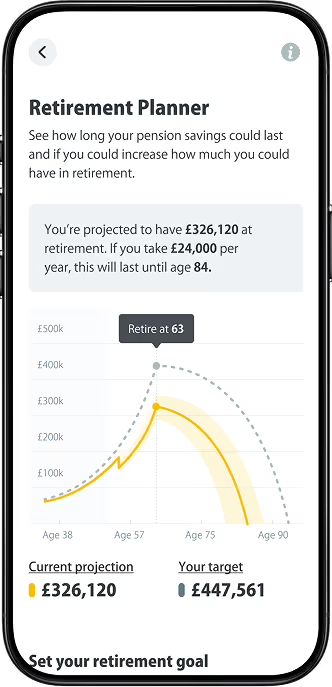
Be pension confident!

Be pension confident!

Combine your old pension pots into one new online plan. It takes just a few minutes to sign up.

Combine your old pensions into one simple plan
Invest with one of the world’s largest money managers
Make paper-free online withdrawals from the age of 55
Pay just one simple annual fee
  • Sign up in minutes
  • Transfer your old pensions into one new online plan
  • Invest with one of the world’s largest money managers
  • Pay just one simple annual fee
Capital at risk
Button with Google Play logo and text 'Get it on Google Play' on a black background.