





Why reaching net zero is cheaper than doing nothing and what it could mean for your pension



Achieving net zero carbon emissions - that’s human-created greenhouse gas emissions and removals being in balance - has been high up on the global agenda for more than a decade.
The Net Zero Strategy was formalised in the 2015 Paris Agreement, an international treaty for combatting climate change. In 2019, the UK became the first major economy to legally commit to net zero by 2050.
According to the Climate Change Committee (CCC), reaching this target is projected to cost around £100 billion. While that might sound expensive, it’s roughly the same amount the UK spent on the energy price shock following Russia’s invasion of Ukraine.
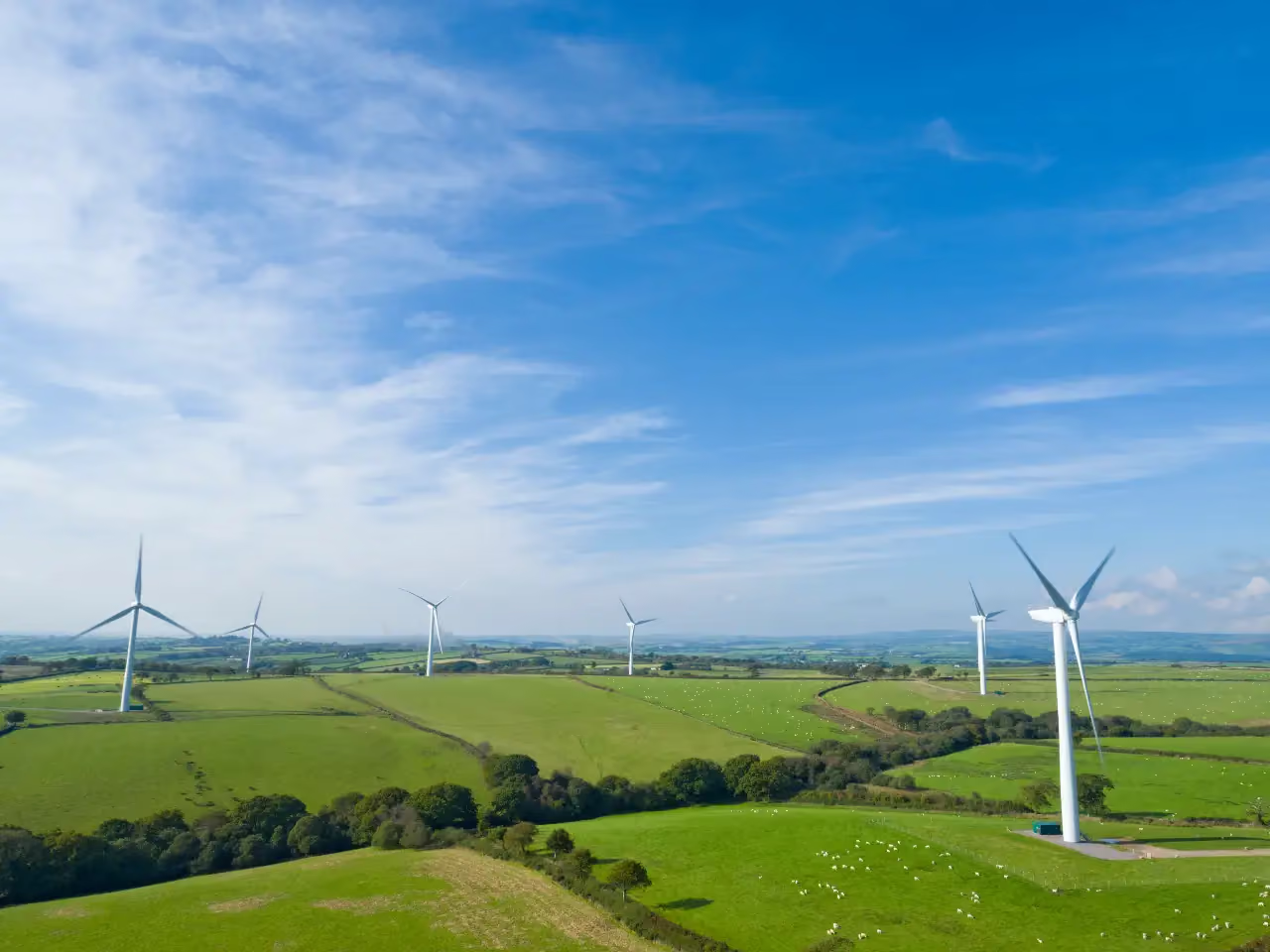
Transitioning from largely imported fossil fuels to domestic renewable energy and green technologies might be beneficial. It could help the UK shield its economy from the price uncertainty that can be triggered by international conflicts - like we’re currently seeing due to the Middle East conflict.
The hidden cost of fossil fuel volatility
The cost of moving to a net zero economy is lower than the potential damage caused by just one major oil or gas price shock. In short, we can either spend £100 billion reacting to a crisis we can’t control, or we can invest £100 billion into a transition that gives us energy independence and long-term stability.
Currently, we’re at the mercy of global oil and gas markets. Instead, investing in a low-carbon economy can create a stable, self-reliant, and ultimately cheaper financial future for the country.
The financial benefits of achieving net zero
Net zero is certainly important for the planet. But the financial benefits make an equally compelling case for the UK investing in the transition:
- Investment returns - for every £1 invested in the transition to net zero, the UK economy is expected to see between £2 and £4 in benefits. That’s a meaningful investment for the national economy.
- NHS and health savings - with cleaner air and healthier lifestyles, there’s a projected £2 billion to £8 billion annual saving for the NHS. This could strengthen the wider economy and support a healthier workforce. In these conditions, investments - including pensions - can thrive.
- Limiting the impact of global events - fossil fuel prices are often dictated by global geopolitics. A low-carbon economy is powered by domestic, renewable energy (such as wind and solar). The cost of this energy wouldn’t spike when there’s uncertainty due to conflict around the world.
{{climate-cta}}
Why this matters for your pension
Most pensions are invested in the world’s biggest companies. Many of these businesses are fossil fuel-dependent, or even fossil fuel producers themselves.
But as we saw after the conflicts in Ukraine in 2022 and the Middle East in 2026, the national economy can be crippled by energy supply shocks. Plus, the potential cost of climate breakdown is estimated to be between £40 billion and £130 billion by 2050. These factors could affect those companies that your pension invests in, which could cause your money to struggle to grow.
Investing in the ‘traditional’ companies carries the risk of stranded assets - those that are no longer valuable or usable. In this case, that might be fuels themselves that have already been extracted but can’t be burned. Or it might be the infrastructure, such as pipelines or plants, which are still in good working order but are no longer necessary.
Stranded assets could be a risk to investors, shareholders, and financial systems, as the loss of value is often not fully priced into company stocks. We could see values for companies that rely on or produce fossil fuels fall as regulations tighten and demand shifts.
Pensions are built for the long-term and savers are usually investing their money for 30 - 40 years, too. As the energy transition would take time, it could increase the likelihood of pension investments being exposed to these dips over time.
Meanwhile, investments in the transition to green, renewable energy could be protected from - and even grow thanks to - the decline in fossil fuel dependence.
How the PensionBee Climate Plan takes action
Transitioning to a green economy might be the key to a more stable financial future for the UK. PensionBee’s Climate Plan is designed to help you invest in companies that are actively preparing for this shift:
- Fossil fuel-free investing - the plan excludes fossil fuel producers, companies with direct fossil fuel reserves, and those heavily reliant on fossil fuel operations (such as some utility companies).
- A 10% annual carbon reduction - it aims to reduce the total intensity of greenhouse gas (GHG) emissions produced by companies in the plan by at least 10% each year.
- Paris-Aligned Benchmark - the plan follows a strict decarbonisation pathway designed to align with the goals of the Paris Agreement to keep the rise in global temperature well below 2°C.
- Focus on financial opportunity - it invests in companies at the forefront of the transition. That may offer opportunities through green incentives, sustainable practices, and alignment with carbon regulations.
- Invests in climate solution providers - as well as avoiding polluters, the plan actively invests more in environmentally friendly companies tackling climate challenges, such as solar energy providers.
- Protects against stranded assets - by moving away from industries that may lose value due to new regulations or shifting consumer preferences, the plan helps protect your savings from assets that could become worth less in a green economy.
- Excludes other harmful industries - beyond carbon, the plan excludes companies involved in tobacco, controversial weapons, gambling, and those misaligned with the UN Sustainable Development Goals.
You can find out more about the PensionBee Climate Plan on our website. Read more about how it works, what it invests in, and common FAQs about the plan.
Have a question? Get in touch!
Do you want to know more about your pension plan with PensionBee? You can check out our Plans page to learn how your money is invested in different assets and locations, or log in to your account (‘BeeHive’) to see your specific plan. You can always send comments and questions to our team via engagement@pensionbee.com.
Risk warning
As always with investments, your capital is at risk. The value of your investment can go down as well as up, and you may get back less than you invest. This information should not be regarded as financial advice.
Period | Market Event | FTSE World TR GBP (%) | 4Plus Plan (%) |
|---|---|---|---|
4Plus Plan’s inception – 6 Sept 2013 | QE Tapering, China Interbank Crisis and its aftermath | -5.44 | -2.41 |
3 Oct 2014 – 15 May 2015 | Oil price drop, Eurozone deflation fears & Greek election outcome | -5.87 | -1.77 |
7 Jan 2016 – 14 Mar 2016 | China’s currency policy turmoil, collapse in oil prices and weak US activity | -7.26 | -1.54 |
15 June 2016 – 30 June 2016 | BREXIT referendum | -2.05 | -1.07 |










%201.png)