










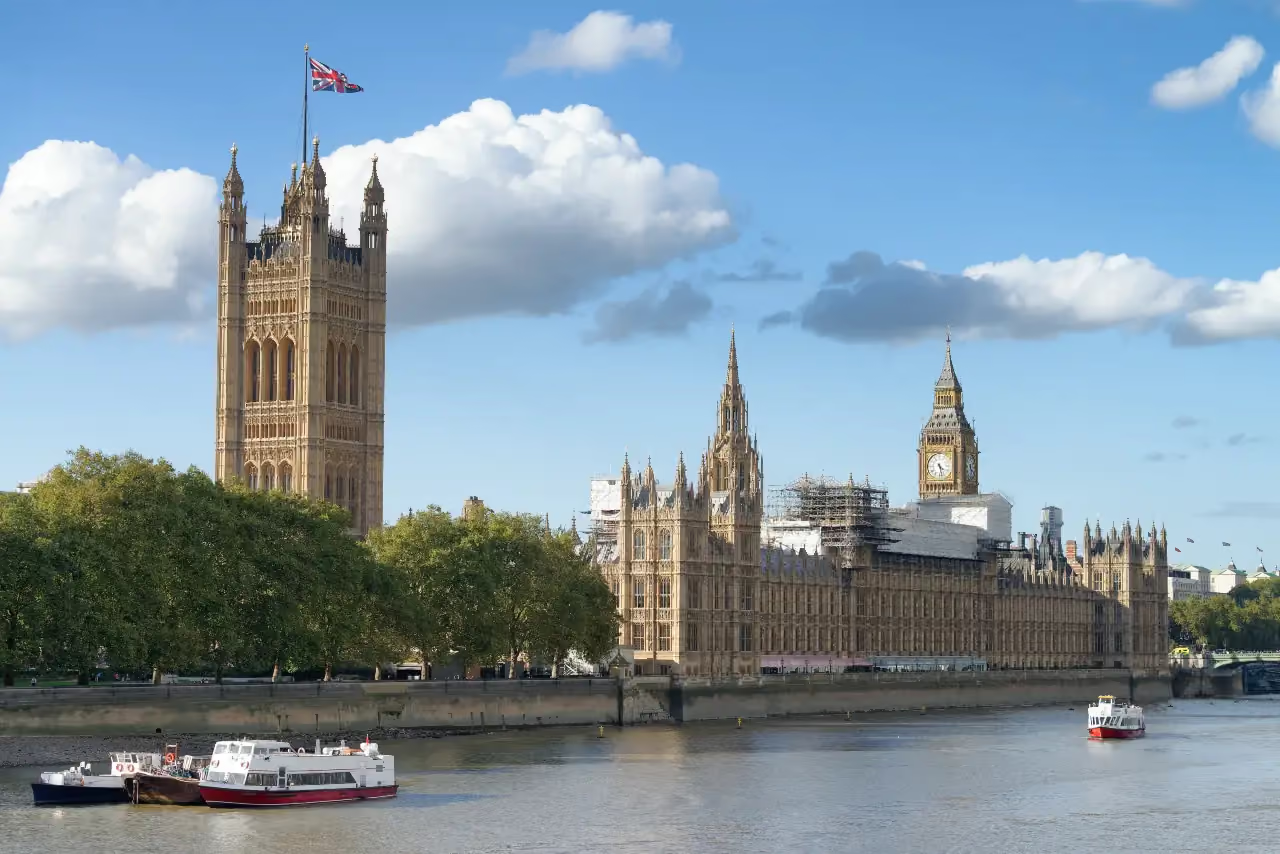
You’ll have no doubt seen the news from Monday morning that Keir Starmer will resign from his role as Prime Minister.
Having won a landslide majority in the 2024 general election, Starmer’s resignation feels early. In fact, he’s the shortest-serving Labour Prime Minister in history.
For now, he’ll stay in post until Labour chooses a new leader. That’ll happen by September at the latest. However, it could be sooner if the party picks a candidate without the need for a leadership contest.
So, what could Starmer’s resignation mean for your pension?
Investors responded softly to the news
When news like this breaks, the main way it can affect your pension is in the movements of the stock and bond markets.
Generally, investors dislike uncertainty and often make changes in response to events like this. This can see stocks and shares dip in value.
It’s also true for government bonds, known as ‘gilts’ in the UK.
Leadership changes can lead to policy changes, affecting how much the government borrows and spends. So, gilt prices and yields can shift as investors react to potential developments as they happen.
But, straight after Starmer’s resignation, markets were fairly calm. Investors had anticipated his decision, meaning there was no bombshell moment to react to.
The FTSE 100 (an index of the 100 largest companies in the UK) flatlined. That suggested that stock market investors were relatively unbothered by the news.
Meanwhile, gilt yields did briefly rise, and the pound dropped slightly against the US dollar.
But shortly after, yields had dipped back down, while the value of the pound climbed back up. That came after former Mayor of Manchester, Andy Burnham, confirmed that he’d throw his hat in the ring for the job.
Wes Streeting, the former Health Secretary, also backed Burnham. With Streeting out of the running, markets were further reassured that there might not be a leadership contest (more on this in a moment).
By lunchtime on Monday, UK bonds were moving in lockstep with other countries, showing no real impact.
We could see some volatility moving forwards
While markets were fairly unfazed by the resignation announcement itself, there could be volatility yet to come. That’s because there’s still uncertainty around what’ll happen next.
Firstly, there’s the all-important detail of who becomes Prime Minister. As mentioned above, Andy Burnham is the first candidate to confirm intent of running for the job.
Whoever takes over, they’ll likely have their own ideas about how to best run the country. When that’s confirmed, we could see a reaction in the markets.
However, for investors, it’s less about who’s in the job. Rather, they’ll want to see a smooth transition of power - ideally without a leadership contest - and a clear vision for the country, no matter who has the reins.
A new Prime Minister could also bring a new Chancellor and investors will keep a close eye on who’ll be taking care of the purse strings. They’ll likely want to see someone known for caution with finances, rather than spending freely or tinkering with tax and pension rules.
This could all influence the bond markets, too. Uncertainty around leadership - particularly if there are calls for a general election - could push up the cost of lending for the UK.
If that were to happen, it could lead to an increase in interest rates across the economy. We might see higher costs for borrowing money on credit cards or mortgages. It could affect pension values and annuity rates, too.
Stay patient, no matter who’s in office
The political landscape matters for pensions. Changes can lead to uncertainty in both the stock and bond markets, which can influence pension balances in the short term.
However, it’s worth remembering that pensions are for the long term. So, no matter who’s in office, it’s key to stay patient and stick to your strategy.
If you’re saving for retirement, continuing to contribute to your pension could keep you on track to build a fund that’ll support you in later life. It can even be helpful to do this when markets are volatile. You could benefit from cheaper investments, actually boosting your pot.
It also tends to be sensible not to switch plans during periods of volatility. You might find that you simply lock in losses that could’ve recovered later.
Meanwhile, this is a reminder of the value of having an emergency fund of one-to-two years’ expenses during retirement.
That way, you can keep enjoying your lifestyle, even if your pension balance does temporarily fall.
Summary
All in all, it’s going to be an important couple of months in the UK as we wait to see what’ll happen next.
If you have any questions about what it might mean for you or your pension, you can get in touch with your account manager (your ‘BeeKeeper’) via phone, email or live chat.
Risk warning
As always with investments, your capital is at risk. The value of your investment can go down as well as up, and you may get back less than you invest. This information should not be regarded as financial advice.
Period | Market Event | FTSE World TR GBP (%) | 4Plus Plan (%) |
|---|---|---|---|
4Plus Plan’s inception – 6 Sept 2013 | QE Tapering, China Interbank Crisis and its aftermath | -5.44 | -2.41 |
3 Oct 2014 – 15 May 2015 | Oil price drop, Eurozone deflation fears & Greek election outcome | -5.87 | -1.77 |
7 Jan 2016 – 14 Mar 2016 | China’s currency policy turmoil, collapse in oil prices and weak US activity | -7.26 | -1.54 |
15 June 2016 – 30 June 2016 | BREXIT referendum | -2.05 | -1.07 |











%201.png)