







How invisible workers can turn self-employment into a pension advantage




Are you running a business, freelancing or juggling gigs? Work has changed. But the pension system hasn't kept up.
Auto-Enrolment has helped millions of employed workers in the UK save for retirement. But it was designed around a traditional type of work: a steady job, a monthly payslip and a clear employer-employee relationship. That’s not how everyone works.
PensionBee’s research shows that people working outside traditional employment, such as freelancers, contractors and small business owners, are often ‘invisible’ to the pension system. This is because they’re typically left out of Auto-Enrolment.
But there are ways to get on top of pension saving.
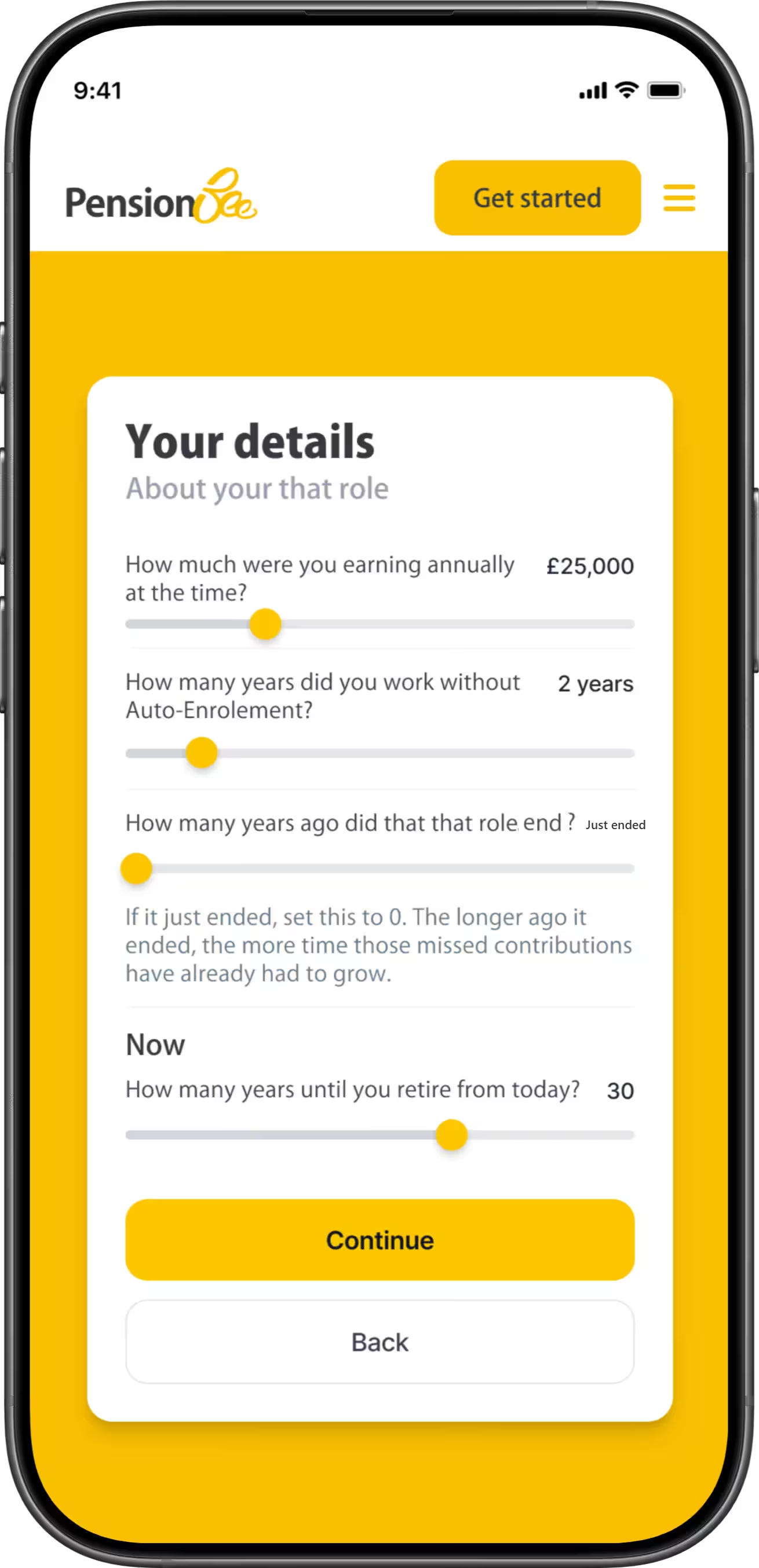
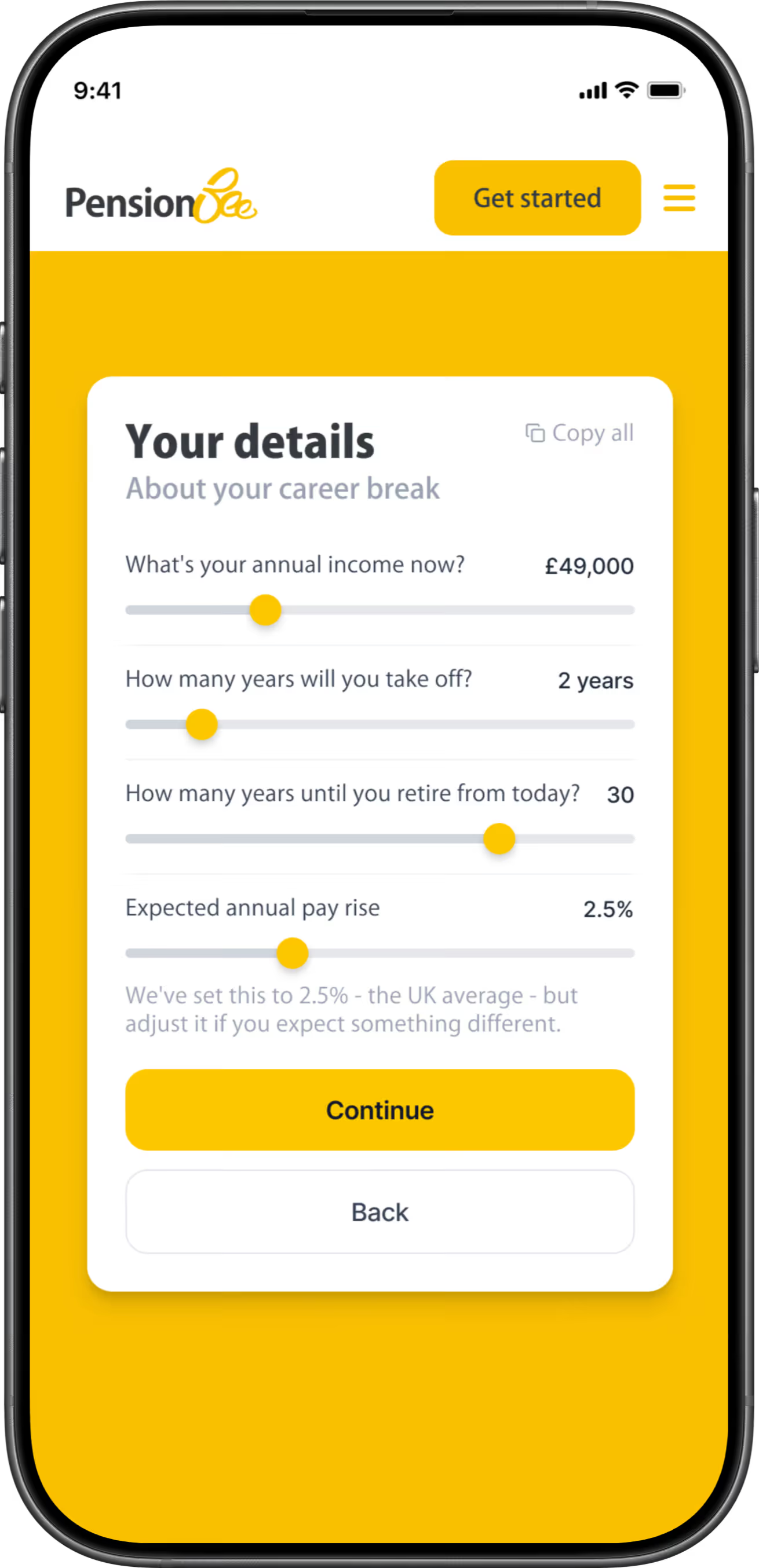
PensionBee's Invisible Workers Calculator helps you put a number on what you might have missed, and start taking steps to close it.
That gives you a helpful starting point. But it’s not the full picture. If you’re effectively your own employer, there are advantages worth knowing about too.
The flexibility advantage
When someone in a salaried job pays into a workplace pension, contributions are usually fixed. They come out of every payslip, on a schedule set by the employer. There's little room to adjust.
But if you're self-employed, you're in control.
- You choose how much to pay in - had a good month? You can contribute more. Going through a quieter period? You can pay less or pause. There's no minimum, and no penalty for changing it.
- You choose when to pay - if you've got a tax bill coming up, you can deal with that first. Then top up your pension later. You can make one-off payments or set up regular contributions, and change them anytime.
- Your pension stays with you - unlike a workplace scheme tied to an employer, a personal pension moves with you. Whether you return to employment, start another business, or take a break, it's still yours.
{{invisible-workers}}
Three tax advantages worth knowing
Not having an employer doesn't mean missing out on support.
Tax relief on personal contributions
Usually, the government adds 25% to eligible personal contributions you make to your pension. Put in £100 and HMRC adds £25 for basic rate tax payers, bringing it to £125. If you're a higher or additional rate taxpayer, you could claim back even more through your Self-Assessment or by contacting HMRC. PensionBee’s Pension Tax Relief Calculator can show how much you could claim on personal contributions.
No National Insurance (NI) on employer contributions
If you run a limited company, your company can contribute directly to your pension. These contributions don't attract National Insurance (NI).
When your company pays you a salary, it pays employer NI on top of that amount at 15% (2026/27). So to put £10,000 in your pocket via salary, it actually costs your company around £11,500. But if the company pays £10,000 directly into your pension instead, there's no NI on top. The full £10,000 goes into your pot, and the company spends exactly £10,000.
In short: the same money goes further when it's routed through your pension rather than your payslip.
Lower your Corporation Tax bill
Pension contributions from a limited company are usually treated as a business expense. This means they can reduce your Corporation Tax bill.
Instead of taking money as salary or dividends, you're putting it into your pension in a more tax-efficient way.
It's worth noting that personal tax relief applies to net relevant earnings. Dividends don't count. If you take a small salary and larger dividends, making employer contributions through your business may be more effective. You may want to speak to an accountant to find the right approach for you.
Is Making Tax Digital (MTD) a pension opportunity?
Making Tax Digital for Income Tax (MTD) came into effect in April 2026 for sole traders and landlords earning over £50,000 a year. Instead of one annual return, you now submit updates every quarter.
The annual threshold is set to fall:
- £30,000 from April 2027; and
- £20,000 from April 2028.
Many people see this as extra admin, but it can work in your favour.
Four times a year, you review your income and outgoings. That regular check-in can prompt a simple question: how much could I put into my pension this quarter? Paying in little and often, instead of rushing at the end of the tax year, can be easier on your cash flow.
What could you actually build?
Missing out on a workplace pension and contributions from an employer can have an impact. But it doesn't mean you can't build a strong pension. Personal contributions, plus tax relief and compound interest, can add up over time.
PensionBee's Pension Calculator helps you see whether your savings meet your retirement goals. You can also adjust your contributions and timelines to see how your pot could be impacted.
The self-employed pension picture
The pension system wasn’t built with self-employed people in mind. That means more of the responsibility sits with you. But it also gives you something most people don’t have: flexibility.
You decide when and how to save. With a PensionBee self-employed pension, you can dial down or pause contributions in quieter months, and increase again when things are going well. There’s room to adjust as your income changes.
If you have gaps, you don’t need to fix everything at once. Start by understanding where you are. Then take one small step, whether that’s setting up a pension, making a first contribution, or checking what you already have.
Over time, those small actions add up. And gradually, your pension becomes less about what you’ve missed, and more about what you’re building.
Risk warning
As always with investments, your capital is at risk. The value of your investment can go down as well as up, and you may get back less than you invest. Tax rules can change and benefits depend on individual circumstances. This information shouldn't be regarded as financial advice.
Period | Market Event | FTSE World TR GBP (%) | 4Plus Plan (%) |
|---|---|---|---|
4Plus Plan’s inception – 6 Sept 2013 | QE Tapering, China Interbank Crisis and its aftermath | -5.44 | -2.41 |
3 Oct 2014 – 15 May 2015 | Oil price drop, Eurozone deflation fears & Greek election outcome | -5.87 | -1.77 |
7 Jan 2016 – 14 Mar 2016 | China’s currency policy turmoil, collapse in oil prices and weak US activity | -7.26 | -1.54 |
15 June 2016 – 30 June 2016 | BREXIT referendum | -2.05 | -1.07 |











%201.png)