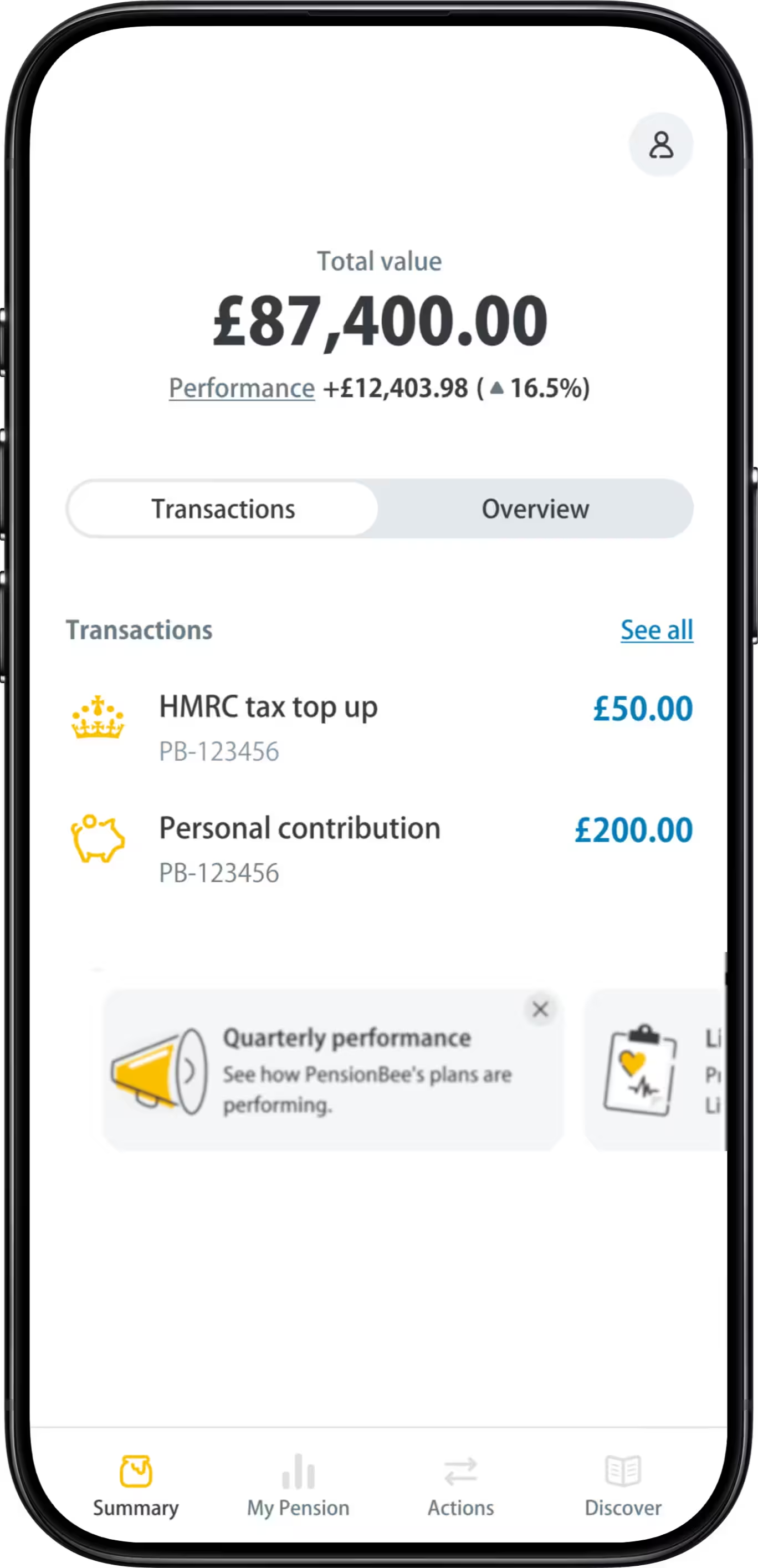




Sign up to our flexible pension plan for the self-employed and contribute as much or as little as you like, as often as you like.
SIPP vs. defined contribution pension: which is the best for self-employed?
Choosing a pension is an important part of retirement planning as a self-employed person. Learn the differences between a SIPP and defined contribution pension in our guide.
SIPPs and defined contribution pensions for self-employed workers
Finding pension options for self-employed people is important if you’re a business owner.
Paying into a pension can be highly tax-efficient. Whether you’re a sole trader or limited company director, you can receive generous tax relief by paying into a pension.
You’ll also create a dedicated retirement savings pot that’s separate from your business. So, no matter what happens to your company, you’ll have money aside for later life.
Self-employed individuals aren’t eligible for Auto-Enrolment like most employees. So, you’ll need to choose from the range of self-employed private pensions available.
One of the decisions you may need to weigh up is whether to pick a Self-Invested Personal Pension (SIPP) or a defined contribution (also known as DC) pension.
There’s a great deal of crossover between these pensions. In fact, a SIPP is a type of defined contribution pension - don’t worry, we’ll explain the details of how this works.
In this guide, learn what SIPP and defined contribution pensions are, and the differences between them so you can understand which might be right for you.
What is a defined contribution pension?
Also known as a ‘money purchase scheme’, with a defined contribution pension, your total savings are determined by how much you pay in. That includes:
- personal contributions;
- contributions made by anyone else (your employer or any third parties); and
- tax relief.
As pension savings are usually invested, the total value will also depend on investment performance.
Most pensions these days are defined contribution, replacing defined benefit (DB) pensions. Also known as ‘final salary’ pensions, these schemes used to be the norm. Now, they’re generally only in the public sector.
You can tax-efficiently contribute to a defined contribution pension in a single tax year up to the annual allowance. This is the limit on the gross amount that can be saved into a pension each tax year without incurring tax charges. It counts across all your pensions - you don’t have a separate annual allowance for each one.
The current standard annual allowance for pension contributions is _annual_allowance (_current_tax_year_yyyy_yy) - this includes personal, employer and any third party contributions. You can also carry forward unused annual allowance from the previous three tax years.
At retirement, you can then usually access your defined contribution pension from the Normal Minimum Pension Age (NMPA). In _current_tax_year_yyyy_yy, this is 55, rising to 57 from 2028.
From then, you can start drawing from your pension, taking as much (or little) as you like.
You can typically take the first 25% tax-free, capped by the lump sum allowance (LSA) (_lump_sum_allowance in _current_tax_year_yyyy_yy). Withdrawals above that threshold will generally be subject to Income Tax at your marginal rate.
Investments within a defined contribution pension
Pension savings are usually invested, aiming to grow your wealth over the long term.
With a defined contribution pension, your provider will usually invest your savings on your behalf. You’ll then pay a fee - often a percentage of your savings - in return.
In most cases, you’ll choose from a range of funds or plans. These will vary in what they offer. For example, that might be the:
- fund’s goal, such as whether it aims for long-term growth or steady, shorter-term returns;
- risk profile, with some plans taking on more investment risk to try and achieve higher returns;
- investments, as some funds will focus on specific sectors, industries, or environmental, social, or governance factors; or
- fees charged for managing and investing your savings.
A PensionBee pension is a defined contribution pension. We offer a range of plans, varying across risk profile and types of investments. For example, our Global Leaders Plan - the default for customers under 50 - is a higher-risk plan, investing in predominantly global stocks and shares.
Meanwhile, the 4Plus Plan is our default for customers aged 50 and over who might be considering accessing their pension sooner as it balances growth and stability.
{{dark-cta}}
What is a SIPP?
A ‘Self-Invested Personal Pension’ (SIPP) is a type of pension in which you have complete control over the investments within it - that’s the ‘self-invested’ part.
Investments you can hold within a SIPP include (but aren’t limited to):
- stocks and shares;
- corporate and government bonds;
- investment and unit trusts;
- exchange-traded funds; and
- cash.
You can also hold commercial property within a SIPP. This can be effective for business owners, as you could use your SIPP savings to buy your company’s premises.
This secures them for the business, rather than paying rent to a landlord. Instead, you can pay rent from your business into your SIPP.
Bear in mind that tax rules around moving property into a SIPP can be complex, especially regarding Capital Gains Tax (CGT). Make sure you fully understand these rules before you buy property in a SIPP. It may be worth taking professional tax advice first.
SIPP fees can also vary across providers. You’ll usually face a range of charges with a ‘full SIPP’, which could include:
- a set-up fee;
- an annual management charge;
- trading fees each time you buy or sell investments;
- admin charges for drawing from your pension; and
- exit fees if you move your pension to another provider.
There are lower-cost versions, with smaller or no set-up fees and lower management charges and trading fees. However, you’ll usually be limited as to what you can invest in.
Is a SIPP a defined contribution scheme?
As mentioned previously, a SIPP is actually a form of defined contribution pension.
Like all defined contribution pensions, the total savings in a SIPP when you retire will be determined by how much you pay in and the performance of your investments.
The main points of difference between SIPPs and other defined contribution pensions are:
- investment flexibility; and
- charging structures.
Otherwise, SIPPs basically work like any defined contribution pension. You have the same standard annual allowance, your contributions may attract tax relief, and you’ll be able to access your fund from the NMPA (55 in _current_tax_year_yyyy_yy, rising to 57 from 2028).
Key differences between SIPPs and defined contribution pensions
Investment options
You’ll usually pick a fund or plan with a defined contribution pension. But you’ll choose the specific investments within a SIPP.
A SIPP’s greater flexibility can be useful if you want more control over how your savings are invested. And, the ability to hold commercial property can be particularly useful for business owners.
However, you’ll need to be confident that you can invest wisely. Making mistakes when investing your retirement savings could affect the lifestyle you can enjoy in future.
Cost
Defined contribution pensions often have simple charging structures. Meanwhile, SIPPs are usually more complex and expensive.
It’s important to fully understand how you’ll be charged for any pension you hold. But this is especially important with a SIPP, as these costs could eat into your savings.
Time and input vs. flexibility
Because defined contribution pension providers carry out investment decisions and admin, they tend to need less input. The downside is that you have less flexibility over how your pot is invested. That said, you can usually choose the pension fund or plan, and withdrawals work similarly for both pension types.
By contrast, you have greater flexibility over a SIPP. But you’ll need to put in more time and work in managing your investments. Make sure you’re comfortable with this before opening one.
Combining pensions
Throughout your career, you might have accumulated many workplace or personal pensions. With PensionBee, you can consolidate these into one pot.
This can help you see all your retirement savings in one place. It can also lower fees, as you’ll be paying just one simple annual fee with PensionBee, which’ll depend on the plan you choose.
Before you consolidate, it’s worth checking whether you have any extra benefits with your current pension. Some may offer enhanced annuities or a larger tax-free portion. You may also face exit fees and charges. Double-check with your providers before you move any of your savings.
If combining your pots is right for you, then PensionBee could be a good home for your savings. Through our self-employed pension, you can invest in any of our plans, in line with your goals. And, if you’re a limited company director, you can make employer contributions to your pot, too.
Risk warning
Please note that tax rules change regularly, and the actual tax benefits you receive will depend on your individual circumstances. If you’re not sure, please seek professional advice.
As always with investments, your capital is at risk. The value of your investment can go down as well as up, and you may get back less than you invest. This information should not be regarded as financial advice.
Last edited: 17-03-2026
Choose a self-employed pension that puts you in the driving seat
When investing, your capital is at risk