










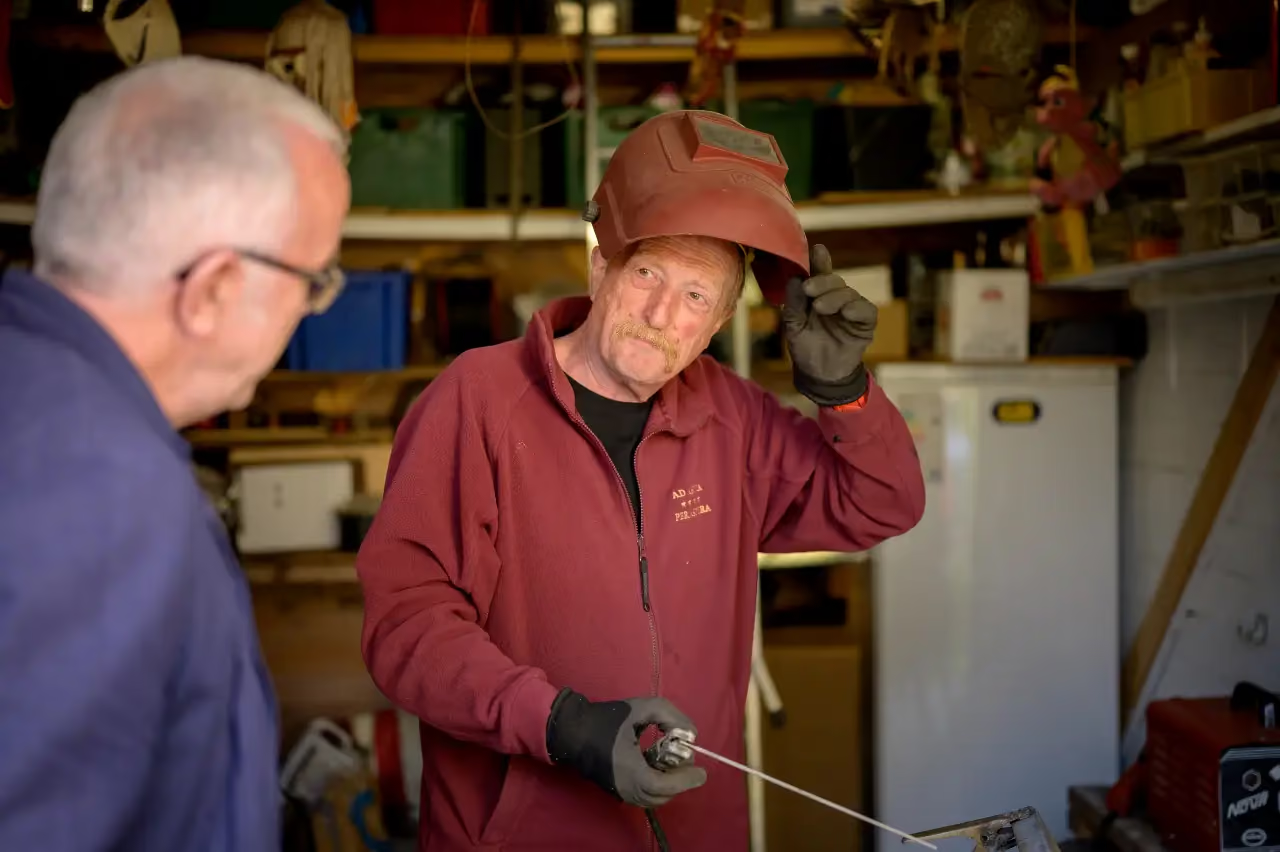
Retirement has many benefits. You can do whatever your budget and health allow, you no longer have to work, and you can now make the rules.
However, for some people, retirement isn’t always the answer. They may realise they have less money than planned. Or, they could miss the routine or social interaction of a job.
The average retirement age in the UK is around 64.7 for women and 65.8 for men, yet many people choose to stop work before this age. Although you can’t receive your State Pension until 66 (rising to 67 from 2028), you can take most private pensions from 55 (rising to 57 from 2028). This can give you an income while you’re no longer working before you hit State Pension age.
Going back to work after you’ve officially retired, also known as ‘unretiring’, may be by choice or a financial necessity. If you’re considering it, you’re not alone.
One study showed that around 34% have already returned to work because of the rise in living costs, while 29% of UK retirees are considering it.
But what happens if you go back to work after retiring? Can you still receive benefits such as your State Pension, how much more can you continue to contribute to a private pension, and what are the tax rules?
Can I start working again after I’ve officially retired?
Yes, you can go back to work even if you’ve retired. There are no rules to say you can’t and it’s completely up to you what type of job you go back to. It can be full or part-time, there are no restrictions on the hours you work, and you can choose whether it’s paid or unpaid.
What are the pros and cons of going back to work after retirement?
Before we look at the financial impact of returning to work after you’ve retired, there are lots of positive reasons and a few drawbacks to consider too.
Pros
- Higher income - returning to paid work will give your overall income a boost.
- New skills - if you’re going into a new job, you may learn a new range of skills which can be a great way to keep your brain active.
- Social benefits - depending on the work you’re doing, you might enjoy the social side of interacting with colleagues.
Cons
- Tax and impact on your pension - you may pay more tax if you start earning while taking your pension.
- Health - while many retirees are in excellent health, it’s important to consider the impact of returning to work on your health and wellbeing as you get older.
- Less free time - once you commit to returning to work, you’ll have less free time to enjoy.
{{main-cta}}
Will I still receive the State Pension if I return to work?
You can still claim the State Pension if you’re working. The current State Pension age is 66, rising gradually to 67 between April 2026 and April 2028.
If you choose not to take your State Pension, you can defer it. In return, you’ll receive larger weekly payments when you do decide to start taking it again.
Note that if you’ve already started receiving your State Pension, you can only defer it once.
Do I need to pay National Insurance if I am earning again?
Once you reach State Pension age, you’re no longer required to pay employee National Insurance contributions (NICs) on the money you earn.
Will I still be able to take my pension if I return to work?
If you’ve stopped working, retired, and then go back into full or part-time paid work, this may have an impact on your pension. Contact your pension provider to see where you stand, as what happens will depend on things like how much you now earn and your existing pension pot.
You can continue to receive your pension if you want to. But, the money you receive will typically be added to your earnings and counted towards your overall income. This may push you into a higher tax bracket, so you may have to pay more Income Tax.
Can I put the same amount of money into my pension if I go back to work?
You can continue taking money from your private pension and go back to work. However, if you want to keep making contributions to your pot, there may be a change to the amount you can put away. This is down to the ‘annual allowance’.
The annual allowance is the limit on the gross amount that can be saved into a pension each tax year without incurring tax charges.
The current standard annual allowance for pension contributions is £60,000 (2026/27) - this includes personal, employer and any third party contributions.
But if you’re already flexibly taking money from your pension and want to continue making contributions to the pot, your annual allowance will normally be reduced. This is known as the money purchase annual allowance (MPAA) which is set at £10,000 (2026/27).
However, there are many options when it comes to where to put any extra money you’re earning. You could be using it for everyday living costs, putting it into a savings account, investing the money, or gifting it to relatives, for example.
Summary
Nothing stops you from returning to work after retiring. Whether you miss the routine and social side of work, or you want to earn some extra cash, you’re free to return to work in whatever role you want, full or part-time.
Before you take the plunge, it’s important to keep in mind that you may pay more tax. And, if you’ve already accessed your pension, your tax-efficient contributions could be reduced.
It’s also worth asking yourself whether you’re happy to lose some of the freedom you’ve enjoyed having given up work.
As long as you’ve considered these factors, returning to work can be a great way to supplement your income, spend time with other people, and perhaps even learn some new skills.
Rebecca Goodman is a freelance personal finance journalist.
Risk warning
Please note that tax rules change regularly, and the actual tax benefits you receive will depend on your individual circumstances. If you’re not sure, please seek professional advice.
As always with investments, your capital is at risk. The value of your investment can go down as well as up, and you may get back less than you invest. This information should not be regarded as financial advice.
Period | Market Event | FTSE World TR GBP (%) | 4Plus Plan (%) |
|---|---|---|---|
4Plus Plan’s inception – 6 Sept 2013 | QE Tapering, China Interbank Crisis and its aftermath | -5.44 | -2.41 |
3 Oct 2014 – 15 May 2015 | Oil price drop, Eurozone deflation fears & Greek election outcome | -5.87 | -1.77 |
7 Jan 2016 – 14 Mar 2016 | China’s currency policy turmoil, collapse in oil prices and weak US activity | -7.26 | -1.54 |
15 June 2016 – 30 June 2016 | BREXIT referendum | -2.05 | -1.07 |











%201.png)