











Major life changes can affect your finances in ways you might not expect. Starting a new job, moving home, getting married, or welcoming a child or grandchild can all change how you earn, spend, and save.
There are other less positive but common things that can happen too, like divorce or bereavement. These can also affect your financial behaviours.
Yet it's easy for important financial tasks to slip down the priority list during busy times.
Taking a little time to review your finances can help make sure your money still reflects your current circumstances. Here are five financial checkpoints to consider after a major life change.
1. Review your budget and savings
A major life change can affect both your income and your spending. You might be earning more in a new job, paying higher household bills after moving, or adjusting to the costs of raising a family. Taking a fresh look at your budget can help you understand where your money’s going and whether your savings plan still feels realistic.
- Review your monthly income and spending - that way, you can see how your finances have changed.
- Check whether you're still able to save regularly - even small amounts each month add up.
- Look at your emergency fund - think about whether it still reflects your current circumstances. Many people aim to build enough savings to cover three-to-six months of essential living costs. If you’re in retirement, it can be sensible to save six-to-12 months expenses. That gives you income that you can draw on if market volatility sees your pension value temporarily fall.
- Consider adjusting your monthly budget - apps like Snoop and HyperJar can help you track your spending.
2. Check your pension
Milestones like starting a new job or becoming a parent could have a knock-on effect on your pension. Taking a few minutes to review your pension can help you understand where your retirement savings stand.
- Check that pension contributions have started - find out whether you're eligible for Auto-Enrolment, where your employer must enrol you into their workplace pension. If you earn below the eligibility threshold, you can still ask your employer to join the scheme. It's also worth asking whether your employer’ll match any extra contributions you make.
- Consider paying into a personal pension - this is especially important if you've become self-employed, as you won’t have an employer who enrols you into a pension or makes contributions on your behalf.
- Review any pensions from previous employers - if you've built up several small pension pots over the years, you could combine them so they’re easier to manage.
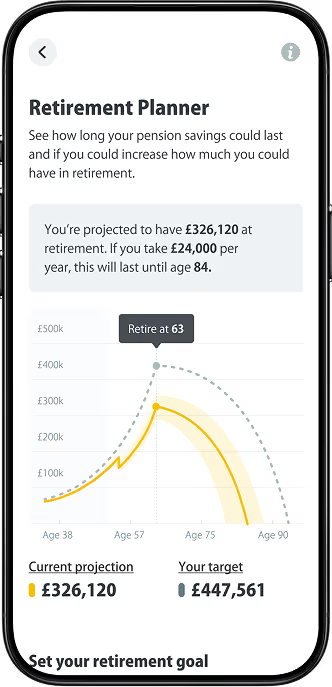
- Review your pension contributions - if your income’s changed, it’s worth checking that what you’re paying into your pension still fits your long-term goals. Tools like PensionBee's Pension Calculator can help you understand the impact of your contributions over time. Even increasing contributions by 1% can make a real difference by retirement.
{{main-cta}}
3. Review your insurance and protection
When your life changes, so can the level of financial protection you need. If you’ve recently bought a home, got married or divorced, or started a family, now’s a good time to check your cover and see if it needs adjusting.
- Review your life insurance - check whether the level of cover still suits your circumstances and any dependants you have.
- Check your income protection - this type of insurance may provide an income if you're unable to work because of illness or injury.
- Look at your home and contents insurance - if you've recently moved house or bought valuable new items, your cover may need updating.
- Consider whether you need critical illness cover - this can pay out a tax-free lump sum if you're diagnosed with certain serious illnesses.
4. Update your financial records
You may need to update key financial records, such as who you've nominated to receive your pension, your contact details, or your will, after a major life event. Keeping these records up to date can help avoid confusion later on.
- Check your pension beneficiaries - these are the people you've nominated to receive your pension if you die before taking it. You could review them after getting married, divorced, or welcoming a child. PensionBee customers can do this quickly and easily via the app.
- Review your will - if your family or financial circumstances have changed, it may be worth checking that it still reflects your wishes.
- Update your contact details - if you've recently moved home or changed your name, let your pension provider and bank know so your records stay up to date.
- Keep your records together - storing important financial documents in one place can make it easier to find what you need.
5. Check your priorities
When you reach a milestone, it can be a good time to think about what matters most to you. A new job, home, or having kids might change what you're saving for or how you want to manage your money. Taking a step back can help make sure your financial plans match your long-term goals.
- Think about your short and long-term goals - your priorities may have changed since your life event, whether that's buying a home, paying off debt, or planning for retirement.
- Look at your monthly budget - if your priorities have changed, you could move more money towards the goals that matter most.
- Consider reviewing your financial plan each year - a regular check-in can help keep your finances aligned with any changes in your life.
- Take things one step at a time - you don't need to update everything at once. Small changes can build up over time.
Keep your finances on track
Major life changes often bring new priorities. Taking the time to review your finances can help you spot anything that needs updating and give you a clearer picture of where you stand.
You don't need to tackle every checkpoint at once. Even a few small reviews after a milestone event can help keep you on track towards your long-term financial goals.
Katie Sims is a Freelance Journalist and has been writing since 2021. She has a keen interest in financial wellness for women, and hopes to make money topics simple and accessible. Holding an MA in Media and Journalism, her work has been featured in Marie Claire, Woman & Home, Liz Earle Wellbeing, Tom’s Guide, and many more.
Risk warning
As always with investments, your capital is at risk. The value of your investment can go down as well as up, and you may get back less than you invest. Past performance isn't a guide to future performance. This information should not be regarded as financial advice.
Period | Market Event | FTSE World TR GBP (%) | 4Plus Plan (%) |
|---|---|---|---|
4Plus Plan’s inception – 6 Sept 2013 | QE Tapering, China Interbank Crisis and its aftermath | -5.44 | -2.41 |
3 Oct 2014 – 15 May 2015 | Oil price drop, Eurozone deflation fears & Greek election outcome | -5.87 | -1.77 |
7 Jan 2016 – 14 Mar 2016 | China’s currency policy turmoil, collapse in oil prices and weak US activity | -7.26 | -1.54 |
15 June 2016 – 30 June 2016 | BREXIT referendum | -2.05 | -1.07 |












%201.png)