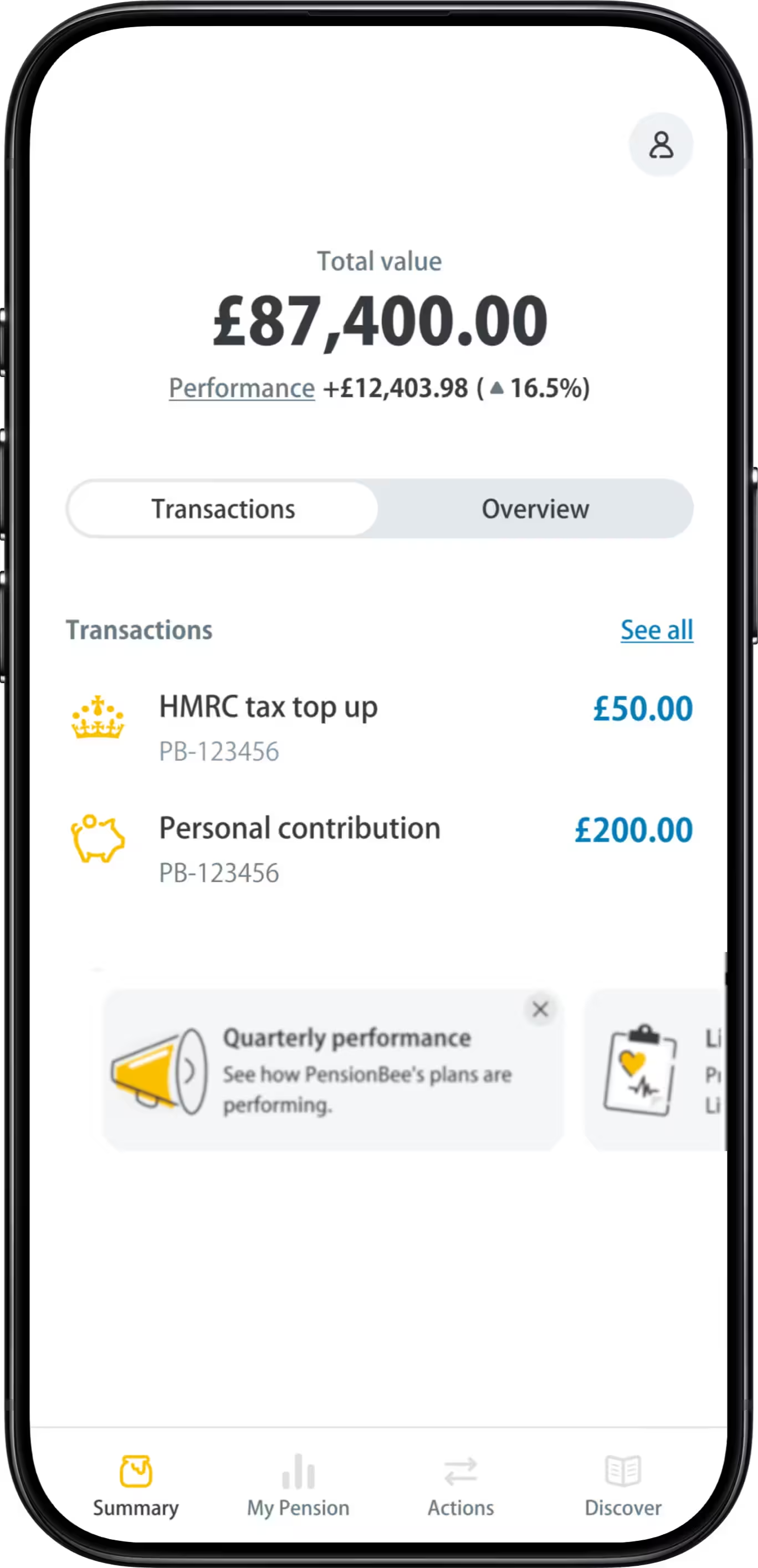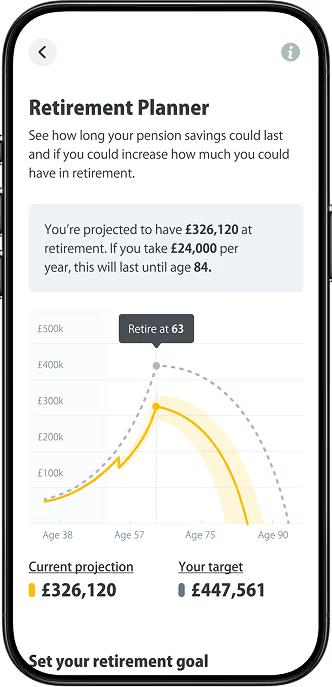




Sign up to our flexible pension plan for the self-employed and contribute as much or as little as you like, as often as you like.
Retirement planning as a self-employed person
When you work for yourself, you get to choose your hours, your clients and even your office view. But there’s one thing you don’t automatically get – a workplace pension. Without an employer setting money aside on your behalf, your future financial security depends on you.
That’s why planning for retirement as a self-employed person is so important. The earlier you start, the easier it is to build up a pot that supports the lifestyle you want later on.
The importance of retirement planning
Around 4.2 million* people in the UK are self-employed, yet fewer than one in five contribute to a pension**. Unlike employees, there’s no Auto-Enrolment or employer top-up, meaning it’s down to you to plan and save.
Most self-employed people are still entitled to the State Pension if they’ve paid enough National Insurance, but it may only cover the basics. Building additional savings or a pension alongside it can help you enjoy more freedom later in life.
Even if retirement feels far off, time is your biggest ally. Regular contributions, even small ones, can grow significantly thanks to investment returns and tax relief. For many, a self-employed pension is the most effective way to do this, as it’s designed to grow over the long term while giving you valuable tax benefits.
What are your options if you’re saving for retirement?
The good news is that self-employed people have several flexible options for saving towards retirement. The right one depends on your age, income and how hands-on you want to be.
Here are some of the best retirement options for self-employed people, and how they work.
A personal pension you manage yourself
A personal pension lets you save into a private pot that’s invested on your behalf. You can choose from:
- Stakeholder pensions – simple, low-cost plans with capped fees.
- SIPPs (Self-Invested Personal Pensions) – for those who want greater control and a wider choice of investments.
You’ll receive 20% tax relief automatically on contributions (more if you’re a higher or additional rate taxpayer). And you can pay in up to _annual_allowance a year or 100% of your earnings, whichever is lower (_current_tax_year_yyyy_yy).
This flexibility makes a personal pension ideal if you want to contribute when business is good and pause when things are quieter.
{{dark-cta}}
A Lifetime ISA if you’re under 40
If you’re aged 18-39, a Lifetime ISA (LISA) can also help you save for retirement. You can contribute up to £4,000 a year, and the government adds a 25% bonus, meaning an extra £1,000 annually if you pay in the maximum amount (_current_tax_year_yyyy_yy).
However, you can only access the money early if you’re buying your first home. Otherwise, you’ll pay a penalty before age 60. The annual limit is also lower than a pension’s.
A LISA can complement a pension but isn’t usually a replacement, as the contribution limits are lower.
Flexible savings options
If you’re not quite ready to commit to a pension, there are other ways to build your future nest egg. ISAs, regular savings accounts and investment platforms offer flexibility and easy access, though they don’t come with pension-style tax relief.
The key is to start somewhere. Saving regularly, even small amounts, helps you form the habit. You can find out more in our article Best ways to save for retirement.
How much should I save for retirement?
There’s no single magic number when it comes to retirement savings for self-employed people. It all depends on your income, lifestyle goals and how long you’ve got until retirement. A good rule of thumb is to aim for half your age as a percentage of your income.
For example, if you’re 30 and earning £35,000, saving around 15% (£5,250) each year could put you on track for a comfortable future.
If that feels too high, start smaller. Consistency matters more than perfection. Even saving £100 a month over 30 years could grow to over £75,000, assuming a 5% annual return.
How to save for retirement with an irregular income
One of the biggest challenges freelancers, contractors and self-employed people face is inconsistency. When your income fluctuates, saving regularly isn’t always easy.
A flexible approach helps:
- save a set percentage of your income, rather than a fixed amount;
- Increase contributions in strong months and scale back when cash flow is tight;
- set up automatic payments when possible to remove the guesswork; and
- keep an emergency fund separate so you’re not tempted to dip into your pension.
Many personal pension providers allow you to pause contributions whenever you need to.
Don’t miss out on tax relief
Tax relief is one of the biggest advantages of saving into a pension. Every time you contribute, the government adds money too.
So, if you pay £80 into your pension, HMRC adds £20, turning it into £100 automatically.
If you’re a higher rate taxpayer, you can claim an extra 20-25% through your Self-Assessment, meaning your pension contributions could cost you even less overall.
That’s why for many self-employed people, contributing to a pension is one of the most tax-efficient ways to save.
Start retirement planning today
You don’t need a steady salary or a huge budget to plan for retirement. What matters is getting started. Here’s how to take your first steps:
- check your income patterns and decide what you can afford;
- use a pension calculator to estimate your future pot;
- consider setting up a PensionBee pension for simplicity and flexibility;
- automate your contributions to stay consistent; and
- review your plan annually and adjust it as your business grows.
Retirement might feel like a lifetime away, but future-you will thank you for starting now. With the right plan, a flexible pension and the confidence to take control, you can look forward to a retirement that’s every bit as independent as your career.
*“The Self-Employed Landscape 2023”, Association of Independent Professionals and the Self-Employed (IPSE).
**“Challenges for the UK pension system: Past, present and future”, Institute for Fiscal Studies (IFS) Report R255, April 2023.
Risk warning
As always with investments, your capital is at risk. The value of your investment can go down as well as up, and you may get back less than you invest. This information should not be regarded as financial advice.
Last edited: 08-05-2026
Choose a self-employed pension that puts you in the driving seat
When investing, your capital is at risk