



PensionBee's guide to semi-retirement
Semi-retirement can offer the flexibility for you to work less as you enter your retirement years and may be accessing your pension. Find out what you need to know about semi-retirement in this guide.
How to successfully semi-retire
Retirement is often a watershed moment. Our jobs can define a great deal of our lives, so the shift from working to life without it is understandably significant.
A big part of retiring is knowing when the time is right, especially as it’s effectively your decision.
There’s no formal ‘retirement age’ in the UK. Currently, the State Pension age is _state_pension_age (rising to _pension_age_from_2028 in 2028). And, you can usually access your pensions at 55 (rising to 57 in 2028).
But these aren’t mandated retirement ages. In fact, provided that you can afford your lifestyle, you could retire at 30. Or, you could continue working into your 70s and beyond.
This flexibility has opened up a range of retirement options for UK savers. In particular, ‘semi-retirement’, a trend that’s become increasingly popular, with 10% of 40-75-year-olds describing themselves as ‘semi-retired’ in 2024.
In this guide, find out what it means to be semi-retired, the pros and cons of this option, and a handy list of tips to help if you’re thinking about semi-retiring.
What is semi-retirement?
Semi-retirement usually refers to moving from full-time work towards retirement, typically by reducing your working hours. It’s sometimes referred to as ‘flexi-retirement’.
Semi-retiring can be a good option if you want to explore life without work before committing to retiring fully. It offers an alternative to the traditional, permanent retirement, where you finish work on Friday and wake up retired on Monday.
Instead, you can gently transition into retired life, slowly moving away from full-time work.
Pensions being more accessible has helped with this. The pension freedoms legislation introduced in 2015 means you can now usually access your pensions from 55 (rising to 57 in 2028).
You can typically take the first 25% tax-free (up to _lump_sum_allowance in _current_tax_year_yyyy_yy). You can take this as a single lump sum, multiple smaller lump sums over time, or as part of regular withdrawals where 25% of each is tax-free.
Once you’ve used this sum, anything else you draw - either as income or lump sums - is potentially taxable, with your tax rate depending on your total income.
This gives you more flexibility in how you use your savings to achieve your ideal lifestyle.
How many hours do you work a week in semi-retirement?
You could be considered semi-retired if you shift to part-time hours or fewer. In the UK, that’s usually between 20-25 hours a week or less.
That said, semi-retirement usually also involves a broader lifestyle change. Alongside reducing your working hours, when semi-retiring, you’ll generally fill that time by pursuing your later-life goals.
It often also involves accessing your pension, usually to supplement your income once you’re working less. And, because you can typically access your pension from 55 (rising to 57 in 2028), you’ll obviously have to be later on in your career before you can semi-retire.
As a result, there’s no set number of hours that define semi-retirement. Even going to four days a week and supplementing your income from your pension could be considered semi-retiring.
How is semi-retirement different from reducing my working hours?
A reduction in working hours doesn’t necessarily mean you’re semi-retired. It could be entirely unrelated to your retirement plans, and you might even intend to return to full-time work later.
There are a few factors that might indicate that you’re semi-retiring specifically. This could include if you:
- no longer need the income from a full-time role, as you’ve built enough savings for the future;
- plan to or are already supplementing your income from your pension savings; or
- intend to fully retire in the near future, such as in the next few months or years.
However, if you cut your working schedule but don’t plan to stop entirely, you might be considered a part-time worker, or simply having reduced your hours.
Why would someone opt for semi-retirement?
There are various potential benefits of partially giving up work. However, there are also potential drawbacks to consider.
Here are a few advantages and disadvantages to think about.
Advantages of semi-retirement
- You might be able to extend your career - remaining in a role you love and continuing to progress while reducing how much you work, especially as you get older.
- You’ll have the flexibility to enjoy retirement earlier - using the time to start achieving some of the things you’ve always wanted, whether that’s travelling, exploring a new hobby, spending time with friends and family, or anything else.
- You can get a sense of what retirement will be like without giving up work entirely - giving you the chance to transition into this new life stage at your own pace without committing to permanent retirement.
Disadvantages of semi-retirement
- You could end up paying more tax, depending on your earnings - while you can usually take the first 25% of your pension tax-free, the rest is typically taxed as earnings so, if your pension withdrawals take you up and above your previous earnings, you could pay more tax than before.
- Your tax-efficient contributions to your pension could be limited - as accessing your pension flexibly may trigger the money purchase annual allowance (MPAA), reducing the amount you can tax-efficiently contribute each tax year from _annual_allowance to _money_purchase_annual_allowance (_current_tax_year_yyyy_yy).
- You’ll need to be sure that you can afford to work less and start drawing from your pension - if you end up taking your pension too quickly, you could run out of money in retirement and be forced to return to work.
{{main-cta}}
How old should I be for semi-retirement?
As there’s no set ‘retirement age’ in the UK, there’s no minimum age for semi-retirement. Nor is there a ‘good’ age to semi-retire - it’s more about when you’re financially able to achieve the lifestyle you want in later life, and if you feel ready to give up work.
The main restriction to keep in mind here is that you usually can’t access your pension before 55 (rising to 57 in 2028). So, if your semi-retirement plan involves using your pension savings to supplement your income, remember that you’ll need to reach that minimum age first.
Ultimately, it comes down to what’s right for you and your circumstances, both emotionally and financially.
How to plan for semi-retirement
If semi-retirement sounds like it would suit you, then it’s sensible to create a plan before you do so.
These tips could help you plan for a successful semi-retirement.
4 practical tips for semi-retirement
- Think about your finances
Make sure you have enough saved and can afford to semi-retire. You could boost your pension contributions to give yourself the best chance of achieving the retirement you want. You could also consolidate pensions from previous jobs into one pot. By putting your savings in one place, you’ll have a better idea of how much you have for supporting your lifestyle. You’ll also reduce the admin of dealing with multiple providers, and you could pay less in fees, too.
- Speak to your employer
Semi-retirement is a personal choice, but it’ll affect your employer. So, it’s worth speaking to them first and finding out what’s possible.
- Plan how you’ll spend your time
It’s sensible to think about how you’ll spend your new free time, so think about what matters to you and what you want to do.
- Talk to your friends and family
Discussing later life with those around you, especially your spouse or partner, can help you figure out what works best for you.
Summary
Semi-retirement gives you the opportunity to reach your later-life goals, with a gentler transition into this new stage.
If you want to boost your pension contributions or bring your savings together ahead of full or semi-retirement, PensionBee can help.
With a PensionBee pension, you can set up a new pot, consolidate your pensions, and enjoy flexible withdrawals (from 55, rising to 57 in 2028).
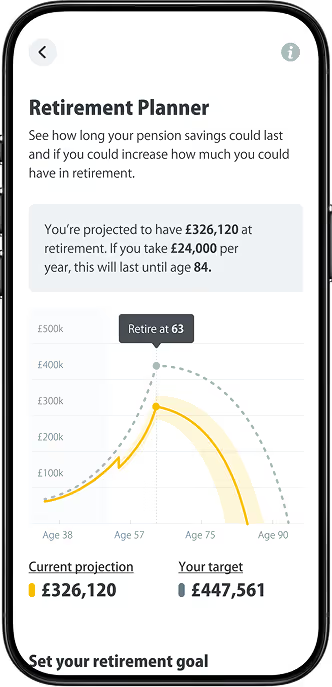
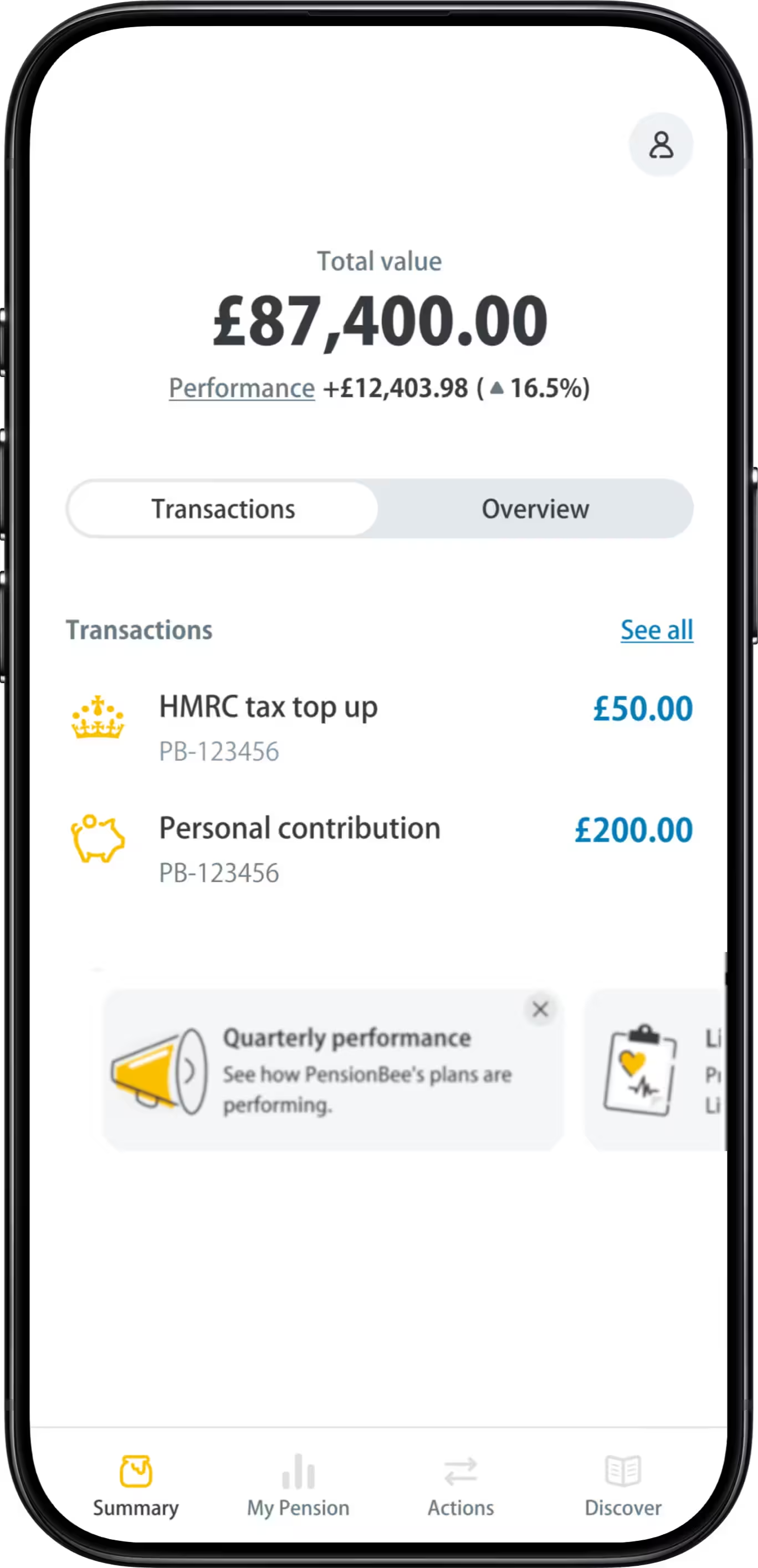
Then, you’ll be able to view your pension balance and manage your savings in your online account (your ‘BeeHive’), allowing you to see how much you have and what you can afford in semi-retirement.
Risk warning
As always with investments, your capital is at risk. The value of your investment can go down as well as up, and you may get back less than you invest. This information should not be regarded as financial advice.
Last edited: 19-02-2026
.webp)