







A takeaway after a long day, a new book or a spontaneous trip to the cinema. Little treats can make day-to-day life feel more enjoyable, and they rarely feel like a big financial commitment.
In fact, research from Capgemini found that 71% of consumers worldwide turn to small treats to help them cope with financial stress. While spending money to ease financial worries might seem counterproductive, it’s easy to see the appeal. Small purchases can give us an immediate sense of reward, offering a temporary mood boost when bigger financial goals feel out of reach.
It's part of what's become known as the 'little treat economy'. And with seasonal sales, targeted advertising and exclusive online offers, there’s no shortage of opportunities to treat ourselves.
But as little treats become part of our everyday spending habits, how can we balance enjoying our money today with saving for the future?
The appeal of little treats
When money's tight, you might expect people to cut back on life's luxuries. But our spending habits aren't always driven by financial circumstances alone.
There's a theory known as the 'lipstick effect', which suggests that demand for affordable luxuries may rise during periods of economic uncertainty.
A study published in the Journal of Behavioral and Experimental Economics looked at spending habits during the 2007-2009 financial crisis. It found that women aged 18 to 40 increased their spending on cosmetics while reducing their spending on clothes.
The idea is that while we might put off bigger purchases when we're worried about money, we're not necessarily willing to give up life's smaller pleasures.
There's a psychological element too. Even the anticipation of buying something can activate the brain's reward system, which involves a chemical called dopamine. The excitement of finding a bargain or waiting for a delivery can feel rewarding in itself, even before we've used what we've bought.
And in our digital world, with shopping accessible at our fingertips, acting on that feeling has never been easier.
When little treats become a spending habit
From browsing online shops at lunchtime to scrolling through social media in the evening, opportunities to spend are everywhere.
Government research published in November 2026 highlights how online retailers influence spending decisions, from personalised recommendations to messages about a product’s popularity.
During sales events like Black Friday, countdown timers and low-stock alerts can create a sense of urgency. Yet research from Which? found that only 22% of the deals it analysed were exclusively at their lowest price during Black Friday.
Getting a good deal can feel like a financial win. But there's a difference between saving money on a planned purchase and buying something simply because it's on sale.
{{main-cta}}
What could your spending be worth in retirement?
According to Barclays, Black Friday shoppers were expected to spend an average of £430 in 2025. Research from PensionBee shows that investing that same amount in a pension each year for 27 years could build a pot worth more than *£20,000.
A survey of 1,000 UK adults planning to shop in the Black Friday sales also revealed that:
*Assumes annual pension contributions of £430 over 27 years, basic rate tax relief of 20%, adjusted for 2.5% inflation and 4.25% annual investment growth after fees.
It's a reminder that looking beyond today's price tag could change how you think about spending.
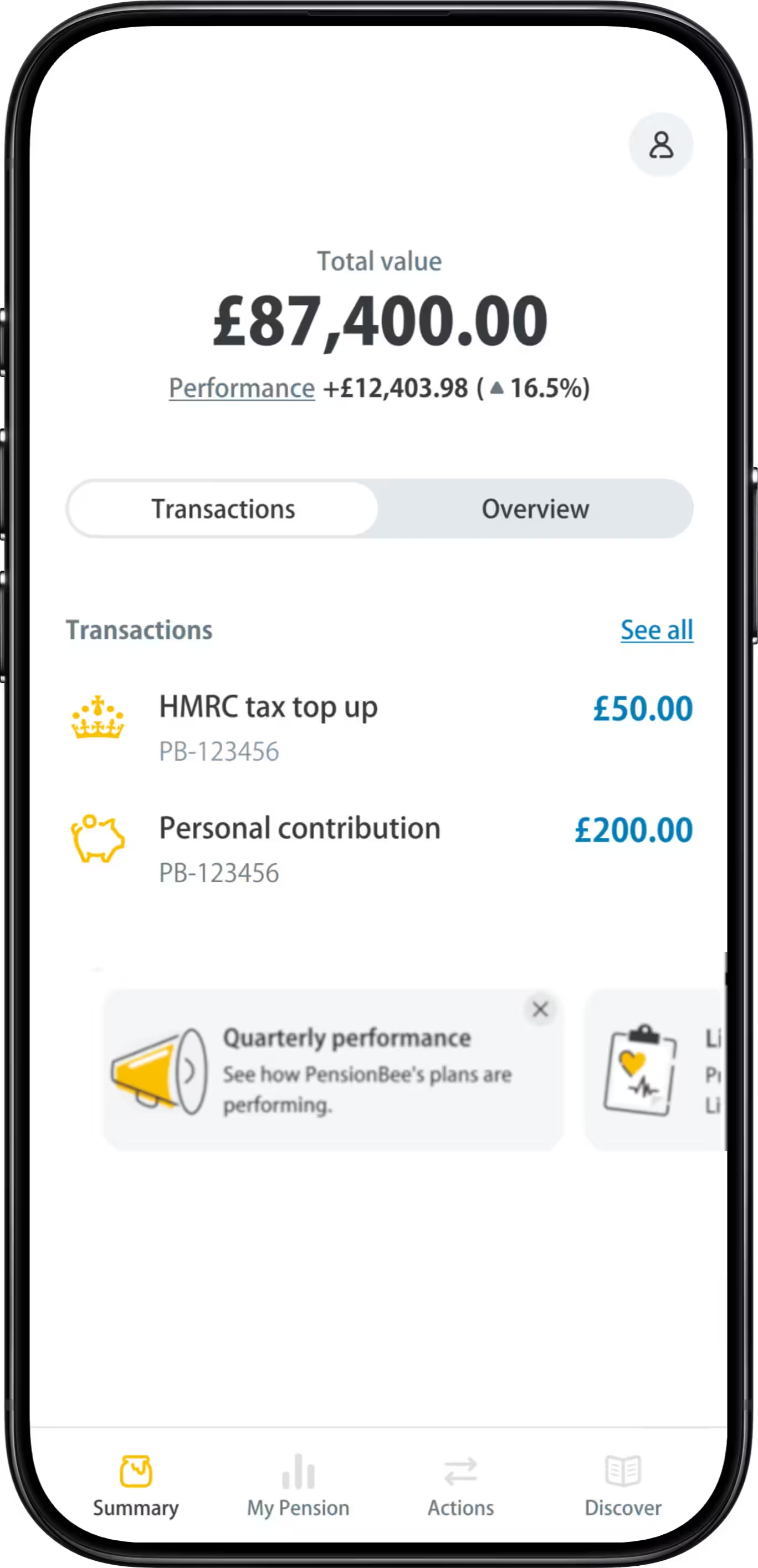
Money saved into a pension could benefit from tax top ups, compounding and investment growth.
And you don't need to set aside hundreds of pounds to start building a savings habit. If your budget allows, you could:
Before making an unplanned purchase, it could be worth considering what that same amount might add to your pension savings over time.
The smarter spending checklist
With so many opportunities to spend, this quick checklist could help you shop more mindfully.
Saving for the future doesn't have to mean taking the fun out of today. There's room for little treats in retirement too - and a little extra in your pension now could help pay for them later.
Risk warning
As always with investments, your capital is at risk. The value of your investment can go down as well as up, and you may get back less than you invest. This information shouldn't be regarded as financial advice. Tax treatment depends on your individual circumstances and may be subject to change in the future.
Period | Market Event | FTSE World TR GBP (%) | 4Plus Plan (%) |
|---|---|---|---|
4Plus Plan’s inception – 6 Sept 2013 | QE Tapering, China Interbank Crisis and its aftermath | -5.44 | -2.41 |
3 Oct 2014 – 15 May 2015 | Oil price drop, Eurozone deflation fears & Greek election outcome | -5.87 | -1.77 |
7 Jan 2016 – 14 Mar 2016 | China’s currency policy turmoil, collapse in oil prices and weak US activity | -7.26 | -1.54 |
15 June 2016 – 30 June 2016 | BREXIT referendum | -2.05 | -1.07 |