










Midlife can be busy. You might be working, supporting children, caring for ageing parents and thinking more about retirement all at once.
Menopause can add another challenge. In the UK, the average age of menopause is 51, although symptoms can begin years earlier during perimenopause.
Menopause and perimenopause symptoms can include hot flushes, poor sleep, anxiety, low mood, tiredness and problems with memory or concentration. This can have a big impact on daily life, including work.
Here’s what to consider, from your rights at work to the possible impact on your retirement savings.
What support could you get at work?
The support you can get depends on how you work.
If you’re an employee, the law may protect you if menopause symptoms affect your work. Menopause isn’t directly protected under the Equality Act 2010. However, unfair treatment related to menopause could sometimes count as discrimination because of your age, sex or disability.
It’s useful to know that:
- if your symptoms have a big, long-term effect on your daily life, the law may treat them as a disability;
- if so, your employer must think about reasonable adjustments, which are changes to help you do your job; and
- these adjustments could include flexible hours, more breaks or changes to where you work.
Acas offers free and impartial advice if you’re unsure about your employment status or which rights apply to you.
There are also changes on the way. From spring 2027, large employers (250 or more staff) are expected to publish action plans under The Employment Rights Act. These will show how they'll close their gender pay gap and support staff going through menopause. For now, actioning these plans is voluntary.
Employees also have the right to request flexible working from their first day in a job, which could mean changing:
- how many hours you work;
- your start and finish times;
- the days you work; or
- where you work.
Your employer must consider your request reasonably, but they don’t have to agree to it. They can refuse a request if there’s a valid business reason, such as extra costs or an impact on staffing or performance.
If you’re self-employed, freelance or doing casual work, your rights and options may be different. You may have more ontrol over your schedule, but changing when or how much you work could have a direct impact on your income.
Whatever your working arrangement, it can help to understand your options before making a change.
{{main-cta}}
What if you’re caring for someone too?
Managing menopause symptoms alongside work can already be challenging. Add caring responsibilities into the mix, and the pressures on your time, wellbeing and finances can quickly build.
Many people in their 40s and 50s are part of the ‘sandwich generation’. This means they care for older relatives while still supporting their children.
If you’re an employee and care for someone who needs long-term care, you can take up to one week of unpaid Carer’s Leave every 12 months.
If this right doesn’t apply to your type of work, you may still need to adjust your hours or workload to fit around caring.
Whatever your situation, taking time away from paid work can affect your money in the long run.
PensionBee’s Carer’s Gap report found that one year out of work to care for someone could leave you with around £5,000 less in your pension when you retire. Working part-time instead of full-time could mean around £2,000 less for every year you do it.
That doesn’t mean taking time out or working less is the wrong choice. But understanding the possible impact can help you plan for it.
If you want to find out more about your rights as a carer, watch our videos on protecting your financial future on YouTube.
How changing your work affects your pension
Working less could mean less money going into your pension. If you’re employed and reduce your hours, both you and your employer may pay less into your workplace pension.
If you’re self-employed or freelance, a drop in income could make it harder to maintain your usual contributions. And if you take time away from paid work, you might choose to reduce or pause them for a while.
Over time, these changes can add up. PensionBee’s Pension Landscape research found that women had 37% less saved in their pensions than men on average in 2025. Career breaks and reduced working hours are among the factors that can contribute to the gender pension gap.
Knowing the potential impact can help you plan ahead. Before changing how much you work, it can help to check:
- how much you and your employer currently pay into your pension;
- how those contributions could change if your income falls; and
- what a period of lower contributions could mean for your retirement plans.
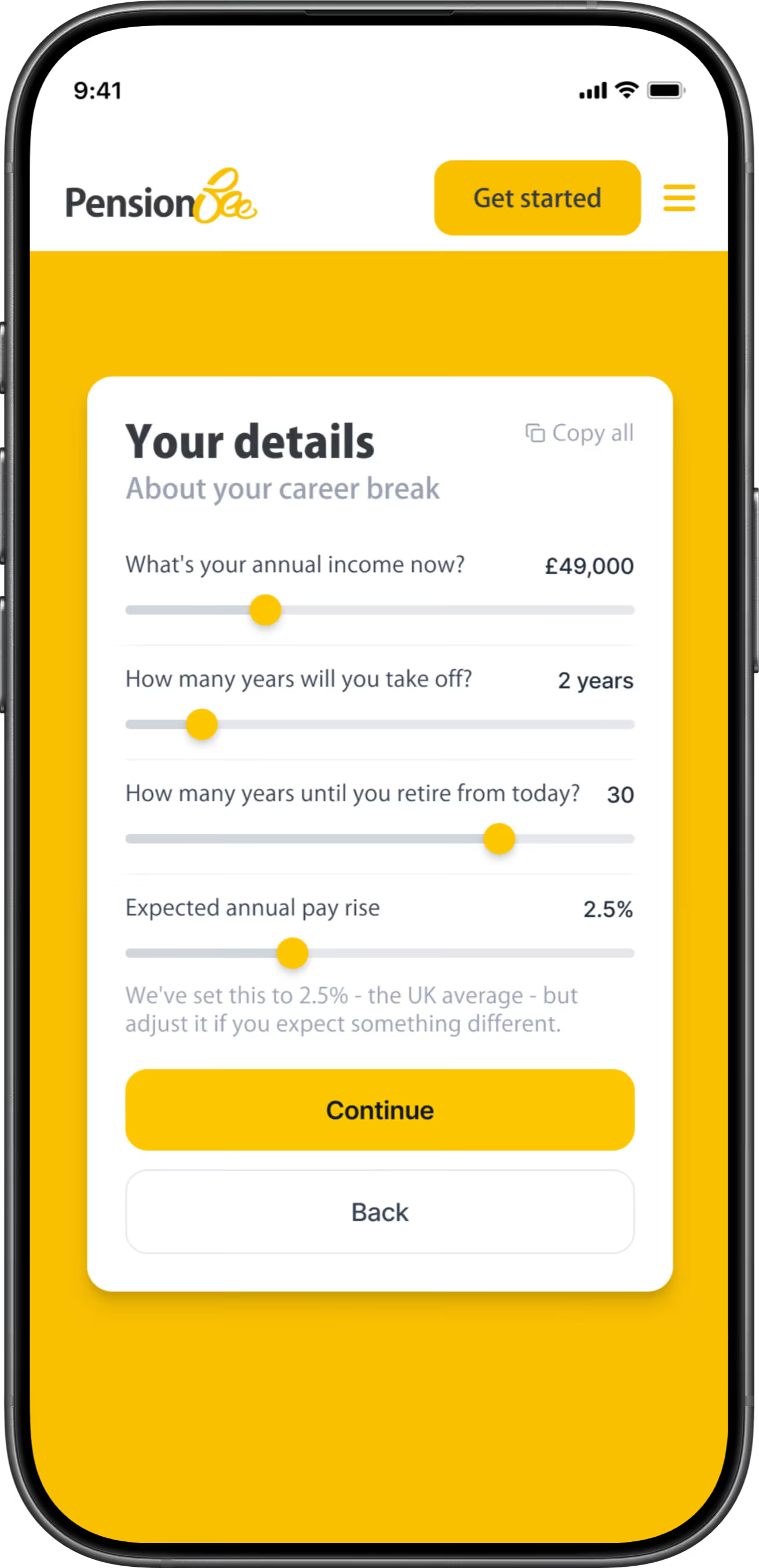
You can use PensionBee’s Pension Calculator to explore how different contribution amounts could affect your pension over time.
And remember, a change now doesn’t have to be permanent. If you need to contribute less for a while, you can review what you’re paying in again if your circumstances change.
Could someone else pay into your pension?
If you’re earning less or taking time out, someone else can pay into your pension for you. These are called third party contributions and could be paid by a partner, or a family member.
Third party contributions still benefit from tax relief. For example, if someone pays in £100 a month on your behalf, the government tops that up to £125. Over a year, that’s £1,500 going into your pension from their £1,200 contribution.
If you earn more than this, there's a separate limit on tax relief. You can usually get tax relief on your own and third party contributions up to 100% of your relevant UK earnings, capped at £60,000 a year (2026/27). Tax relief doesn't apply to employer contributions.
The annual allowance is a different limit. It's the most you can save into a pension each tax year without paying a tax charge. It's currently £60,000 gross (2026/27). This includes personal, employer and any third party contributions. Your allowance may be lower depending on your circumstances.
You can find out more by watching our video on third party pension contributions.
What about your State Pension?
Your private or workplace pension may be one part of your retirement income. You may also be eligible for the State Pension, which is a regular payment from the government that you can get when you reach State Pension age (66, rising to 67 from 2028). How much you get depends on your National Insurance (NI) record, which is built up through contributions you make while working or NI credits you may receive when you're not working.
If you’re thinking about earning less or taking time away from paid work, it’s worth checking your State Pension forecast, which can tell you what you’re projected to receive from the government.
You’ll usually need at least 10 qualifying years on your NI record to get any State Pension, and 35 qualifying years to get the full new State Pension. A qualifying year is a tax year when you’ve paid enough NI or received NI credits.
If there are gaps in your NI record, for example if you took time out to raise children or care for elderly relatives, it’s possible to get NI credits. Carer’s Credit is one type. It could help fill gaps in your NI record if you care for someone for at least 20 hours a week and meet the other rules.
It’s also worth checking whether you have pensions from previous jobs. The government’s free Pension Tracing Service can help. You can also read our blog, 4 steps to finding a missing pension, for more ways to track down your pension.
Your menopause, work and pension checklist
There’s a lot to think about when menopause, work and caring overlap. Breaking it into smaller steps can help.
- Check your rights at work - Acas has guidance on menopause and the law.
- See what support you can get - if you have an employer, check if they have a menopause policy. You can also ask if they can make changes to help you at work.
- Think about working differently - employees can ask for flexible working from day one. This could mean changing when, where or how many hours you work. If you work for yourself, think about whether you could change your hours or workload.
- Check your rights as a carer - if you’re an employee and care for someone, you may be able to take unpaid Carer’s Leave.
- Check your pension - find out how much you and your employer pay into your pension now. If you’re thinking about earning less, check how this could change the amount going into your pension.
- Check your State Pension - look at your State Pension forecast to see how much you could get. You can also check your NI record to see if there are any gaps.
- Find out about NI credits - NI credits may help fill gaps in your NI record if you’re earning less or not working.
- Find old pensions - if you’ve lost track of a pension from an old job, the Pension Tracing Service can help you find the provider’s contact details.
- Look at your wider finances - think about how earning less could affect your bills, savings and anyone you share costs with.
- Run the numbers - use PensionBee’s Pension Calculator to see how changing the amount you save could affect your pension in the future.
The bigger picture
Menopause can change how work fits into your life. But there’s no single working pattern, and no single way to manage that change.
You might be employed, self-employed, freelance or working part-time. You might have several jobs, care for someone alongside work or need time away from paid work.
Whatever your situation, it helps to understand your options before making a change. That could mean knowing your rights at work, checking what support is available or seeing what earning less could mean for your pension and wider finances.
Your health, work and money are often connected. Taking stock of them together can help you make choices that work for you today, without losing sight of the future.
Risk warning
As always with investments, your capital is at risk. The value of your investment can go down as well as up, and you may get back less than you invest. This information should not be regarded as financial advice.
Period | Market Event | FTSE World TR GBP (%) | 4Plus Plan (%) |
|---|---|---|---|
4Plus Plan’s inception – 6 Sept 2013 | QE Tapering, China Interbank Crisis and its aftermath | -5.44 | -2.41 |
3 Oct 2014 – 15 May 2015 | Oil price drop, Eurozone deflation fears & Greek election outcome | -5.87 | -1.77 |
7 Jan 2016 – 14 Mar 2016 | China’s currency policy turmoil, collapse in oil prices and weak US activity | -7.26 | -1.54 |
15 June 2016 – 30 June 2016 | BREXIT referendum | -2.05 | -1.07 |












%201.png)