




Being an ‘invisible worker’ could cost you £70,000 in retirement - here’s what you can do about it




What happens if you fall outside of the UK’s main pension saving structure?
That’s the question the UK’s invisible workers need to ask themselves.
You might be an invisible worker if you’re:
Whatever the reason, if you’re an invisible worker, you face a different retirement saving landscape to other employees. That’s not your fault, either - it’s a result of the way the system’s structured.
While these individuals all work and earn, they risk not having enough in retirement, simply because they aren’t employed in the traditional way.
A year of research from PensionBee reveals that this could cost workers £70,000 in retirement. That figure could be even higher depending on individual circumstances, too.
Fortunately, once you know about the issue and how it might affect you, you can take steps to resolve it.
Invisible workers fall outside of Auto-Enrolment
The reason that invisible workers are in this position is that they fall outside of Auto-Enrolment. Those are the rules the government introduced in 2012 to improve pension saving.
Under Auto-Enrolment, you’re automatically added to your employer’s pension (if you meet the criteria) when you start working for them. You can opt out, but the default position is that you’re added to the scheme.
You’ll usually qualify for Auto-Enrolment if you:
- work in the UK;
- are at least 22 years old and haven’t reached State Pension age (66, rising to 67 from 2028);
- earn more than £10,000 a year (2026/27); and
- aren't already a member of a suitable workplace pension scheme.
If your earnings are below £10,000 but above £6,240, you can ask your employer to enrol you in their scheme. They won’t automatically add you in this case, but you can ask to join and they aren’t allowed to say no.
Employees who meet the criteria then contribute 8% of their ‘qualifying earnings’ to their pension. In 2026/27, qualifying earnings are between £6,240 and £50,270. Of that 8%, the employer must contribute at least 3% of this, with the employee making up the rest - usually 5%.
You can also choose to pay more in yourself, as do some employers. Your employer might even match extra contributions you make.
Auto-Enrolment has gone a long way to ensuring that more people have pension savings. In 2012, just over 40% of people saved into a workplace pension. By 2024, that number was 89%.
However, invisible workers fall outside of its scope, putting them at a disadvantage compared to employed workers. Not only do they not open a pension automatically when they start working, they also miss out on employer contributions.
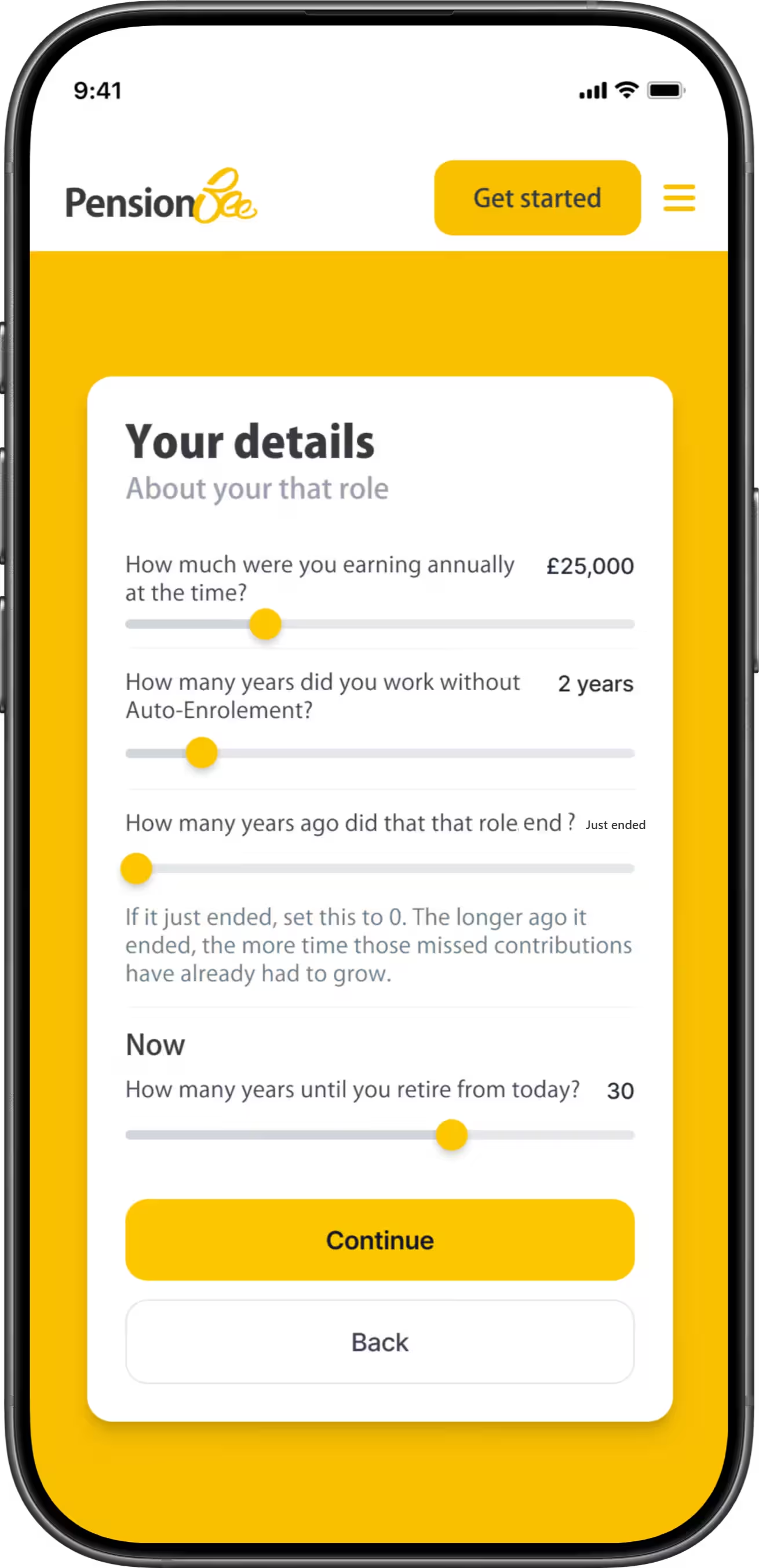
The impact might be bigger than you think. PensionBee research found that a worker earning £25,000 and spending 30 years outside of the pension system would lose out on £70,000.
That figure could be even higher depending on your earnings or how long you work for, too.
{{main-cta}}
Closing the pensions gap for invisible workers
Ensuring that invisible workers aren’t disadvantaged and losing out in retirement is key.
One solution could be a form of automatic pension enrolment for invisible workers.
In fact, PensionBee’s research found that 66% of UK adults support this.
Aside from that, there could also be prompts built into Self-Assessment tax returns to remind you to contribute to a pension.
Likewise, more guidance around life events, such as maternity or paternity leave, and the effect it could have on pensions could be useful. That might help parents work out what to prioritise financially.
But while we wait for changes like this, it means taking matters into your own hands.
To do so, it’s worth knowing what you’re missing out on, and then working out what you’d need for your dream future and how a pension could help you get there.
Know what you’re missing out on
Firstly, it’s important to understand how big the gap is for you.
Pension contributions are considered effective for retirement saving for a few different reasons.
For one, they’re highly tax-efficient. You’ll usually get a tax top up, which for most people sees you get a 25% boost on your eligible contributions. For every £100 you pay in, you’ll get £125 in your pot. That could be more if you pay higher or additional rate tax.
Plus, your pension’s usually invested. That gives it the opportunity to grow over time, especially thanks to compounding. There’s no tax to pay on any interest or investment returns you receive.
Without these benefits of saving for the future, you can see why a gap starts to emerge.
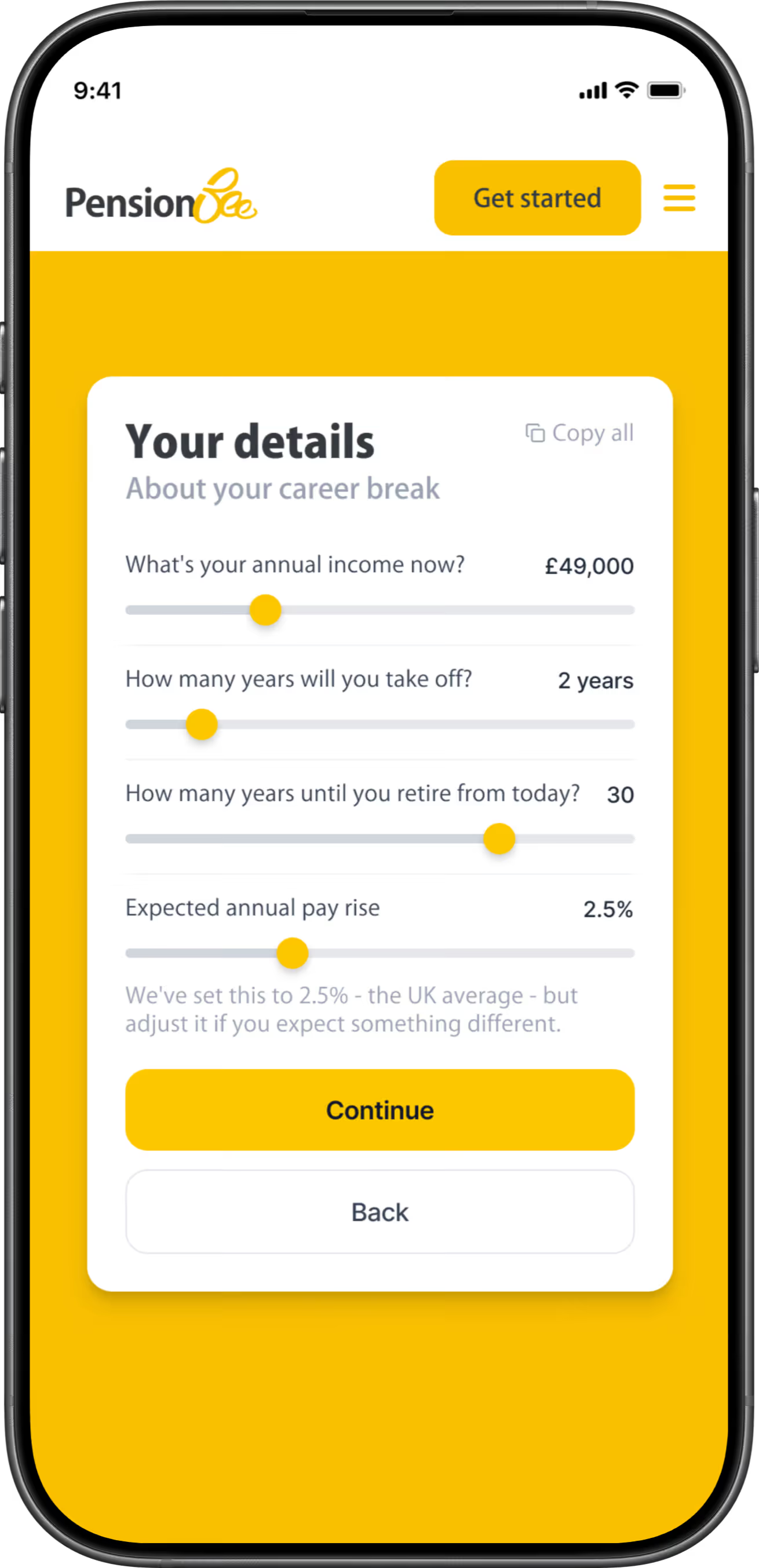
That £70,000 figure’s just a projection, too. If you want to see what you could be missing out on in your personal circumstances, PensionBee’s Invisible Workers Calculator can help.
You can adjust for things like:
- whether you’re missing out on a previous, current or future role;
- your situation, such as if you’re self-employed, a part-time worker, or on a career break;
- your annual income now, with an expected annual pay rise;
- how many years you’ll miss out, and how long until you retire; and
- what you might’ve expected you and an employer to pay into your pension during that period.
The calculator will give you a figure that shows the gap you could face compared to an employed worker.
Work out what you need for your future
Once you know what sort of gap you could be facing, you can calculate what you’d need to do to build the pot you want for later life.
PensionBee’s Pension Calculator can help here. Simply put in:
- your current age and ideal retirement age;
- your desired monthly retirement income;
- how much you’d like to retire with;
- what you’ve saved so far; and
- your personal monthly and one-off contributions.
You can also allow for different levels of investment growth, if you’ll take your 25% tax-free cash at 55 (57 from 2028), and whether to include the full new State Pension.
The calculator can then give you an idea of what you’ll have by the time you want to retire, and how long it might last.
This information could be useful for anyone, but especially if you’re an invisible worker.
It could give you confidence that you’re on track and saving enough to have what you want.
Or it might reveal that you’re facing a shortfall. In that case, you can work out how much you need to start contributing to hit that target.
It’s not a perfect science, and your circumstances could change in future. But it could help stop you from falling victim to that £70,000 gap many invisible workers might be facing.
Risk warning
As always with investments, your capital is at risk. The value of your investment can go down as well as up, and you may get back less than you invest. This information should not be regarded as financial advice.
Period | Market Event | FTSE World TR GBP (%) | 4Plus Plan (%) |
|---|---|---|---|
4Plus Plan’s inception – 6 Sept 2013 | QE Tapering, China Interbank Crisis and its aftermath | -5.44 | -2.41 |
3 Oct 2014 – 15 May 2015 | Oil price drop, Eurozone deflation fears & Greek election outcome | -5.87 | -1.77 |
7 Jan 2016 – 14 Mar 2016 | China’s currency policy turmoil, collapse in oil prices and weak US activity | -7.26 | -1.54 |
15 June 2016 – 30 June 2016 | BREXIT referendum | -2.05 | -1.07 |