United Kingdom

But millions of workers fall outside this system entirely. No automatic enrolment. No employer contributions. No support. No safety-net. They have to build a pension alone, from scratch.
We call them invisible workers. They include:
- Self-employed people and freelancers.
- Gig economy workers on zero-hours or irregular contracts.Part-time workers earning below the Auto-Enrolment threshold.
- Unpaid carers who've stepped back from paid work to support family members.
Together, this group of people who make a significant contribution to the economy and society, face a higher risk of undersaving and a retirement outcome that looks very different from their employed peers. Our campaign exists to explore this gap and to push for reform that reflects how people actually work today.

Missing out on workplace pensions, employer contributions and Government tax-relief can compound over decades into a serious financial penalty. Without reform, millions face retirement insecurity.
The 26% pension gap
A self-employed person earning £30,000 is projected to retire with £64,000 less in savings than an employed peer earning the same wage. That's a 26% gap in retirement wealth, driven almost entirely by the absence of employer contributions through Auto-Enrolment. To close it, the self-employed must save significantly more.
The carer's penalty
Every year spent out of the workforce providing care can reduce a retirement pot by around £5,000. Even dropping to part-time to manage caring responsibilities can leave a shortfall of roughly £2,000 per year. Over a typical caring period, that can add up to £30,000 less saved for retirement. (Read more)
Exclusion from saving altogether
For many gig and low-income workers, the issue isn't a smaller pension, it's no pension at all. 57% of temporary economy workers say they can't afford to contribute. Just 16% of gig workers earning under £15,000 save regularly, compared with 46% of those earning over £100,000. One in five low earners expects to retire on the State Pension alone. (Read more)
The complexity barrier
Nearly one in three gig workers (29%) say they don't know where to start, or find pensions too complicated to engage with.
Use our invisible workers calculator to understand how your retirement wealth could be affected by missed employer contributions, so you can start planning your next steps.
The good news? It's never too late to start closing that gap.
The pension system was built for a world of permanent, full-time employment. That world no longer exists for millions of people. These are the reforms we believe would make the biggest difference to enable everyone to save for a happy retirement.

Expand Auto-Enrolment
The eligibility rules for those in employment haven't kept pace with how people work. Lowering the age threshold from 22 to 18 would mean young workers start benefiting from compound growth earlier, giving them years the current system takes away. Removing the minimum earnings threshold (which currently sits at £10,000) would end the effective exclusion of low earners from workplace saving altogether. Both changes are straightforward and long overdue.
A simpler route in for the self-employed
Many of the retirement saving challenges that the self-employed face are already solved by a personal pension: They can set-up a new pension and combine any old pots into it to get a better overview of their finances; they can contribute flexibly around their changing income; and they can manage their pension simply through an app.
But what they lack is the right nudge to get them started. Auto-Enrolment works because it removes the effort of opening a pension - you're in unless you choose not to be. The self-employed deserve the same ease of entry.
We propose using the Self-Assessment tax return as that nudge. It's the one financial touchpoint every self-employed person shares, and it's a natural moment of reflection on finances and the future. Embedding a pension education pathway, explaining the benefits of saving into a pension - for example how government tax relief works (which nine in ten people don't know they're entitled to) - would give millions a clear, well-timed prompt to start saving.
Fast, reliable pension transfers
Invisible workers have often accumulated pension pots across multiple employers and working arrangements. Consolidating those pots is often the first step to understanding what they've actually saved and what they still need to do. But the system that's supposed to make that easy is stuck in the past.
The UK's statutory deadline for pension transfers hasn't been updated since the nineties. A six-month limit designed as a backstop has, in practice, become a benchmark that lets poor performance go entirely unchallenged. A complex regulatory landscape with multiple regulators - as well as third-party administrators who are not caught by regulation - has created what amounts to a transfer lottery for savers.
Amending the legislation to a 30-working-day limit for straightforward defined contribution transfers would bring pensions in line with the rest of financial services and meet modern consumer expectations, applied consistently across all schemes, regardless of which regulator oversees them. A clear standard creates accountability, ends the lottery, and gives savers the certainty they need to engage with their retirement.


PensionBee data reveals the millions of self-employed, gig economy and lower income workers denied the same chance of a secure retirement as those in traditional employment.

Affordability is the key barrier for gig workers looking to save into a pension, as PensionBee launches its invisible worker campaign.

Workplace pension statistics highlight the urgent need to enact policies that encourage self-employed and gig economy workers to save more into their pension.

Read about Cheryl's eagerness to see better pension inclusion for gig and temporary workers like herself.
Read PensionBee research into why the self employed find it harder to save for retirement, as well as the reforms required to boost accessibility, in MoneyWeek.
Read Pensions Age's writeup about our research, which reveals the extent to which the self-employed lack confidence about their savings being able to support them in later life.
We’d love to hear from you. And we'll compensate you if we publish your story in our campaign materials or in the media. Email press@pensionbee.com..
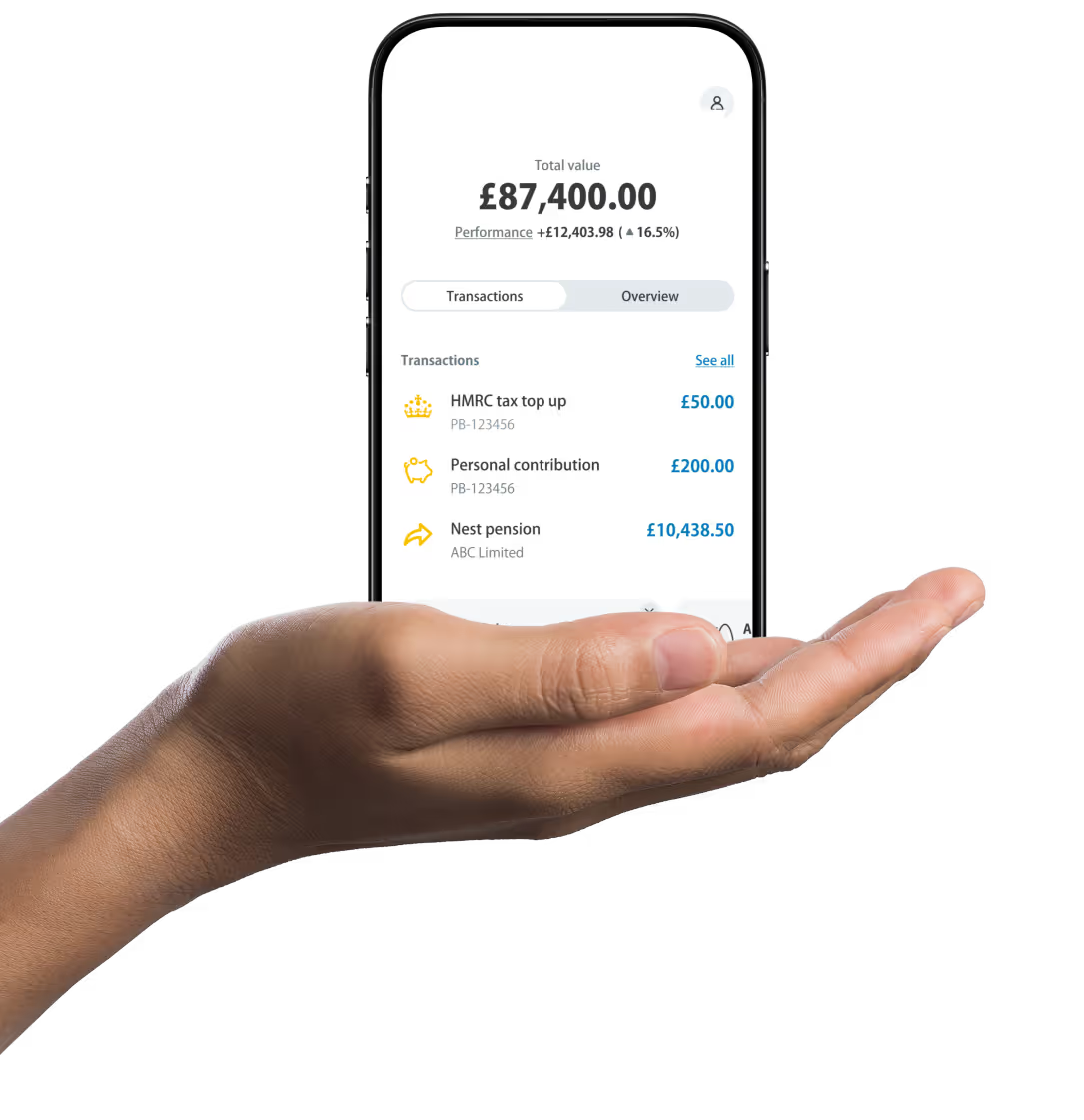
Combine your old pension pots into one new easy-to-manage online plan. It takes just a few minutes to sign up.
Get started




General enquiries: 020 3457 8444

General enquiries: contact@pensionbee.com
Press: press@pensionbee.com
Partners: partnership@pensionbee.com

Why PensionBee?
About us
Calculators
Help & Knowledge

General enquiries: 020 3457 8444
General enquiries: contact@pensionbee.com
Press: press@pensionbee.com
Partners: partnership@pensionbee.com

%201.png)