











Making the leap into self-employed life can be exciting. More freedom, flexibility, and the chance to work on your own terms. But there’s a lot to juggle too. From finding clients to sorting your taxes, your to-do list may already feel like it’s overflowing. But there are ways to make sure saving for your future retirement doesn't fall to the bottom of that list.
Just because you don’t have an employer paying into a pension for you doesn’t mean your future self won’t thank you for setting one up. It’s more important than ever to take charge of your own retirement savings, with people living longer and the cost of living continuing to rise. The good news is, it doesn’t have to be overwhelming.
If you’re working as a sole trader, whether you’re freelancing or running a small business, here are six tips to help you get started with pension saving.
1. Start where you are
You don’t need to be earning six figures to begin saving for retirement. One of the benefits of being in control is that you can start small and scale up when you’re ready. If you have a pension with PensionBee, there’s no minimum contribution. So you can save any amount, as often as you like.
If cash flow is tight, getting into the habit of saving regularly into a pension, even just a little, is better than doing nothing at all. Pensions are typically invested in a range of assets like shares, bonds, property and cash. The earlier you start, the more time your money has to benefit from potential investment growth and compound interest (this is the interest the bank will pay on top of your original amount and any interest it’s already earned combined).
2. Take advantage of the tax perks
When you contribute to a pension, the government usually tops it up with tax relief. Most basic rate taxpayers get a 25% tax top up. This means for every £100 you contribute, HMRC adds £25, bringing your total contribution to £125.
If you’re a higher or additional rate taxpayer, you can claim further tax relief through your Self-Assessment tax return.
Just remember, there’s a limit. You can only receive tax relief on personal and any third party contributions up to 100% of your relevant earnings. This is capped at £60,000 per year (2026/27).
Use our Pension Tax Relief Calculator to see how much tax relief could be added to your pension pot. It’ll also tell you whether or not you may need to file a Self-Assessment tax return to claim a portion of it.
{{dark-cta}}
3. Automate it
Set up a monthly Direct Debit or standing order. It’s one of the simplest ways to stay consistent. When contributions go out automatically, you won’t have to think about it each month and you’re less likely to skip payments. It’s like paying your future self first.
Listen to this special bonus episode of The Pension Confident Podcast for more tips on how automation can help with your personal finances.
4. Get expert help if you need it
Personal finance can feel complicated, especially when you’re managing your own workload and admin. Explore free online resources and podcasts for more support and tips. Government-backed sites like MoneyHelper offer clear, unbiased guides that break down the basics. There are also excellent platforms tailored to support self-employed women managing their personal finances, including Vestpod and rainchq.
If you feel as though you need specific advice, a qualified Independent Financial Adviser (IFA) can help you:
- understand your options;
- choose the right pension product; and
- tailor a plan that works for your income and goals.
There will be a cost involved, but it could save you stress (and potentially money) in the long run.
5. Make the most of good years
As a sole trader, your income can fluctuate. If you’ve had a strong year and have some extra cash in the business, consider putting a lump sum into your pension. It’s a smart way to use surplus profits and reduce your tax bill at the same time.
Just don’t forget your limits. For 2026/27, the total amount you can contribute to your pension is £60,000 - this is known as the current standard annual allowance. Remember, pension contributions that you can receive tax relief on are capped at 100% of your relevant earnings.
High earners may have a reduced annual allowance, as well as those who’ve already flexibly accessed their pensions.
If you’ve not used your full allowance in the previous three tax years, you could make use of the pension carry forward rule. Watch the video below to find out more about how to use carry forward.
6. Think long term
As pensions are invested they can be impacted by stock market fluctuations. But your pension is a long-term investment, so volatility in the short term isn’t the end of the story. If retirement is a long way off, starting a pension pot as early as you can is beneficial. Keeping up with pension contributions, however modest, can make a big difference over time.
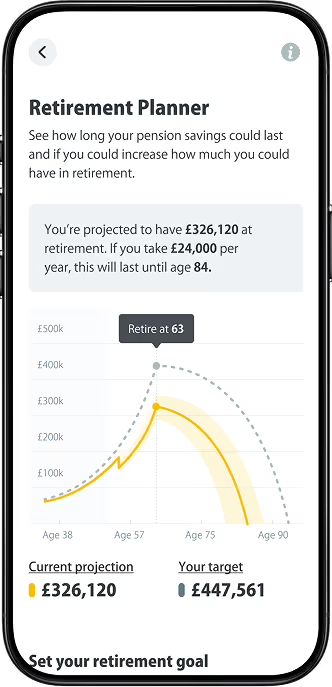
Whatever your age and stage, it makes sense to keep track of the progress you’re making towards your future retirement. You can use the PensionBee Pension Calculator to see how long your current pension could last and how contributions might impact your savings over time.
Whether you’ve just launched a small business or have been working for yourself for years, contributing to a pension is key to securing your financial future. The sooner you begin, the more opportunity your savings have to grow.
Risk warning
Please note that tax rules change regularly, and the actual tax benefits you receive will depend on your individual circumstances. If you’re not sure, please seek professional advice.
As always with investments, your capital is at risk. The value of your investment can go down as well as up, and you may get back less than you invest. This information should not be regarded as financial advice.
Period | Market Event | FTSE World TR GBP (%) | 4Plus Plan (%) |
|---|---|---|---|
4Plus Plan’s inception – 6 Sept 2013 | QE Tapering, China Interbank Crisis and its aftermath | -5.44 | -2.41 |
3 Oct 2014 – 15 May 2015 | Oil price drop, Eurozone deflation fears & Greek election outcome | -5.87 | -1.77 |
7 Jan 2016 – 14 Mar 2016 | China’s currency policy turmoil, collapse in oil prices and weak US activity | -7.26 | -1.54 |
15 June 2016 – 30 June 2016 | BREXIT referendum | -2.05 | -1.07 |










%201.png)